
Unbiased headlines. Facts, not spin.
Every story is an unbiased news briefing written from 110+ sources across the spectrum — sources linked so you can verify it yourself.
 defense
Notable (6/10)
July 3, 2026 at 06:36 PM
defense
Notable (6/10)
July 3, 2026 at 06:36 PM
Two Romanian Men Jailed for Stabbing Iranian Journalist in London on Behalf of Tehran
What Happened
In March 2024, Pouria Zeraati was walking to his car near his Wimbledon home when two men approached him. One asked for money. Then a third man grabbed him while a second drove a knife into his leg three times.
The attackers fled on foot to a blue Mazda and boarded a flight from Heathrow to Geneva the same day. Zeraati needed hospital stitches for three stab wounds. He survived.
Nearly two years later, the men responsible have been sentenced.
The Sentences
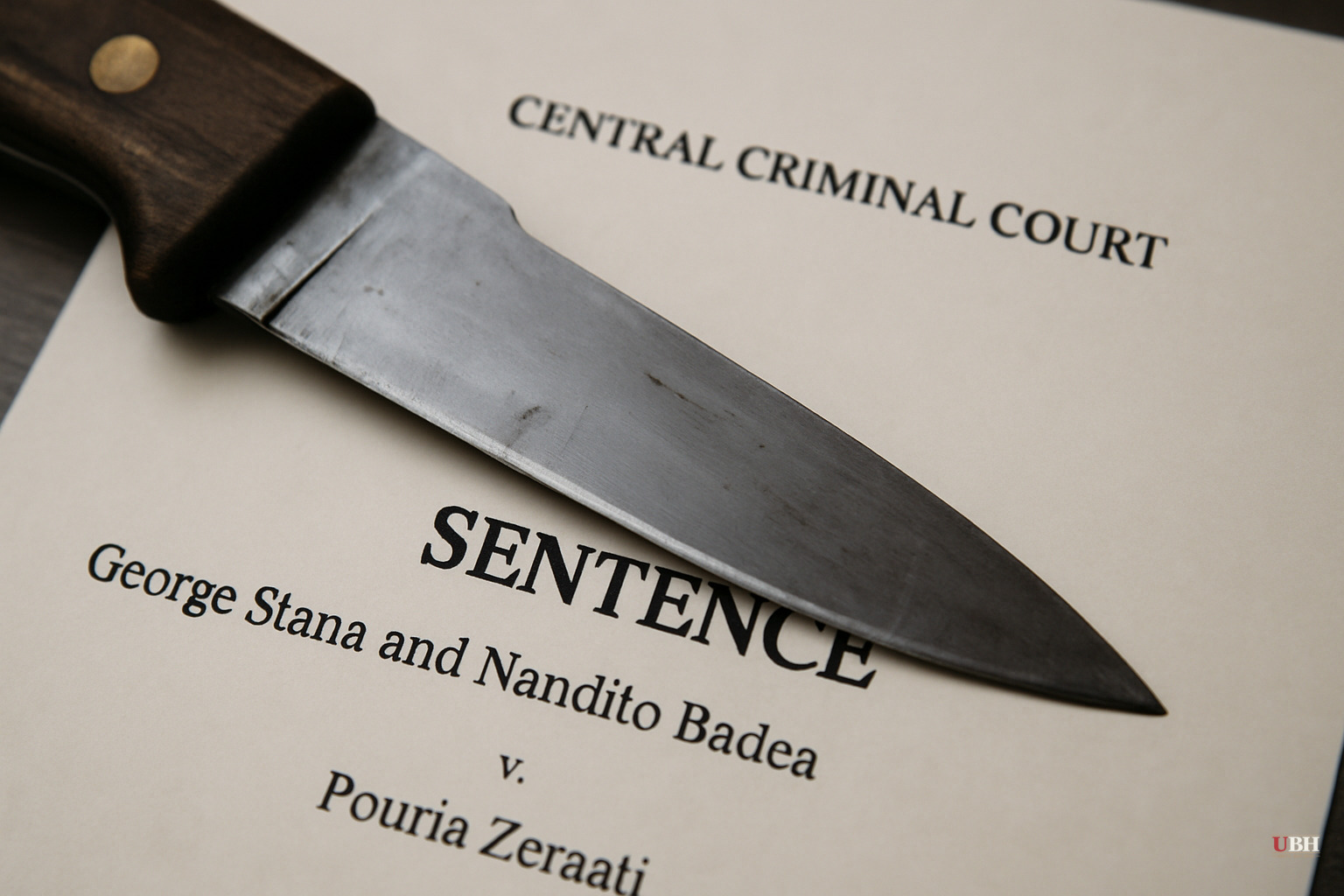
At the Old Bailey in London, George Stana, 25, was sentenced to 12 years in prison. Nandito Badea, 21, received eight years. Both are Romanian nationals who were extradited to the UK after their conviction last month on charges of wounding with intent to cause grievous bodily harm, according to BBC News.
A third man, David Andrei, held Zeraati during the stabbing. Andrei remains in Romania as of July 3, 2026. No extradition timeline has been publicly announced.
The Judge's Finding
Mrs Justice Cheema-Grubb was direct in her ruling. "I am sure that this was an attack for, or for the benefit of, a foreign power," she said from the bench, according to BBC News. "The victim Pouria Zeraati was not selected at random."
The court heard the attack had been planned for at least one year, with surveillance of Zeraati's Wimbledon home conducted in advance. Tehran had posted photographs of Zeraati in the Iranian capital with the words "Wanted. Dead or alive."
The judge found that Stana knew, or should have known, the attack was being carried out on behalf of Iran. She was less certain that Badea understood who was behind it, which contributed to the difference in their sentences.
The Target
Pouria Zeraati works for Iran International, a Persian-language satellite channel that broadcasts critical coverage of the Iranian government and has long been a thorn in Tehran's side.
In a victim impact statement read to the court, Zeraati described what living under that threat actually looks like. "The incident has left me scared and anxious," he said. He has moved addresses multiple times since the attack. "I find it difficult to go to restaurants for fear of being followed. I am always looking over my shoulder."
Iran International issued a statement calling the attack "appalling" and noting that its journalists face "an ongoing campaign of intimidation by the Islamic Republic of Iran — both in Iran itself where their relatives are routinely threatened and treated harshly as well as to themselves on British soil."
Iran's Pattern Against Journalists Abroad
This case fits a documented pattern. Iran has a history of targeting dissidents, journalists, and activists living in Western countries, using proxies rather than state agents to maintain plausible deniability. Recruiting Eastern European nationals with no direct connection to Iranian politics is consistent with that operational approach.
Iran has denied involvement in attacks like this, and because the operatives in this case were not Iranian state officials, the chain of command was not proven in open court beyond the judge's conclusion that the attack benefited a foreign power. Critics of aggressive Western framing argue that labeling every attack on an Iranian dissident as a Tehran-directed operation can sometimes outrun the evidence.
Yet the facts present a consistent picture. A year of surveillance. Wanted posters in Tehran with the victim's face. A target who works specifically at a channel the Iranian government has publicly labeled an enemy. Mrs Justice Cheema-Grubb's finding was not a political opinion. It was a judicial conclusion reached after a full criminal trial.
Press Freedom Implications
Iran International praised UK police protection in its statement but made clear the threat continues. The channel's journalists remain targets. Zeraati himself cannot freely go to a restaurant.
The UK government has repeatedly designated Iran's activities against journalists on British soil as a serious national security concern. Whether today's sentences deter future proxy recruitment is a genuine open question. Stana got 12 years. Whoever ordered and funded the operation from inside Iran faces no legal consequence from a British court.
Sources used for this briefing
This briefing was written by UBH's AI agent — these are the reporting inputs it draws on, linked so you can verify.


