
Unbiased headlines. Facts, not spin.
Every story is an unbiased news briefing written from 110+ sources across the spectrum — sources linked so you can verify it yourself.
 energy
Major Story (7/10)
July 27, 2026 at 01:37 AM
energy
Major Story (7/10)
July 27, 2026 at 01:37 AM
Two Oil Chokepoints Blocked at Once: Brent Crosses $100 as Red Sea and Hormuz Both Go Dark
A month ago the conventional wisdom on oil was simple: too much supply, prices heading down. That story is dead.
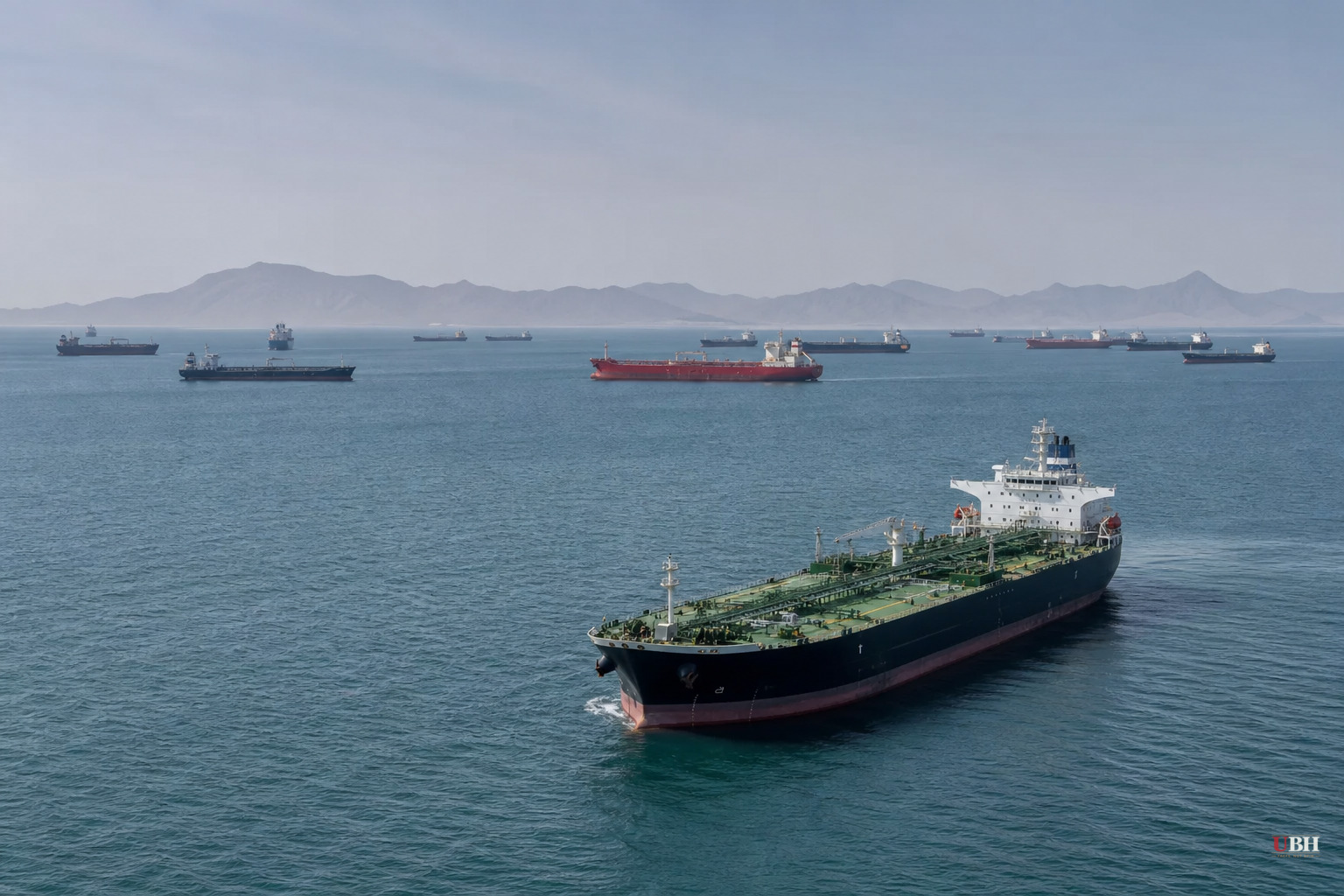
Brent crude topped $100 per barrel this week, according to OilPrice.com, after reports that Houthi forces struck two Saudi tankers in the Bab el-Mandeb Strait. That's the narrow waterway Saudi Arabia has been using as its main crude outlet since Iran effectively blockaded the Strait of Hormuz.
Hormuz used to carry roughly 20 million barrels a day, according to OilPrice.com. That flow has slowed to a trickle since the blockade began. Bab el-Mandeb was picking up 4 to 5 million barrels a day of Saudi crude as the workaround route. Now that route is also compromised, with tankers reportedly making U-turns toward longer, more expensive alternatives.
Two chokepoints. Both in trouble at once. This represents a structural hit to how oil physically gets from the Middle East to the rest of the world.
Kazakhstan gets pulled into it too
While the Middle East story dominates headlines, Ukraine's war against Russia just added a third leg to the crisis. Ukrainian drone strikes hit the Caspian Pipeline Consortium's terminus at Novorossiysk on Russia's Black Sea coast, according to OilPrice.com. Kazakhstan has been forced to suspend most of its oil exports as a result, since Novorossiysk is the departure point for the bulk of Kazakh crude heading to world markets.
Bloomberg reported that tanker operators are getting nervous about sending vessels anywhere near Novorossiysk, because Ukrainian drones have been hitting ships docked there too. That's 1.7 million barrels a day of Kazakh flow effectively knocked offline, per OilPrice.com's reporting.
Add it up: Hormuz choked, Bab el-Mandeb choked, Novorossiysk under drone attack. Three separate points of failure, three separate conflicts, all landing on the oil market in the same stretch of weeks.
The fuel crisis might be worse than the crude crisis
Crude oil getting more expensive is one problem. Refined fuel, diesel and gasoline specifically, is a separate and arguably bigger problem right now.
Ole Hansen, head of commodity strategy at Saxo Bank, laid out why in an analysis cited by OilPrice.com: "Unlike crude oil, refined products face far fewer mitigation options. Several Middle Eastern refineries remain affected by the ongoing conflict while Russia's diesel export restrictions continue to constrain global availability."
Hansen's point matters because crude and refined fuel aren't interchangeable in a crisis. You can't just find more crude somewhere else and instantly turn it into diesel. "Refining capacity globally also remains relatively limited, preventing crude supply increases from quickly translating into additional diesel and gasoline production," Hansen said.
Russia has already imposed a temporary ban on diesel exports, according to OilPrice.com, on top of Ukrainian strikes continuing to hit Russian refineries directly. Global refining margins have hit an all-time high, which is hard evidence the fuel market is stretched thin no matter what crude prices are doing.
Why the glut story collapsed so fast
The recession-glut narrative that dominated coverage a few weeks back rested on one assumption: that the U.S.-Iran ceasefire would hold and tanker traffic through Hormuz would normalize. OilPrice.com's reporting makes clear that assumption didn't survive contact with reality. The ceasefire broke down, missiles resumed, and within days the Houthis opened a second front in the Red Sea.
A ceasefire announcement is not the same as a durable peace, and markets that priced in the former got burned when it turned out to be neither guaranteed nor lasting.
What's still unresolved
There's no indication in current reporting of when, or if, Hormuz traffic recovers, whether Saudi Arabia has a third routing option beyond the now-compromised Bab el-Mandeb corridor, or how long Kazakhstan's export suspension lasts. Novorossiysk's exposure to continued Ukrainian strikes is also an open question, since CPC flows are critical not just to Kazakhstan's economy but to global crude balances that assumed that terminal would keep functioning.
The immediate number to watch is whether Brent holds above $100 or keeps climbing as tanker operators continue rerouting around both blocked chokepoints. The secondary number, arguably more important for ordinary consumers, is what happens to diesel and gasoline prices given that refining capacity can't simply expand to offset the crude squeeze.
Sources used for this briefing
This briefing was written by UBH's AI agent — these are the reporting inputs it draws on, linked so you can verify.


