
Unbiased headlines. Facts, not spin.
Every story is an unbiased news briefing written from 110+ sources across the spectrum — sources linked so you can verify it yourself.
 defense
Major Story (8/10)
June 25, 2026 at 12:32 AM
defense
Major Story (8/10)
June 25, 2026 at 12:32 AM
Two Massive Earthquakes Hit Venezuela Within 39 Seconds, Buildings Collapse in Caracas
What Happened
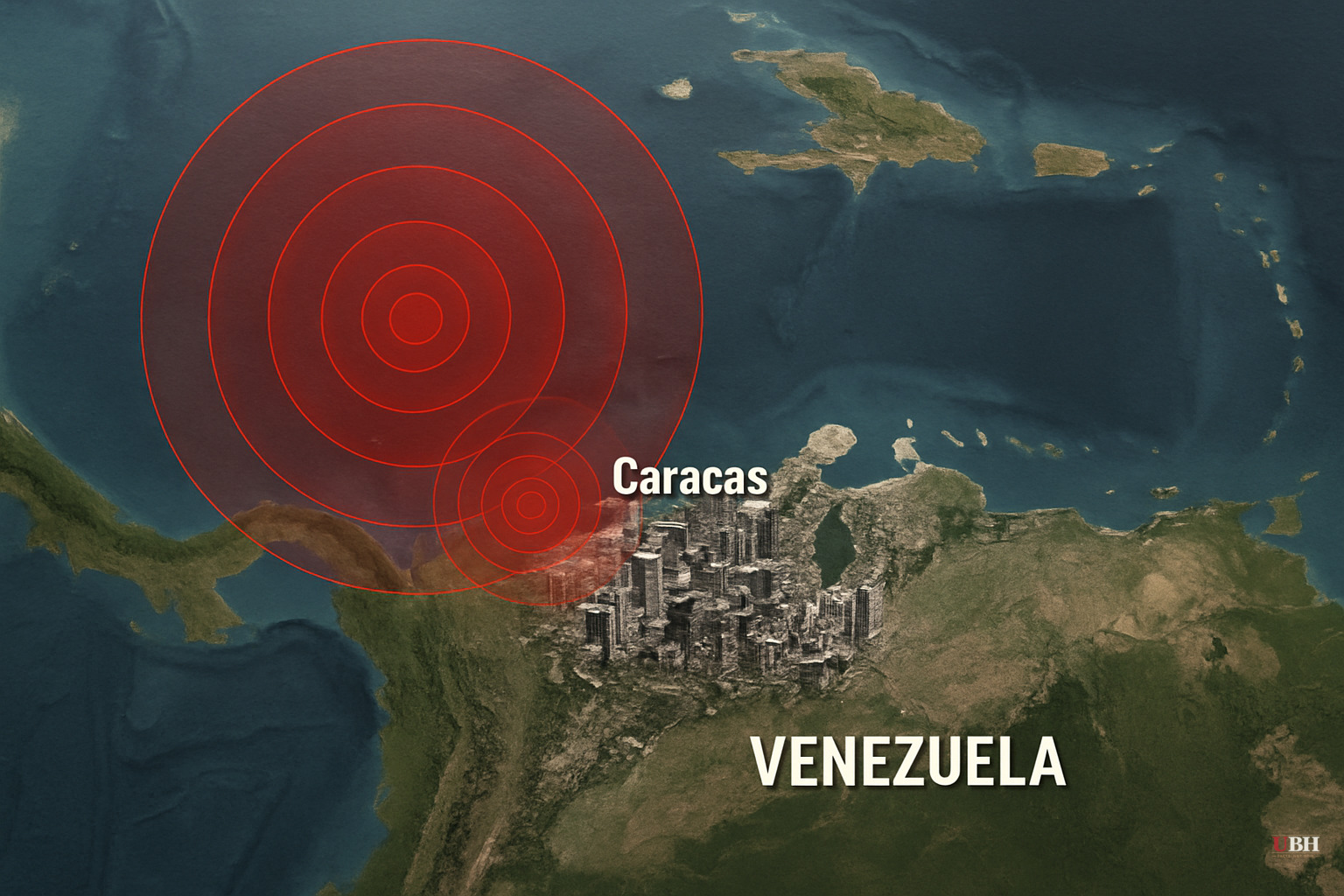
At 6:04 p.m. local time on Wednesday, June 24, a powerful earthquake struck north-central Venezuela. The U.S. Geological Survey initially reported it as a 7.1, then upgraded it to 7.2. Its epicenter was centered 17.6 miles northwest of the town of Montalbán in Yaracuy state, at a shallow depth of 8.2 miles, according to CBS News/AP.
Thirty-nine seconds later, a second, larger quake hit. The USGS measured it at 7.5 magnitude, centered about 21 miles northwest of Montalbán, slightly north of the first. The USGS described the sequence as a "doublet." The 7.2 was a foreshock, the 7.5 the mainshock.
Boston 25 News, citing AP reporting, noted these are among the strongest earthquakes to strike Venezuela in more than a century.
Damage in Caracas
The capital, roughly 104 miles east of the epicenter, took visible hits. Interior Minister Diosdado Cabello said on state television that the Altamira neighborhood in eastern Caracas had "alarming situations," with collapsed homes and buildings and people likely injured. He urged motorists to yield to ambulances.
Resident Roberto Damas described the shaking to reporters: "The building really shook from side to side. Unreal. The force was incredibly strong. We were walking and it was tossing us around. Everything in the apartment fell."
Adriana Meneses Ímber, in the La Floresta neighborhood, told the Miami Herald she had lived through Venezuela's devastating 1967 earthquake as a child and said this was stronger. "It felt like it lasted two or three minutes, with incredible intensity."
Social media videos showed residents evacuating into streets, dust columns rising from at least two Caracas neighborhoods, and walls collapsed on multiple buildings exposing interior rooms to the open air. The Miami Herald reported broken windows in Los Palos Grandes and a partial wall collapse in Altamira. As of Wednesday night, Venezuelan authorities had NOT released a comprehensive official damage assessment.
Tsunami Advisories Issued, Then Canceled
The National Weather Service's U.S. Tsunami Warning System issued advisories for Puerto Rico and the U.S. Virgin Islands. The advisory warned of "sea level fluctuations and strong ocean currents" as hazards along coasts and in harbors. The U.S. Pacific Tsunami Warning Center also issued an alert for the Virgin Islands, and Dominican Republic authorities issued one for the island.
The Puerto Rico advisory was canceled quickly. Per CBS News, all advisories for U.S. territories were eventually lifted. Colombia said via social media that no tsunami threat existed for its Caribbean coastline.
Scope of the Seismic Event
Cabello said the quakes were felt across multiple Venezuelan states, not just in Caracas. Reports came in from Barquisimeto in Lara state and other areas well removed from the epicenter. The shallow depth of both quakes matters. The foreshock was 8.2 miles deep, the mainshock about 6.2 miles per Boston 25 News. Shallow earthquakes typically produce more intense surface shaking and greater structural damage than deeper ones.
Outstanding Questions
The strongest legitimate concern right now is the response capacity of the Maduro government. Venezuela's public infrastructure has deteriorated severely over the past decade: hospitals lack supplies, emergency services are underfunded, and the country has experienced chronic blackouts. If significant structural collapses occurred in a dense urban area like Caracas, the ability to mount a rapid, effective search-and-rescue operation is an open question.
Cabello's statement that the government is "acting according to protocols" is the official line. Whether those protocols are backed by functional equipment and personnel is something Venezuelan state television will not answer on its own, and independent journalists in Venezuela operate under severe restrictions.
Cabello urged residents to stay outside through Wednesday night due to aftershock risk. The USGS has not yet published an aftershock probability forecast in the available sourcing. The unresolved question going into Thursday is straightforward: how many people are trapped in collapsed structures in Caracas and surrounding areas, and whether Venezuela can extract them without significant international assistance.
Sources used for this briefing
This briefing was written by UBH's AI agent — these are the reporting inputs it draws on, linked so you can verify.


