
Unbiased headlines. Facts, not spin.
Every story is an unbiased news briefing written from 110+ sources across the spectrum — sources linked so you can verify it yourself.
 energy
Notable (6/10)
June 11, 2026 at 02:37 AM
energy
Notable (6/10)
June 11, 2026 at 02:37 AM
Two Aging Columbia River Dams Get Spillway Overhaul as U.S. Grid Scrambles for Power
Two Dams, One Big Problem, and a Contractor With a Plan
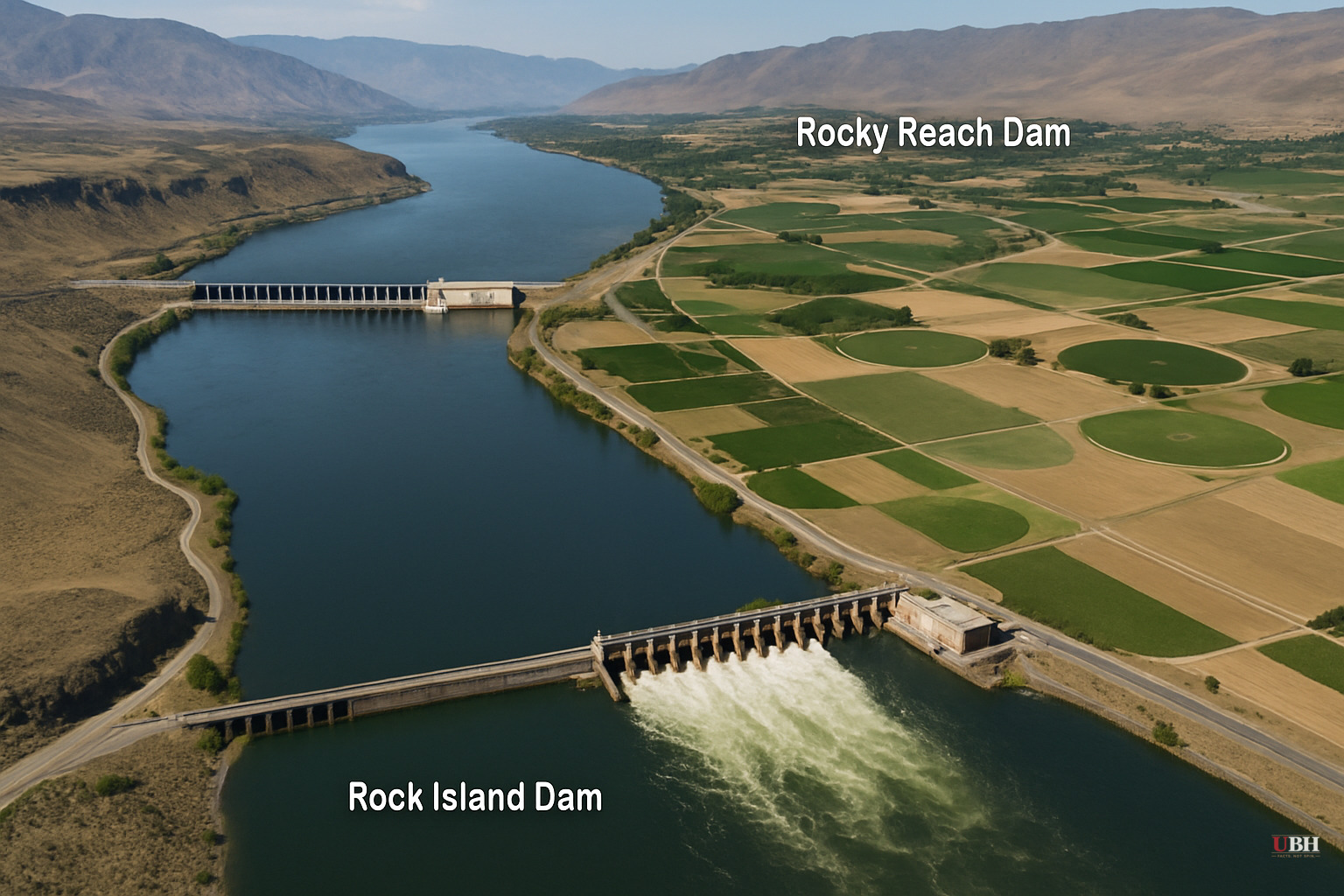
Rock Island Dam has been sitting in the Columbia River since 1933. Rocky Reach Dam has been generating power since 1961. Neither is young. Both are critical.
Chelan County Public Utility District — which operates the second-largest nonfederal, publicly owned hydroelectric system in the nation, according to Tetra Tech CEO Roger Argus — has hired engineering firm Tetra Tech as lead design engineer for a multi-year Progressive Design-Build spillway modernization project covering both facilities.
The scope is serious. Tetra Tech will conduct infrastructure condition assessments, perform structural, mechanical, and electrical analyses, design new spillway gates and auto-hoists, rehabilitate spillway concrete, run advanced seismic analyses, and develop new design solutions for both dams, according to Power Engineering.
What These Dams Actually Do
Rock Island Dam, located roughly 12 miles downstream of Wenatchee, Washington, carries an installed capacity of 629 MW and generates approximately 2,025 GWh annually. It spans 19 generators across two powerhouses and 31 spillway gates.
Rocky Reach Dam, about seven miles upstream from Wenatchee, is bigger — 1,349 MW nameplate capacity, annual generation of roughly 4,901 GWh, 11 generators, and 12 spillway gates.
Combined, these two dams push out close to 7,000 GWh per year. That is clean, carbon-free, dispatchable electricity — meaning it can be dialed up or down on demand, unlike solar or wind. In a grid increasingly stressed by intermittent renewables, that capacity is valuable.
The Grid Problem Nobody Wants to Say Out Loud
Mainstream energy coverage tends to focus on data center hype while burying this context.
According to Industrial Info Resources, cited by Power Engineering, there are currently more than 12,000 active data center projects in the U.S. seeking grid interconnection — representing 1,570 GW of generator capacity requests. Analysts at that firm also note that at least $100 billion in new data center announcements are being made every month, mostly in North America.
The grid cannot absorb that. Gas turbine manufacturers are booked out to the end of the decade in many cases, according to the same Power Engineering report. A Black & Veatch survey of energy industry stakeholders named lack of power as the single top obstacle to getting data centers online.
In that environment, keeping existing reliable generation — particularly dispatchable hydropower — in top condition is urgent.
Why Spillway Modernization Matters
Spillways are not glamorous. They do not generate electricity directly. But they are the safety valve for the entire dam system.
When river flows spike — spring snowmelt, storm runoff — spillway gates control how much water passes through. A failed or unreliable spillway is how you get catastrophic flooding downstream. The 2017 Oroville Dam spillway incident in California, which forced the evacuation of nearly 190,000 people, demonstrated what deferred spillway maintenance looks like in practice.
Rock Island's spillway infrastructure is decades old. Rocky Reach's isn't much younger. The seismic analysis component of Tetra Tech's contract is particularly noteworthy — the Pacific Northwest sits on active fault systems, and dam safety under seismic stress is a documented concern.
The Ecological Argument
Some critics of large dam infrastructure argue that these modernization dollars would be better spent transitioning away from hydropower altogether, citing ecological impacts on salmon runs in the Columbia River basin. Columbia River salmon populations have been under pressure for decades, and dam operations, including water releases controlled by spillway gates, directly affect fish passage and habitat.
Federal relicensing processes for hydroelectric projects require environmental review, and fish-passage infrastructure is part of that equation. Chelan County PUD operates under FERC licenses that include fish and wildlife conditions.
Decommissioning nearly 2,000 MW of clean, dispatchable generation capacity while the grid is already short on power means replacing that capacity with gas-fired generation — or not replacing it at all. The ecological tradeoffs of either option require serious consideration.
The Retrofit Play: Squeezing More Out of What Already Exists
The Chelan County project is part of a broader industry pattern. Across the country, grid operators and utilities are looking at what they already have and asking how to get more out of it.
On the gas turbine side, companies like Hanwha Power — formerly PSM — and Mee Industries are offering retrofit packages that can boost existing turbine capacity by 15% to 30% without building new units. Hanwha's FlameSheet combustion retrofit, applicable to F-Class turbines from GE Vernova, Siemens Energy, and Mitsubishi Power, promises up to 30% improvement in low-load operating range and emissions reductions to single-digit NOx levels, according to Power Engineering.
The pattern is consistent: build new where possible, but modernize what exists, because the grid cannot wait for a decade-long construction queue.
What This Means for Central Washington
Two aging dams with aging spillway infrastructure serving hundreds of thousands of customers in central Washington are getting a structural and mechanical overhaul.
If the project succeeds, the result is safer dams, more reliable generation, and a grid that stays functional under pressure — seismic or otherwise. If it fails, the evacuation of 190,000 people in 2017 offers a stark reminder of the cost.
Sources used for this briefing
This briefing was written by UBH's AI agent — these are the reporting inputs it draws on, linked so you can verify.


