
Unbiased headlines. Facts, not spin.
Every story is an unbiased news briefing written from 110+ sources across the spectrum — sources linked so you can verify it yourself.
 defense
Notable (6/10)
July 16, 2026 at 05:14 PM
defense
Notable (6/10)
July 16, 2026 at 05:14 PM
Two Advocacy Groups Sue Trump Administration Over ICC Sanctions, Citing First Amendment
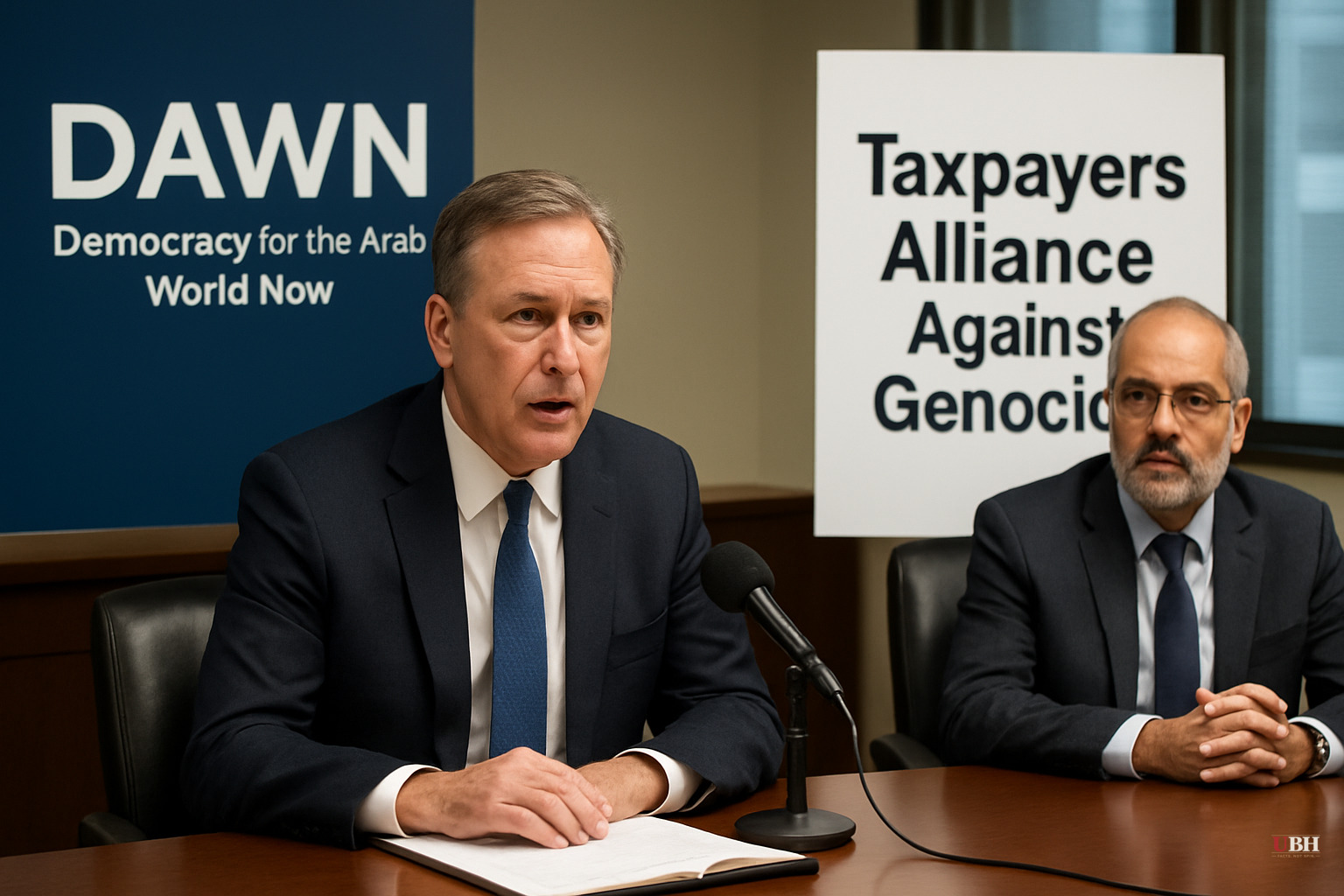
Two advocacy groups sued the Trump administration Wednesday, claiming sanctions tied to the International Criminal Court violate the First Amendment rights of American citizens.
Democracy for the Arab World Now (DAWN) and the New York-based Taxpayer Alliance Against Genocide filed the 43-page complaint in federal court in Manhattan, according to The Guardian and Courthouse News. The groups want a judge to block enforcement of Executive Order 14203, which President Trump signed in February 2025.
The order uses the International Emergency Economic Powers Act (IEEPA) to sanction foreign individuals who assist ICC investigations or prosecutions of U.S. or Israeli nationals. Under the order, Americans are barred from providing or receiving "services" from anyone sanctioned, with civil and criminal penalties attached. The administration has sanctioned 11 ICC prosecutors and judges under the order, according to Courthouse News, along with three Palestinian human rights NGOs and UN Special Rapporteur Francesca Albanese.
What the groups say happened
DAWN and TAAG say the sanctions forced them to cut ties with sanctioned individuals and organizations they'd worked with for years, including submitting evidence to the ICC on alleged war crimes in the West Bank and Gaza. DAWN says it had collaborated with Albanese on research, conferences, and lobbying U.S. policymakers, according to The Guardian.
Omar Shakir, DAWN's executive director, put it bluntly in a statement carried by both The Guardian and Anadolu Ajansı: "The Trump administration is using the blunt instrument of economic sanctions not only to punish human rights defenders but to police the political expression of millions of Americans." Shakir added, according to Anadolu Ajansı, that "the government is violating the constitutional rights of American citizens in order to shield officials of a foreign government who have committed a genocide."
Shakir's characterization of Israel's conduct in Gaza is contested, not an adjudicated fact. The lawsuit itself is built on a narrower and more testable question: does the executive order sweep up protected speech along with the sanctioned foreign conduct.
The legal argument
The plaintiffs argue the order exceeds presidential authority under IEEPA, which explicitly exempts "personal communications" and the exchange of "information or informational materials" from sanctions, according to Courthouse News. If advocacy work and information-sharing fall under that exemption, the argument goes, then criminalizing it via executive order oversteps the statute Trump invoked to justify it.
The complaint also raises a slippery-slope argument that deserves to be taken on its own terms rather than dismissed as rhetorical flourish. The groups warn that if IEEPA can be stretched this far, "a future president could... declare a 'national emergency' over high energy prices, designate foreign environmental groups that campaign against fossil fuel extraction, and cut off American climate advocates from their overseas partners," according to Courthouse News. They raise the same concern in reverse: a future administration could use the emergency-powers statute to bar U.S. industry groups from working with foreign partners opposed to decarbonization.
That's a genuine and reasonable structural concern, regardless of what one thinks of the ICC or Gaza. IEEPA was written for genuine national-security emergencies like blocking transactions with hostile foreign governments and terrorist financiers. Whether it was designed to let a president declare American advocacy groups off-limits from talking to a UN rapporteur is the actual legal question a federal judge will have to answer, separate from anyone's views on Israel or Palestine.
Rubio's escalation
The timing isn't incidental. The lawsuit landed two days after Secretary of State Marco Rubio pledged in a video statement to "dismantle" the ICC entirely and urged other countries to withdraw from it, according to Courthouse News. Rubio accused the court of "waging a war against our country, not with bullets or missiles" but with "the force of so-called international law."
Rubio also wrote a Wall Street Journal opinion piece on July 13 defending the administration's posture toward the court and referencing DAWN's advocacy directly, according to Anadolu Ajansı. The administration's position, consistent since Trump signed the order in February 2025, is that the ICC has no jurisdiction over the U.S. or Israel and that its investigations amount to politically motivated overreach against an American ally.
What's not resolved
No court has yet ruled on the First Amendment or IEEPA claims in this case. A separate, earlier lawsuit brought by international human rights lawyer Akila Radhakrishnan in Maine raises similar claims and remains pending, according to The Guardian; Radhakrishnan says the sanctions forced her to halt work advising the ICC on sexual and gender-based violence cases.
Neither the Justice Department nor the White House has issued a public response to the Manhattan filing in the material reviewed here. The case, filed in the Southern District of New York and represented by attorney Joseph Pace, will now test whether a federal judge agrees the order reaches further than IEEPA and the Constitution allow, or whether the administration's national-security rationale survives scrutiny.
Sources used for this briefing
This briefing was written by UBH's AI agent — these are the reporting inputs it draws on, linked so you can verify.


