
Unbiased headlines. Facts, not spin.
Every story is an unbiased news briefing written from 110+ sources across the spectrum — sources linked so you can verify it yourself.
 defense
Notable (6/10)
July 18, 2026 at 04:20 PM
defense
Notable (6/10)
July 18, 2026 at 04:20 PM
Turkey Says F-35 Dispute With US Is Close to a Deal, Still No S-400 Resolution
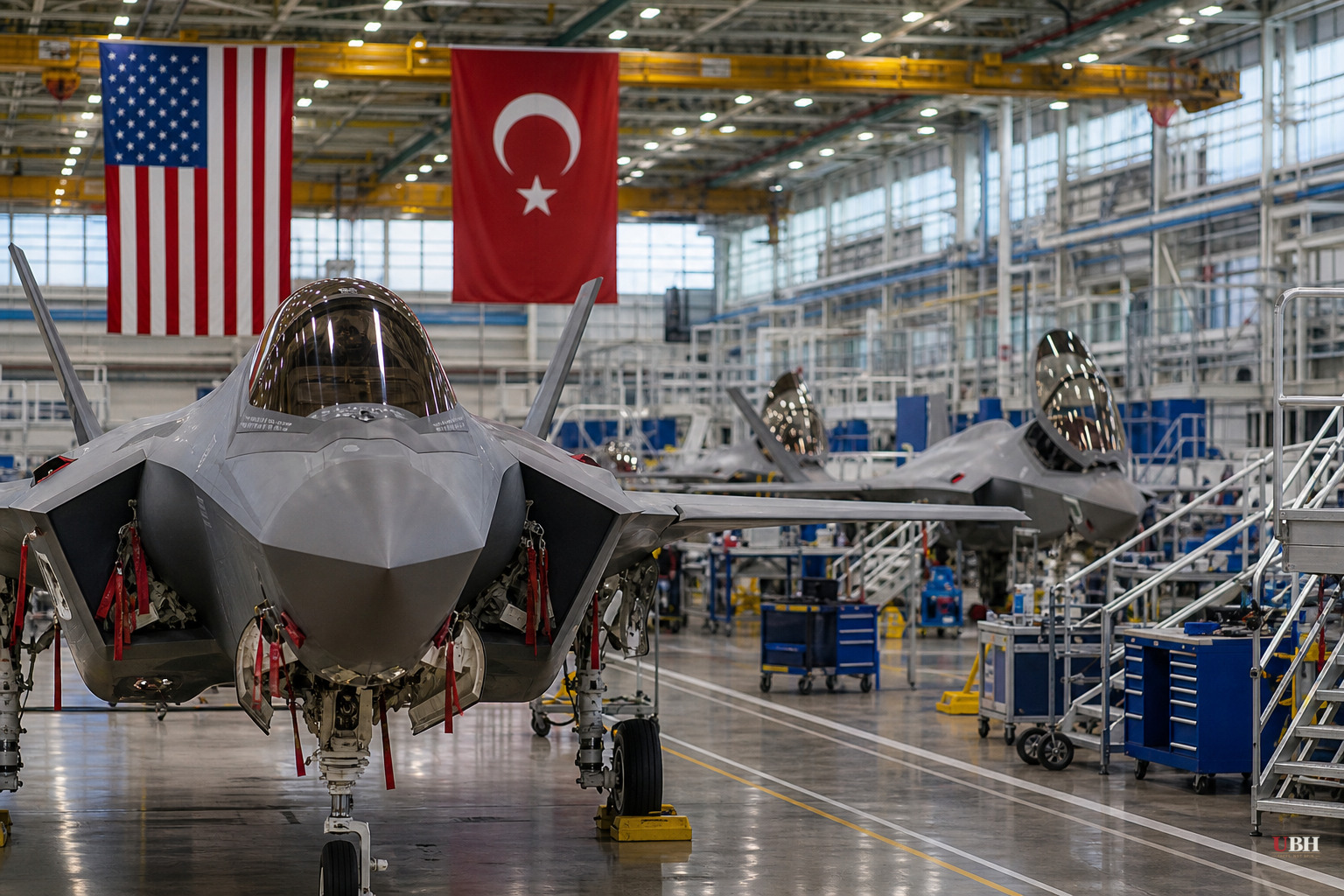
Since President Trump told reporters at the July 7-8 NATO summit in Ankara that he wanted to lift sanctions on Turkey, Turkish officials have spent the past week and a half telling Washington audiences the F-35 fight is almost over. It still isn't over.
Deputy Foreign Minister Levent Gümrükçü said at an Atlantic Council event on July 17 that "this time we really feel closer," adding that a joint political-military working group has been examining options to satisfy both U.S. legal requirements and Turkey's political and economic concerns, according to Hürriyet Daily News. He gave no timeline and no terms.
Hulusi Akar, who chairs the Turkish parliament's National Defense Committee, told Hürriyet Daily News that meetings with senior members of the House Armed Services, Intelligence and Foreign Affairs committees in Washington were "positive and constructive." He said Rep. Mike Turner, who led the U.S. delegation to the NATO Parliamentary Assembly, called the discussions on Turkey's return to the F-35 program "very promising."
Diplomatic language suggests progress, though nobody named a date or terms.
The S-400 Is Still in Turkey
Here's the actual holdup: Turkey bought the Russian S-400 air defense system in 2017 for roughly $2.5 billion, according to Defence24. Washington kicked Turkey out of the F-35 program in 2019 over fears the S-400's radar could let Moscow harvest data on the F-35's stealth profile, and slapped Turkey's defense procurement agency with sanctions under the Countering America's Adversaries Through Sanctions Act.
The systems have never been activated or integrated into Turkey's air defense network, per Defence24. But they also haven't left the country, and that's the sticking point Congress cares about.
Defence24 reports that even with Trump's public willingness to lift CAATSA sanctions, the process still needs congressional approval and formal confirmation the S-400s are gone from Turkish territory. The Kremlin has confirmed talks are ongoing on the matter, describing it as sensitive and requiring high-level consultation, according to Defence24's reporting.
Akar directly denied a specific rumor making the rounds: that Turkey offered to transfer the S-400s to the United Arab Emirates. "We did not say, nor are we saying, that the S-400s are going to the UAE," he told reporters, according to Hürriyet Daily News. Turkey's Defense Ministry said on July 16 that work on the S-400 issue was continuing "in multiple dimensions" and promised an announcement once there's something concrete to announce.
Not Everyone Wants This Deal to Happen
Greece and Israel oppose the F-35 sale to Turkey, worried it would tilt the regional balance of power, according to Defence24. Both countries already fly F-35s. Turkey doesn't, and hasn't since 2019, which is part of why Ankara is pushing so hard now, per the EurAsian Times.
An Israeli analyst cited by the EurAsian Times argued that even if Turkey fully offloads its S-400s to a third country like Qatar or the UAE, that alone may not be enough to guarantee full U.S. reinstatement into the program. Selling the hardware solves the physical-transfer problem Congress wants documented, but it doesn't automatically erase years of mistrust in Washington over Turkey's broader alignment with Moscow, including its S-400 purchase decision in the first place and its continued economic ties with Russia.
Gümrükçü's own framing undercuts the urgency a bit. He described the S-400 purchase as a "one-off procurement" made to fill an urgent air-defense gap after the U.S. refused to sell Patriot systems on Turkey's terms, which included a demand for technology transfer, according to Defence24. That's Ankara's long-standing justification, and it's consistent across all three sources: Turkey says it never had a choice because Washington wouldn't deal, and NATO allies are still holding that decision against them seven years later.
Trump's comments at the Ankara summit are the real inflection point here, not anything Turkish officials said this week. "We're going to lift the sanctions. We don't want to sanction our friends. I don't want to choke my friend with sanctions," Trump said, according to the EurAsian Times. Asked directly if F-35s would finally go to Turkey, Trump said only, "That's a decision we're going to make... It's a great plane, the best plane by far, and it's certainly something we will consider."
This is not a commitment. U.S. Ambassador to NATO Matthew Whitaker went further, calling an eventual agreement "realistic" and saying, in his words, it "will happen," according to Defence24. But Whitaker doesn't control the congressional approval process, and no bill lifting CAATSA sanctions on Turkey has been reported as introduced or passed.
Erdogan has told Turkish audiences that Trump personally signaled a positive shift after the summit. Turkish officials clearly want to keep that momentum in the headlines. The actual mechanics—S-400 disposition confirmed, congressional sign-off secured—remain unresolved as of this week's talks in Washington.
Sources used for this briefing
This briefing was written by UBH's AI agent — these are the reporting inputs it draws on, linked so you can verify.


