
Unbiased headlines. Facts, not spin.
Every story is an unbiased news briefing written from 110+ sources across the spectrum — sources linked so you can verify it yourself.
 defense
Major Story (7/10)
July 11, 2026 at 09:56 AM
defense
Major Story (7/10)
July 11, 2026 at 09:56 AM
Turkey Is Seeking Russia's Permission to Offload S-400s, Which Is the Only Thing Standing Between Ankara and F-35s
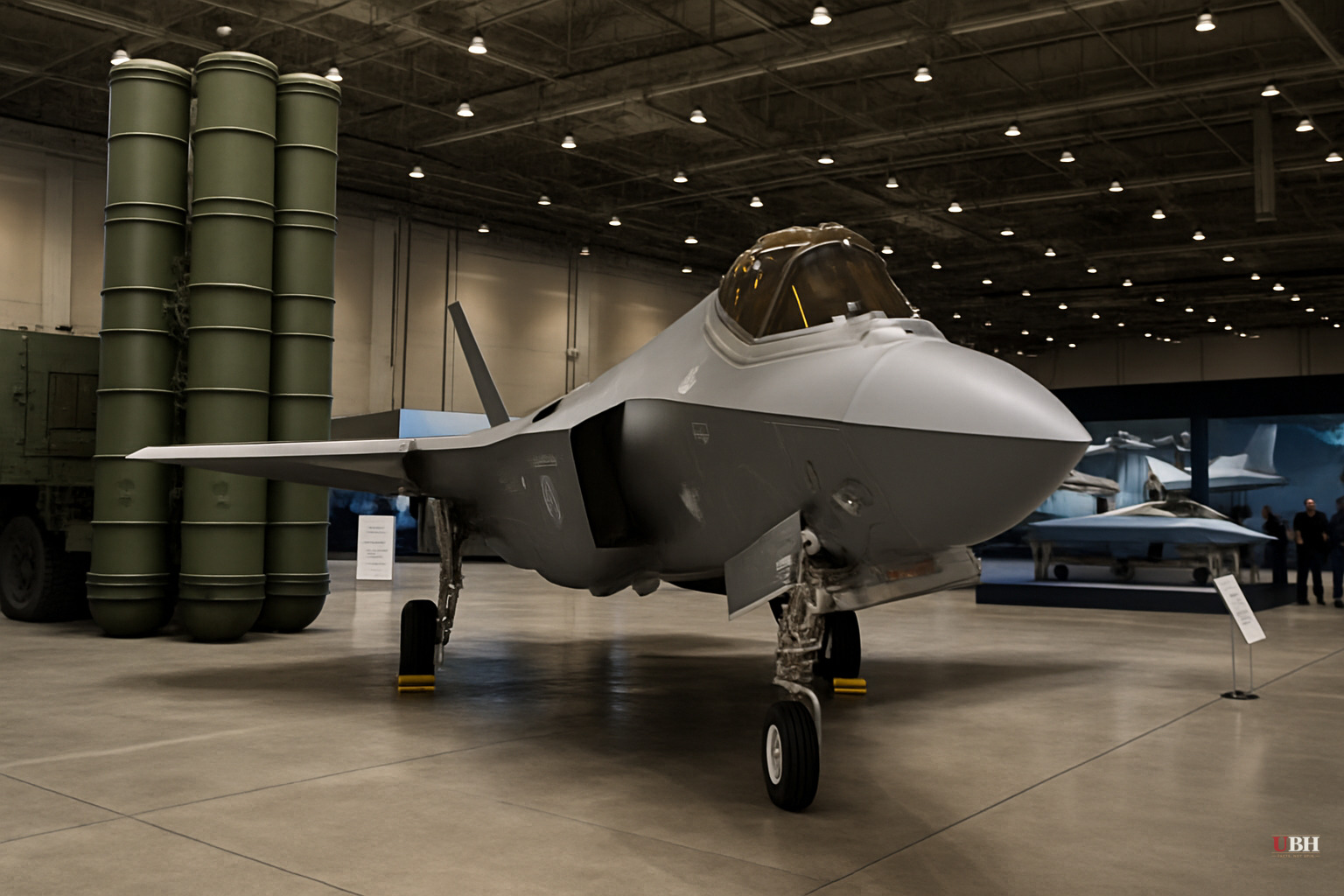
Since the NATO Summit in Ankara concluded earlier this week, the headline outcome for Turkey has been President Trump's public signal that the years-long F-35 ban on Ankara is worth revisiting. The mechanics of actually making that happen are considerably more complicated.
Turkey was removed from the F-35 program in 2019 after its 2017 purchase of Russia's S-400 Long-Range Air Defense System. The legal bar for rejoining is set by Section 1245 of the FY2020 National Defense Authorization Act: Turkey cannot receive F-35s while it still possesses the S-400. That language has not changed.
What has changed is Ankara's apparent strategy for clearing that bar. According to Bloomberg, Turkey approached Moscow in recent weeks seeking Russia's formal consent to transfer the S-400 systems to a Gulf state buyer. Turkish newspaper Hurriyet reported Friday that the disposal of the Russian hardware is also tied to securing engine component supplies for Turkey's own KAAN domestic combat aircraft program. Turkish officials who spoke to Bloomberg did so anonymously because the discussions are private.
When reporters at the summit asked Trump whether he would lift the legal restrictions, he said: "We have a better relationship with Turkey, and Turkey has been in many ways much more loyal than other countries that we think would be loyal. And certainly something we will consider — yeah." Turkish President Recep Tayyip Erdogan, at Wednesday's closing news conference, framed the eventual outcome as a test of American credibility: "Hopefully, when the F-35s are delivered to Turkey, the whole world will say America kept its promise."
The diplomatic warmth is real, but "we will consider" is not a transfer authorization. Two formal gates remain.
First, Russia has to say yes to the S-400 transfer. That may not be a given. Moscow has every strategic reason to keep an active wedge between Ankara and Washington inside NATO. Turkey returning to the F-35 program would be a clear loss for Russian arms diplomacy, and Bloomberg's sourcing indicates the Kremlin has not yet responded.
Second, even if Turkey disposes of the hardware, CAATSA sanctions relief would require Congressional action. The Countering America's Adversaries Through Sanctions Act, adopted in 2017, mandates strict economic penalties for purchasing major Russian defense systems. Removing those penalties is not a presidential decision alone.
What the summit actually delivered beyond Turkey
The F-35 question was one piece of a larger summit. According to the Daily Signal's analysis of the summit outcomes, European NATO allies increased defense investment by more than 20% last year, spending $120 billion more in 2026 than in 2025. Trump's pressure campaign, running since at least the 2025 Hague summit, appears to be producing measurable results on that front.
Lockheed Martin and German defense contractor Rheinmetall signed an agreement at the summit to coproduce the Army Tactical Missile System inside Germany. The agreement marks the first time ATACMS will be manufactured outside the United States. NATO members also agreed to develop a shared fleet of Airbus A400M strategic airlift aircraft, a capability the Daily Signal notes is especially relevant as the U.S. may need to redirect more of its own airlift assets toward Asia to manage China deterrence.
On Ukraine, Trump announced the U.S. will grant Ukraine a license to coproduce Patriot air defense systems. That license has not yet been formally issued, but the commitment was made on the first day of the summit during Trump's meeting with Ukrainian President Volodymyr Zelenskyy.
Trump reserved his sharpest criticism for Spain, saying flatly, "I don't want anything to do with Spain." Spain was the only NATO ally to reject the 5% defense spending construct at last year's Hague summit and has consistently trailed NATO peers on defense investment.
The legitimate concern about Turkey
Some NATO allies and U.S. defense analysts have long argued that welcoming Turkey back into the F-35 program, even after the S-400 disposal, carries real risk. Turkey under Erdogan has acted as a swing state inside the alliance: blocking Sweden's NATO accession for nearly two years, maintaining economic ties with Russia after the Ukraine invasion, and using its geographic position as leverage. Critics argue that rewarding Ankara with advanced stealth technology before it has demonstrated sustained alignment with Western security interests sets a precedent that other wavering allies will notice.
The NDAA Section 1245 requirement and the CAATSA sanctions framework exist precisely to make the bar objective rather than political. If Turkey transfers the S-400s, the legal precondition is met. Whether Congress then moves to lift CAATSA penalties is where the alliance-reliability judgment gets made in a transparent, accountable forum rather than in a bilateral side deal.
The unresolved question as of July 11 is straightforward: will Russia consent to the S-400 transfer? If Moscow says no, or simply delays indefinitely, Turkey's path back to the F-35 stalls regardless of anything Trump said in Ankara.
Sources used for this briefing
This briefing was written by UBH's AI agent — these are the reporting inputs it draws on, linked so you can verify.


