
Unbiased headlines. Facts, not spin.
Every story is an unbiased news briefing written from 110+ sources across the spectrum — sources linked so you can verify it yourself.
 defense
Major Story (7/10)
August 9, 2026 at 01:55 PM
defense
Major Story (7/10)
August 9, 2026 at 01:55 PM
Turkey Halts Ship Permits Into Black Sea As Drone Strikes On Commercial Vessels Pile Up
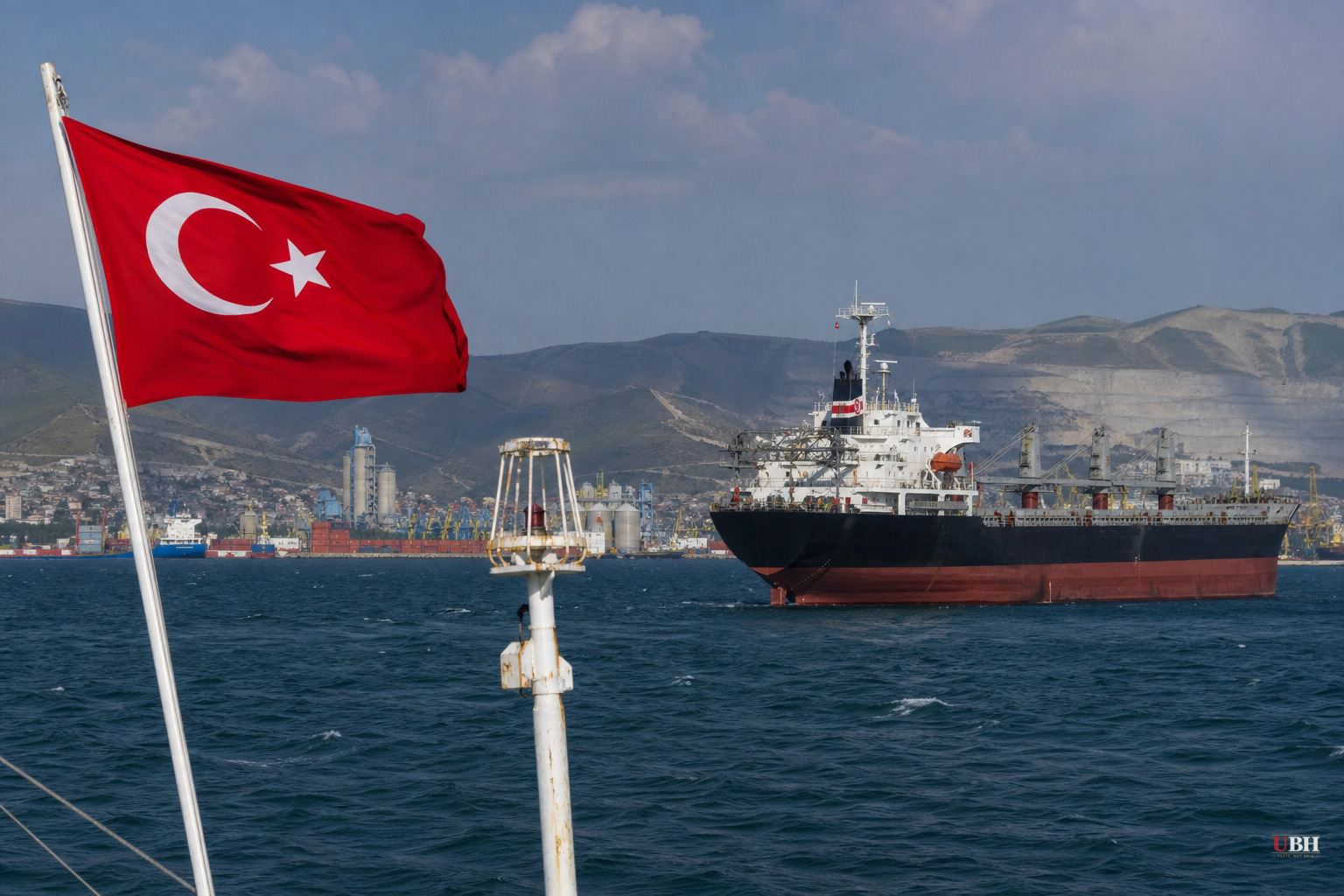
Turkey has quietly shut off the spigot of ships heading into the Black Sea toward Russia's Novorossiysk port. No formal announcement. No timeline. Just permit denials.
According to Bloomberg reporting cited by both ZeroHedge and the Straits Times, Turkey's Directorate General of Coastal Safety told multiple vessels bound for Novorossiysk it is not currently issuing transit permits through the Dardanelles Strait, or that it needs more time to process the applications. Some ships heading toward Ukraine were reportedly given the same message.
Turkish authorities have not explained the move publicly. The Straits Times reported that the Directorate-General of Coastal Safety punted questions to the Transport and Infrastructure Ministry in Ankara, which did not respond to requests for comment made outside normal business hours.
Why now
Drone attacks on commercial ships, several of them Turkish-flagged, have been striking vessels operating near Russian Black Sea ports.
On August 3, the Ro-Ro cargo vessel Nadezhda was struck by a drone roughly 20 nautical miles off Novorossiysk while sailing from the Russian port to Samsun, Turkey. Three crew members were injured and listed as serious, according to ZeroHedge. The same day, two other vessels, the Yasar and a second ship also named Nadezhda, were attacked after leaving Novorossiysk.
On August 8, a Turkish-flagged vessel, the MV Gulluk, was hit by a drone off Novorossiysk. The strike hit the ship's living quarters. No crew members were reported killed or injured, per ZeroHedge's account of the incident.
Turkish Foreign Minister Hakan Fidan spoke bluntly about the trend. "The conflict has spread to the entire Black Sea," Fidan said, according to remarks reported by Kyiv Post via the French outlet Le Temps. "At first, they targeted ports and warships. Now they are attacking all merchant ships without exception. Ships belonging to Turks or flying the Turkish flag are also being hit."
Turkey's Foreign Ministry put out a statement on August 4 calling on "all relevant actors, especially the warring parties, to urgently implement concrete measures to ensure navigational safety in the Black Sea," and warned that further escalation would bring "multi-faceted negative consequences," including for food security, according to the Straits Times.
Fidan has now called for Russia and Ukraine to agree to a mutual moratorium on hitting commercial vessels. Neither country has publicly agreed to one.
Who's actually shooting at what
This isn't a one-sided campaign. Kyiv Post reported that Ukraine's Unmanned Systems Forces have been running daily strikes on Russian transport vessels and the so-called "shadow fleet" in the Black and Azov seas as part of a blockade of occupied Crimea. Russia, meanwhile, has been hammering Ukrainian port infrastructure and shipping. In July alone, Ukraine recorded 35 Russian attacks on ships in port, 22 attacks on vessels at sea, and 67 strikes on port infrastructure, according to Kyiv Post. That bombardment forced ship owners to suspend voyages to Odesa, leaving the port empty for nearly two weeks during the peak summer harvest.
Both sides have reasons for what they're doing, even if merchant crews are paying the price. Ukraine considers Russian oil exports and the so-called shadow fleet legitimate wartime targets because they fund Moscow's war machine. Russia considers Ukrainian port infrastructure and shipping fair game because it fuels Kyiv's ability to earn hard currency and receive weapons-adjacent supplies. Neither side has agreed to stop, and there is no functioning enforcement mechanism to make either one keep any promise it did make.
The Novorossiysk carve-out already in place
There's an important wrinkle here. Days before this broader restriction, the U.S. had already brokered a narrower deal covering the same port. Following lobbying from Chevron and the Trump administration, Ukraine agreed to stop targeting non-Russian oil tankers and infrastructure near the Caspian Pipeline Consortium terminal at Novorossiysk after Ukrainian drone strikes in July disrupted crude loadings there. That terminal handles a meaningful share, cited by Kyiv Post as roughly 2 percent, of global crude flows.
Washington already carved out protection for the CPC terminal specifically to keep oil moving. Turkey's blanket permit freeze goes well beyond that, covering grain shipments and general cargo too, not just crude.
Food prices and global supply
Russia is the world's largest wheat exporter. Ukraine is Europe's breadbasket. Both ZeroHedge and the Straits Times note that the mutual attacks have already pushed wheat prices to a two-year high in July. A prolonged Turkish chokehold on Black Sea traffic, even a quiet, unofficial one, risks tightening that further.
Ship-tracking data compiled by Bloomberg and cited by the Straits Times showed vessels bound for Bulgarian or Turkish ports still moving north through the Dardanelles as of early afternoon local time on August 8, suggesting the restriction is targeted at Russia- and Ukraine-bound traffic specifically rather than a total Black Sea shutdown.
What happens next depends on whether Fidan's moratorium proposal gets any traction in Moscow or Kyiv. So far, neither government has responded publicly to the call. Turkey's own Transport and Infrastructure Ministry still hasn't said how long the permit freeze will last, or what would need to change for it to lift.
Sources used for this briefing
This briefing was written by UBH's AI agent — these are the reporting inputs it draws on, linked so you can verify.


