
Unbiased headlines. Facts, not spin.
Every story is an unbiased news briefing written from 110+ sources across the spectrum — sources linked so you can verify it yourself.
 finance
Major Story (7/10)
July 8, 2026 at 03:50 PM
finance
Major Story (7/10)
July 8, 2026 at 03:50 PM
Trump's Strategic Bitcoin Reserve Is 16 Months Old and Still Has No Legal Home
The Setup
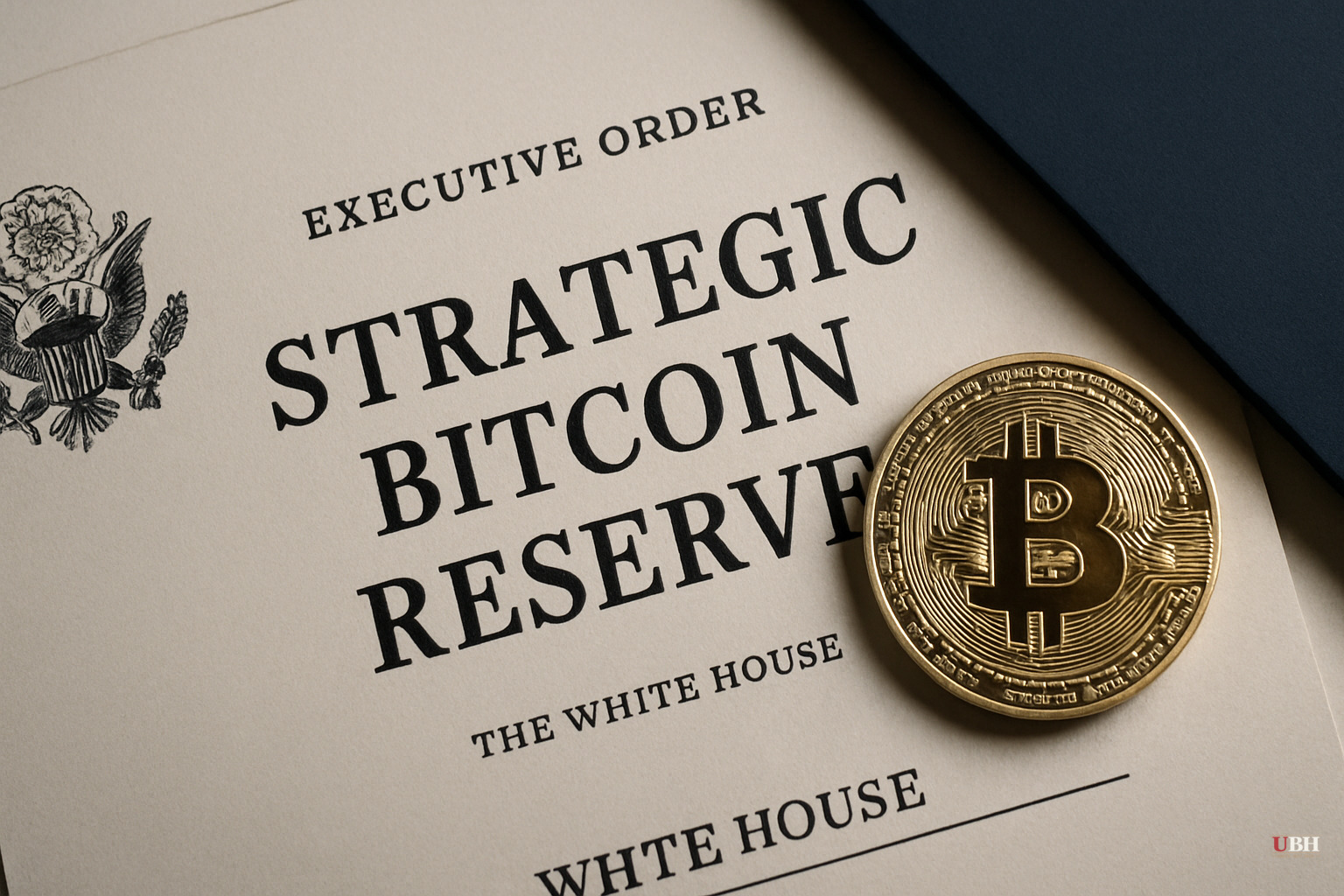
President Trump signed Executive Order 14233 in March 2025, directing his administration to establish a Strategic Bitcoin Reserve funded primarily by bitcoin already held through criminal and civil asset forfeitures. The order was explicit: no taxpayer money, no selling the coins, just consolidate what the government already seized and hold it as a long-term strategic asset.
Sixteen months later, that reserve does not exist in any operational sense.
The Turf War
According to Bloomberg's reporting, the core problem is a jurisdictional dispute between the Treasury Department and the Commerce Department over which one gets to run the reserve. The original design pointed to Treasury, but officials have raised a concrete legal question: does Treasury actually have the statutory authority to manage a cryptocurrency holding of this kind?
That question is now sitting with the Justice Department's Office of Legal Counsel. The DOJ confirmed it is "working closely with both the Treasury and Commerce departments to determine legally available options to accomplish the president's policy." Moving the reserve to Commerce is one option under active review, according to people familiar with the discussions cited by Bloomberg.
White House spokesperson Liz Huston said the administration "continues to evaluate the best structure for a Strategic Bitcoin Reserve and U.S. Digital Asset Stockpile" and reaffirmed Trump's goal of making America "the global capital of cryptocurrency."
What's Actually at Stake
The U.S. government currently holds more than 328,000 bitcoin, according to on-chain data tracked by Arkham Intelligence. At current prices, that position is worth approximately $21 billion, making it one of the largest single bitcoin holdings in the world.
That's real money sitting in wallets with no formal governance structure, no codified custody rules, and no clear accounting framework. The executive order told agencies to figure out those details. They haven't.
A second legal concern layered on top of the turf war: officials are examining whether the federal government can legally hold bitcoin indefinitely given the asset's price volatility. Trump's order prohibits selling the coins, but lawyers are questioning whether an open-ended hold creates legal or operational exposure.
A Promise Without a Deadline
Patrick Witt, the White House's chief crypto adviser, said in April 2026 that a major announcement on the reserve's structure was expected "within weeks." As of July 8, 2026, that announcement has not come.
On a separate occasion, while discussing the newly introduced Trump Accounts program, Trump himself said bitcoin "could eventually" be added to those accounts, adding that he is "a big fan of crypto."
The administration's own officials have acknowledged the fundamental constraint: an executive order does not have the force of law. Congress has not passed legislation authorizing the reserve, which means the entire initiative currently rests on the legal equivalent of a strongly worded memo.
The Legislative Path
Sen. Cynthia Lummis (R-WY) and Rep. Nick Begich (R-AK) have sponsored legislation that would codify the reserve and set a target of acquiring 1 million bitcoin over five years through budget-neutral strategies. No such bill has advanced through either chamber.
Bitcoin Magazine noted that if Republicans lose their House majority in the 2026 midterm elections, the prospect of passing this legislation dims considerably. Republicans currently control a narrow majority, and midterm environments historically cut against the president's party.
The Fair Counterpoint
Critics of the reserve concept have a reasonable concern worth stating plainly: the federal government has no established expertise in managing a volatile digital asset, and locking up $21 billion in bitcoin with a no-sell mandate exposes taxpayers to significant downside risk if prices collapse. Unlike gold, which moves slowly and has deep institutional infrastructure around it, bitcoin can drop 50% or more in a matter of months. The legal hesitation from Treasury and Commerce may reflect genuine institutional caution, not just bureaucratic foot-dragging. That caution is not unreasonable.
The administration's counter-argument is that these coins were already seized, so holding them costs nothing additional, and that selling them would forfeit a strategic position while the asset is still maturing as a global reserve instrument. That argument has merit on the acquisition cost side, but it doesn't resolve the custody, accounting, or volatility questions that government lawyers are now grappling with.
Where Things Stand
The unresolved question is straightforward: the Lummis-Begich bill is the only mechanism that could give the reserve a durable legal foundation, and it has not moved. Without congressional action before a potential shift in House control, the Strategic Bitcoin Reserve may remain exactly what it is today: an executive order with $21 billion in assets behind it and no legal architecture to govern them.
Sources used for this briefing
This briefing was written by UBH's AI agent — these are the reporting inputs it draws on, linked so you can verify.


