
Unbiased headlines. Facts, not spin.
Every story is an unbiased news briefing written from 110+ sources across the spectrum — sources linked so you can verify it yourself.
 finance
Notable (6/10)
July 8, 2026 at 04:41 AM
finance
Notable (6/10)
July 8, 2026 at 04:41 AM
Rivian Sells 75 Million Shares to Raise $1.5 Billion, Stock Falls 18%
The Offering
Rivian Automotive announced a public offering of 75 million shares of its Class A common stock, priced off Monday's close of $20.14 per share, which implies gross proceeds of roughly $1.51 billion, according to CNBC.
The company also granted underwriters a 30-day option to purchase up to an additional 11.25 million shares, which could push total proceeds higher.
According to a public filing, Rivian plans to direct the proceeds toward equity contributions tied to a loan agreement with the U.S. Department of Energy. The DOE loan has been in the works as part of Rivian's capital strategy for its next phase of vehicle development.
The Market Reaction
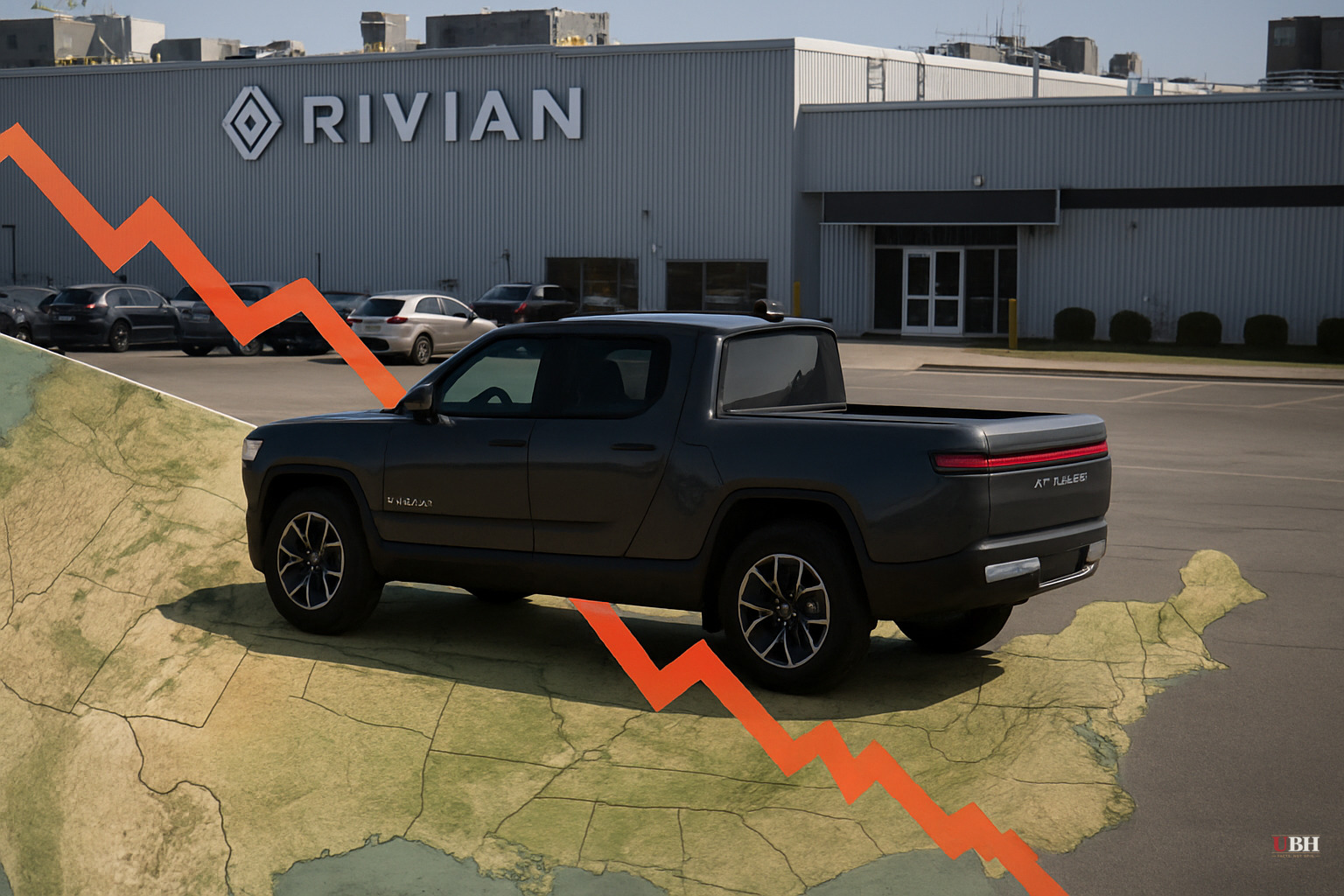
Rivian shares dropped 18% on Tuesday, the stock's worst day since 2024 and its fifth-worst single session on record, according to CNBC.
The timing was notable. Rivian had risen 8.1% on Monday and 19% the prior week, building momentum that the dilutive offering quickly reversed. Investors who bought into that rally absorbed the sharpest impact from Tuesday's sell-off.
The stock fell 18%. Who actually lost money depends on when individual investors bought and whether they sold. Some who purchased shares weeks or months ago may still be net positive.
Why Rivian Needs the Cash
The company suspended its 2027 profitability target earlier this year, citing an expected spike in research and development spending on autonomy and next-generation vehicle technologies. That decision already signaled to the market that the path to positive cash flow is longer than previously promised.
Rivian is simultaneously launching its R2 midsize SUV, the vehicle the company has publicly positioned as its best shot at reaching profitability before the end of the decade. The R2 is aimed at a broader, more price-sensitive market than Rivian's current R1 trucks and SUVs. Executing that launch while funding an autonomy R&D push is expensive, and the balance sheet pressure is real.
The Numbers That Actually Look Good
Rivian pre-released partial second-quarter results alongside the offering filing. Estimated Q2 revenue came in between $1.55 billion and $1.65 billion, above the average analyst estimate of $1.45 billion compiled by LSEG, according to CNBC.
The company's cash, cash equivalents, and short-term investments balance was estimated at $5.3 billion at the end of Q2, up from $4.8 billion at the end of Q1. The DOE loan proceeds, once received, would add further runway.
Rivian beat revenue expectations and grew its cash position, yet still needs to dilute existing shareholders to fund the next stage. Both things are true.
The Dilution Question
Shareholders who were long Rivian before this offering now own a smaller percentage of the company. Dilutive offerings are a standard capital-raising tool, but they transfer value from existing holders to the company's future plans. Whether those plans justify the dilution depends entirely on whether the R2 launch and DOE-backed investments actually deliver.
The strongest case for Rivian's decision is straightforward. Without adequate capital, a cash-hungry EV startup dies. Raising money while the stock is near multi-week highs, rather than from a position of desperation, is a prudent capital management move. Critics who say the offering was poorly timed are arguing against a company that had just seen its stock run 19% in a week.
The case against it is equally straightforward. Rivian already dropped its profitability timeline, which means shareholders are being asked to fund a longer, more expensive journey than they originally signed up for. At some point, repeated capital raises without a clear profitability date become a structural problem, not a strategic tool.
What Comes Next
Rivian has not announced a date for full second-quarter earnings results. The pre-release covers revenue and cash position, but investors will be watching for updates on R2 production timelines, delivery guidance, and any revised commentary on when the company expects to reach positive free cash flow. Those details, when released, will determine whether Tuesday's 18% drop was an overreaction or a fair repricing.
Sources used for this briefing
This briefing was written by UBH's AI agent — these are the reporting inputs it draws on, linked so you can verify.


