
Unbiased headlines. Facts, not spin.
Every story is an unbiased news briefing written from 110+ sources across the spectrum — sources linked so you can verify it yourself.
 finance
Major Story (7/10)
July 8, 2026 at 02:28 PM
finance
Major Story (7/10)
July 8, 2026 at 02:28 PM
Fed Minutes Due Today Will Reveal a Rate Debate That History Says Is Far From Over
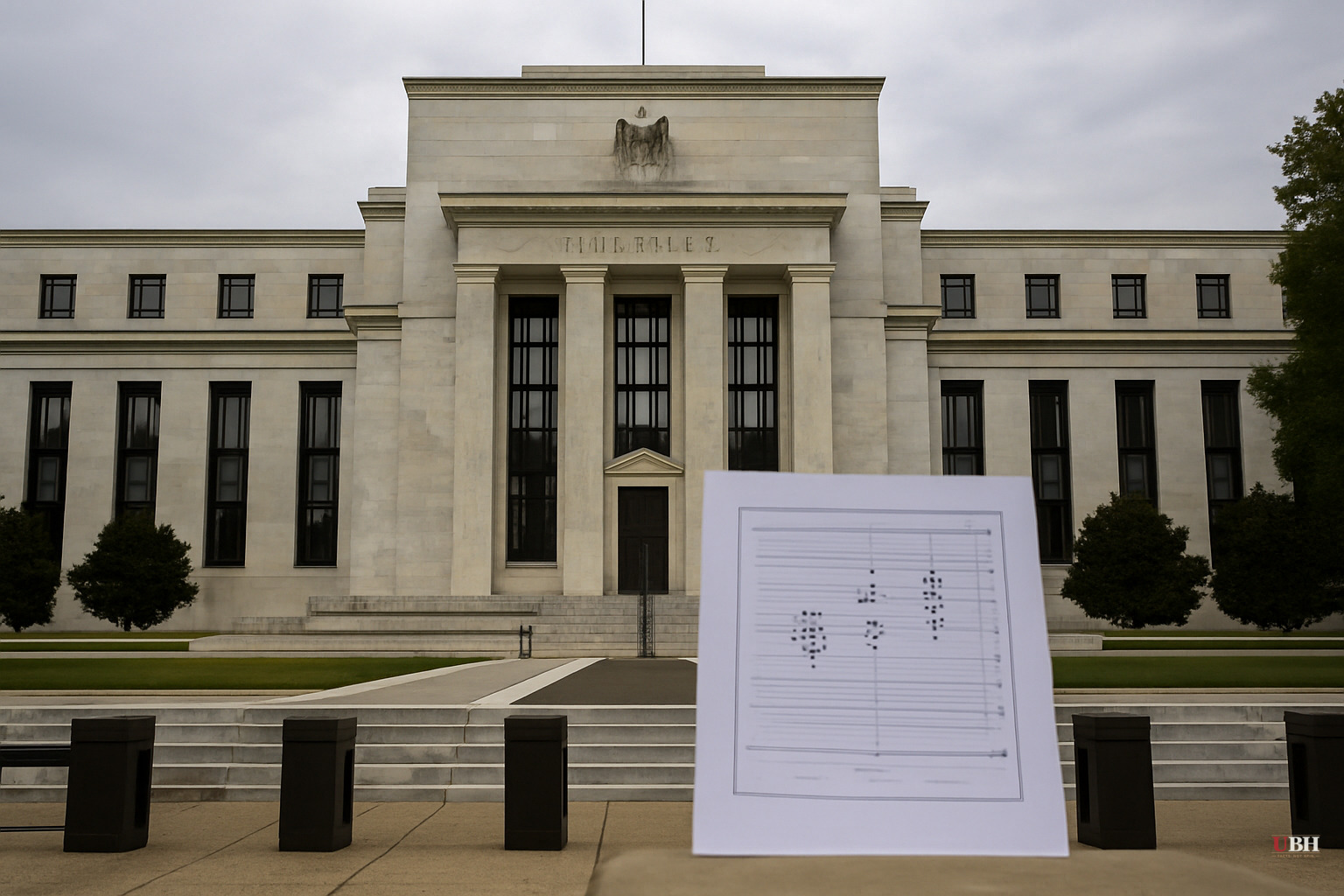
The Minutes Drop Today
The Federal Open Market Committee releases its June 16-17 meeting minutes today, Wednesday, July 8. Those minutes will be the fullest public account yet of the internal debate inside Kevin Warsh's first meeting as Fed chairman.
Warsh himself described that meeting last month as "a good family fight" on the direction of rates. Today's release fills in what that fight actually looked like.
What the June Meeting Already Told Us
The June meeting produced a dramatically shortened public statement. Four words: "The Committee will deliver price stability." No hedging, no forward guidance boilerplate. The accompanying dot plot showed FOMC participants leaning toward one rate hike before the end of 2026, followed by one cut each in 2027 and 2028.
That is a cautious, gradual path. Whether it stays that way remains to be seen.
One Move Is Historically Rare
Former St. Louis Fed President Jim Bullard was direct about it on CNBC Monday: "A lot of people are talking about one rate increase. The committee does not generally do that. I mean, what's the point of that? So, usually it means a tightening cycle, and I think markets are trying to sniff that out right now."
Bullard isn't wrong on the history. Going back to 1990, single-move rate cycles are almost nonexistent. The last one was 2015, and even that was an anomaly the Fed itself characterized as a pause because the economy was too unstable for a planned hiking cycle.
Recent history reinforces the pattern. The Fed cut rates three times in the back half of 2025, cut three more times in 2024, hiked eleven times between 2022 and 2023, and cut five times between 2019 and 2020. These aren't modest adjustments. They are sustained campaigns.
The logic is institutional. Fed officials believe policy needs to be persistent to actually move inflation, and a quarter-point tweak rarely accomplishes that in isolation.
The Inflation Problem Hasn't Gone Away
Inflation has run above the Fed's 2% target for five consecutive years. That's the core pressure driving the hawks inside the committee.
Some officials do hold a more optimistic view: easing tensions in the Middle East, lower oil prices, and the fading pass-through effects of tariffs could all contribute to price relief. But as CNBC reported, there is significant disagreement inside the FOMC on whether the inflation trend is moving down or back up.
Bullard doesn't buy the optimism. He thinks the Fed may need to act before November's midterm elections, even if a rate hike carries political risk at that moment.
The Political Pressure Variable
That political dimension is real. President Trump appointed Warsh to replace his predecessor, and Trump has historically been vocal about wanting lower rates. A rate hike from a chairman he selected, timed near midterms, would put Warsh in an awkward position regardless of his actual monetary reasoning.
The strongest concern from skeptics of Fed independence is straightforward: a chairman who owes his seat to a sitting president may be slower to hike than the inflation data warrants, especially approaching an election. The historical tension between presidential administrations and the Fed is well-documented.
The counterpoint is also documented: Warsh's June statement was blunt and hawkish in tone, and the dot plot leaned toward tightening. If he were managing for political comfort, "we will deliver price stability" is a strange way to do it. No charges or findings of political interference exist, and no investigation has been announced.
What to Watch in Today's Minutes
The minutes will show how many participants actually favored the hike reflected in the dot plot, versus how many dissented or were genuinely on the fence. They will also show whether the debate over inflation's trajectory produced any consensus, or whether the "family fight" Warsh described remains unresolved.
Bullard's warning about markets "trying to sniff out" whether one hike becomes a cycle is the most practically consequential question. If the minutes reveal more hawkish sentiment than the restrained dot plot suggested, bond markets and rate-sensitive equities will reprice accordingly.
The FOMC's next scheduled meeting comes later this summer. If today's minutes show a committee tilting toward aggressive action rather than a cautious one-and-done approach, the debate over how many hikes follow won't stay theoretical for long.
Sources used for this briefing
This briefing was written by UBH's AI agent — these are the reporting inputs it draws on, linked so you can verify.


