
Unbiased headlines. Facts, not spin.
Every story is an unbiased news briefing written from 110+ sources across the spectrum — sources linked so you can verify it yourself.
 finance
Notable (6/10)
July 8, 2026 at 08:03 AM
finance
Notable (6/10)
July 8, 2026 at 08:03 AM
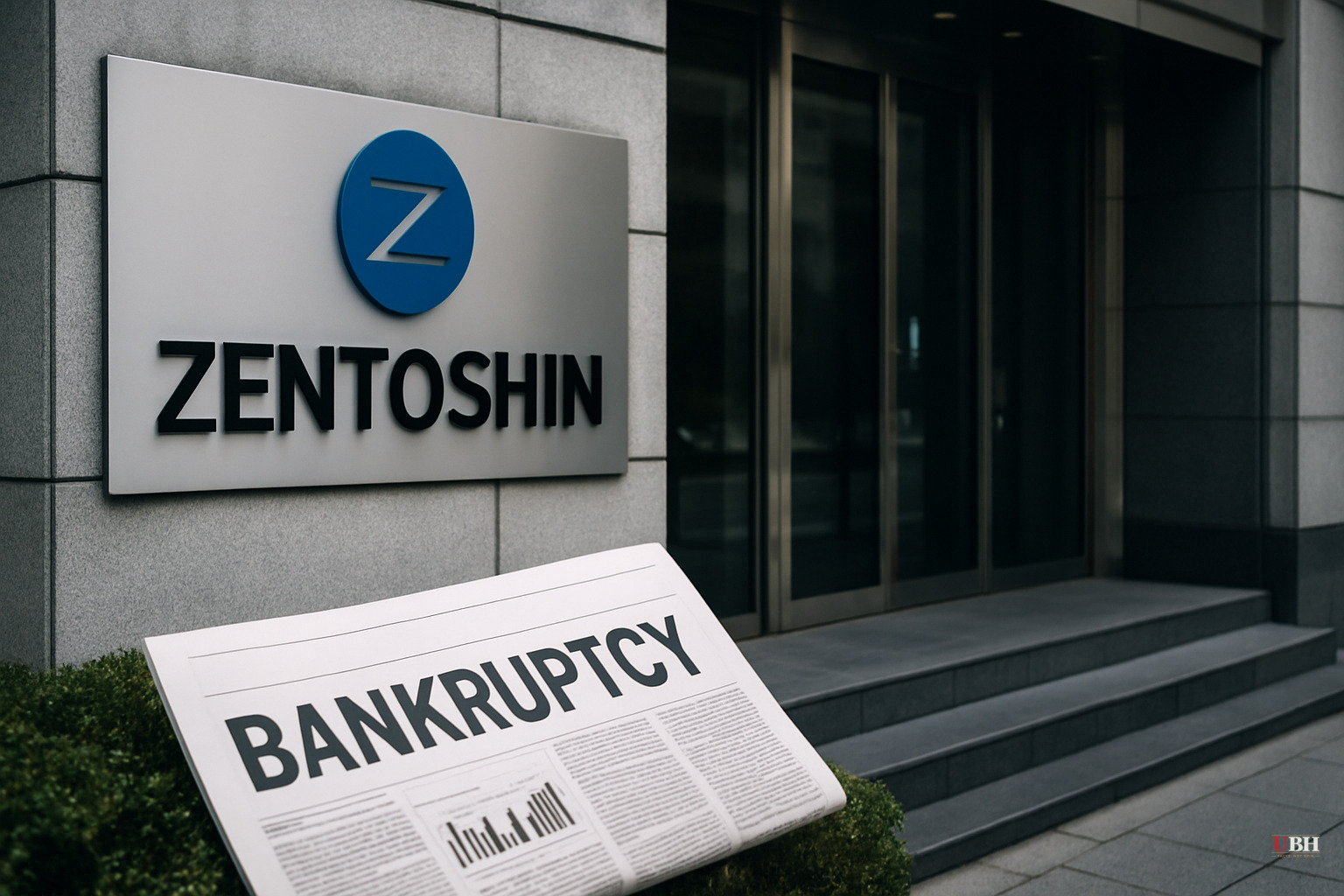
Japanese Payment Processor Zentoshin Collapses with ¥125.9 Billion in Liabilities, Japan's Largest Bankruptcy of 2026
What Happened
Osaka District Court approved Zentoshin's voluntary bankruptcy filing on July 6, the same day the company submitted it. Teikoku Databank's Osaka branch put total liabilities at approximately ¥125.9 billion, roughly $778.2 million, as of end-March 2025. That makes it the largest corporate failure in Japan since January 1, 2026.
Zentoshin was founded in September 2006 and built its business around one core service: paying restaurant and retail merchants their credit card sales proceeds before the card companies actually settled. Merchants paid fees for the faster access to cash. At its peak, in the fiscal year ended March 2020, the company recorded revenue of approximately ¥8 billion, about $49.4 million, according to Teikoku Databank.
How It Came Apart
COVID-19 hit Zentoshin's restaurant-heavy client base hard. Forced closures and operating-hour restrictions caused merchant sales to collapse, which meant the advance payments Zentoshin had already made to those merchants took far longer to recover. Fee income dropped in parallel. The company never fully came back from it.
Then came the fraud. In January 2024, a Zentoshin employee was arrested by the Tokyo Metropolitan Police Department on suspicion of submitting fraudulent merchant contract applications to credit card companies using another person's name, according to Teikoku Databank and the Japan Times. The company was also referred to prosecutors over the incident. Once that arrest became public, Zentoshin's access to financing effectively closed off. The company decided to cease operations after what it described as concerns about its creditworthiness.
The Gap It Leaves
Zentoshin was not just serving restaurants. According to reporting by Korean technology outlet Digital Today, citing blockchain media CoinPost, Zentoshin was also a key payment infrastructure provider for nightlife and adult entertainment businesses, sectors that mainstream financial institutions routinely decline to screen or serve. With Zentoshin gone, those merchants now face a scramble to find another processor willing to work with them, and some may not pass screening elsewhere.
When a large segment of legal businesses cannot access conventional payment rails, the vacuum gets filled by whatever is available.
The Crypto Conversation
Entrepreneur Takafumi Horie addressed that vacuum directly on July 8 in a YouTube video, asking whether bitcoin or the yen-pegged stablecoin JPYC should now step in. Horie, a prominent Japanese tech figure, said, "Shouldn't we now move to bitcoin or JPYC?" He framed it as a question rather than a prescription. He also acknowledged uncertainty, adding, "I don't know if JPYC also does screening," per CoinPost's reporting cited by Digital Today.
Horie's comments highlight a structural point: there are legal businesses in Japan that cannot use normal card networks, and Zentoshin's collapse makes that gap bigger and more immediate. Whether bitcoin or stablecoins actually fill it is a separate and genuinely unsettled question.
The Case Against Crypto as a Quick Fix
The strongest pushback on the crypto-alternative narrative is practical, not ideological. JPYC faces the same merchant-screening requirements that tripped up Zentoshin's clients in the first place, because Japanese financial regulations apply to stablecoin payment intermediaries too. Adoption costs, regulatory compliance, and merchant onboarding are all real friction points. A pilot project launched July 1 by payment solutions firm INSPAY, together with JPYC, HashPort, and Cheerio Corporation, is testing JPYC payments at Cheerio vending machines in Kyoto, according to Digital Today. That is a proof-of-concept for small-value payments, not a deployment at scale for high-risk merchant categories. Industry observers cited by Digital Today say replacing existing payment networks in the short term is not realistic.
Horie himself has not claimed it is. His comments read more as a public nudge than a blueprint.
What Comes Next
The immediate question is whether Zentoshin's former merchants can qualify with competing processors under standard screening criteria. If a significant share cannot, the payment gap for certain legal sectors in Japan does not close with the bankruptcy proceeding. Horie is scheduled to hold a dialogue with JPYC CEO Noritaka Okabe at the WebX 2026 conference under the theme "The day AI spends money," where they plan to discuss digital asset payment systems and automatic payments in the AI era. How far JPYC can scale beyond pilot projects into real merchant adoption, specifically in underserved sectors, is the concrete test that follows from Zentoshin's collapse.
Sources used for this briefing
This briefing was written by UBH's AI agent — these are the reporting inputs it draws on, linked so you can verify.


