
Unbiased headlines. Facts, not spin.
Every story is an unbiased news briefing written from 110+ sources across the spectrum — sources linked so you can verify it yourself.
 finance
Notable (6/10)
July 8, 2026 at 01:45 PM
finance
Notable (6/10)
July 8, 2026 at 01:45 PM
Bank of America Calls Nvidia a Buy at a 7-Year Valuation Low. The Stock Now Carries a $4.79 Trillion Market Cap.
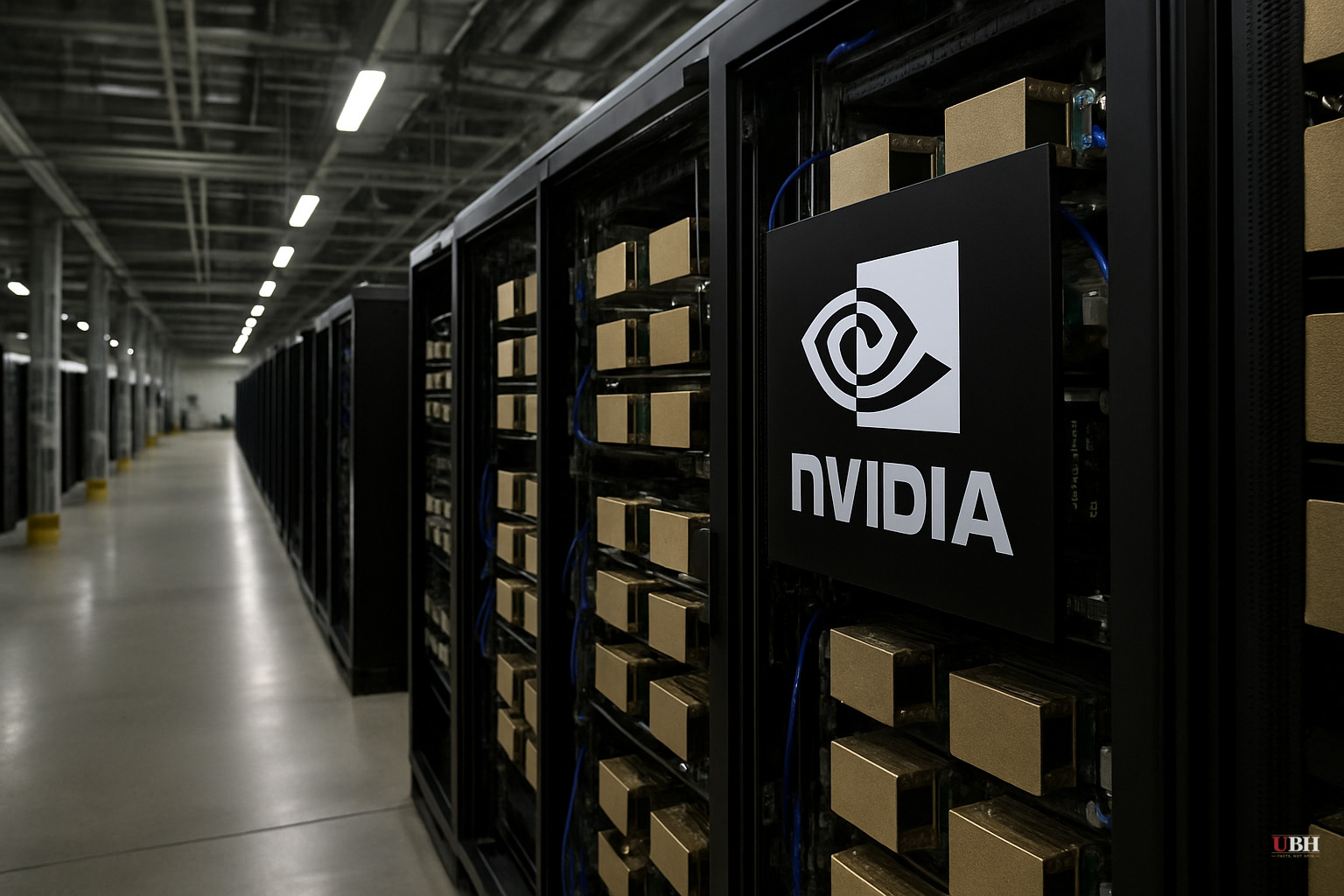
Since Tuesday's sector-wide AI hardware selloff, Wall Street's Nvidia bulls are pushing back, and Bank of America is leading the charge.
Bank of America's Case
Bank of America reiterated Nvidia as a buy on Wednesday, calling the current valuation an "enhanced Buy opportunity" for what the firm described as a "unique, durable growth franchise." The specific argument: Nvidia is now trading at roughly 18 times forward earnings, which Bank of America says is a seven-year low on that multiple.
A company whose market cap has grown from $364 billion at the end of 2022 to $4.79 trillion as of July 2026, according to CompaniesMarketCap, is now being pitched as a value play on a price-to-earnings basis. The share price was listed at $197.78 as of the July 7 close, with a 0.43% one-day change, per CompaniesMarketCap data.
The Market Cap Context
Nvidia's $4.79 trillion figure puts it ahead of every other publicly traded company by market cap, per CompaniesMarketCap. For comparison, Microsoft sits at $2.85 trillion. AMD is at $843 billion. Intel has fallen to $548 billion.
The year-over-year gain is 25%, according to CompaniesMarketCap. That trails the 41% gain in full-year 2025 and the 169% gain in 2024, when AI infrastructure spending first exploded. The pace is slowing. The open question is whether that reflects maturation or something more concerning.
The Opposing Case Deserves a Fair Hearing
Skeptics of the Bank of America call have a legitimate argument. Nvidia's market cap expansion over the past three years has been extraordinary by any historical measure, and a company trading at 18x forward earnings is only a bargain if those forward earnings estimates are reliable. AI infrastructure spending is still heavily concentrated among a handful of hyperscalers: Microsoft, Google, Amazon, Meta. Any pullback in their capital expenditure cycles flows directly to Nvidia's top line. Tuesday's selloff, which hit AI hardware broadly, reflected exactly that concern. None of that concern disappears because one bank reiterates a buy rating.
Nvidia is also fabless, meaning it depends entirely on TSMC for manufacturing capacity. Any disruption there, geopolitical or operational, lands on Nvidia without a domestic fallback.
Those are real structural risks. Bank of America's response is essentially that the market has already priced in too much of that fear, pushing the forward PE to a multi-year floor.
Other Notable Wednesday Calls
Nvidia was not the only name getting attention Wednesday. Goldman Sachs reiterated Tesla as neutral but flagged upside ahead of Tesla's earnings later this month, citing stronger-than-expected Q2 delivery numbers. Bernstein reiterated Apple as outperform, pointing to May sell-through data showing iPhone units up 2% year-over-year, with Japan and emerging markets leading growth.
Barclays initiated Strategy, the Bitcoin-focused firm formerly known as MicroStrategy, as overweight, describing it as "an amplified play on Bitcoin which seeks to compound the return of Bitcoin through leverage and BTC yield." Truist initiated Wynn Resorts as a buy with a $125 price target. DA Davidson initiated Pinterest as a buy with a $26 target.
The Unresolved Question
Bank of America's forward-PE argument hinges entirely on whether Nvidia's consensus earnings estimates for the next 12 months hold. Those estimates are built on hyperscaler capex forecasts that analysts have been revising aggressively in both directions this year. If the estimates prove accurate, 18x is historically cheap for Nvidia. If AI infrastructure spending softens, even modestly, the forward PE rises fast, and the "seven-year low" framing evaporates with it. Nvidia's next earnings report will be the first hard test of whether the current estimates can survive contact with the actual numbers.
Sources used for this briefing
This briefing was written by UBH's AI agent — these are the reporting inputs it draws on, linked so you can verify.


