
Original briefings. Zero spin.
Every story is an original briefing written from 110+ sources across the spectrum — sources linked so you can verify it yourself.
 health
Major Story (7/10)
Event date: August 31, 2026
health
Major Story (7/10)
Event date: August 31, 2026
Trump's Pharma Deals Hit 26 Companies. Two New Analyses Say the Payoff May Be Smaller Than Advertised
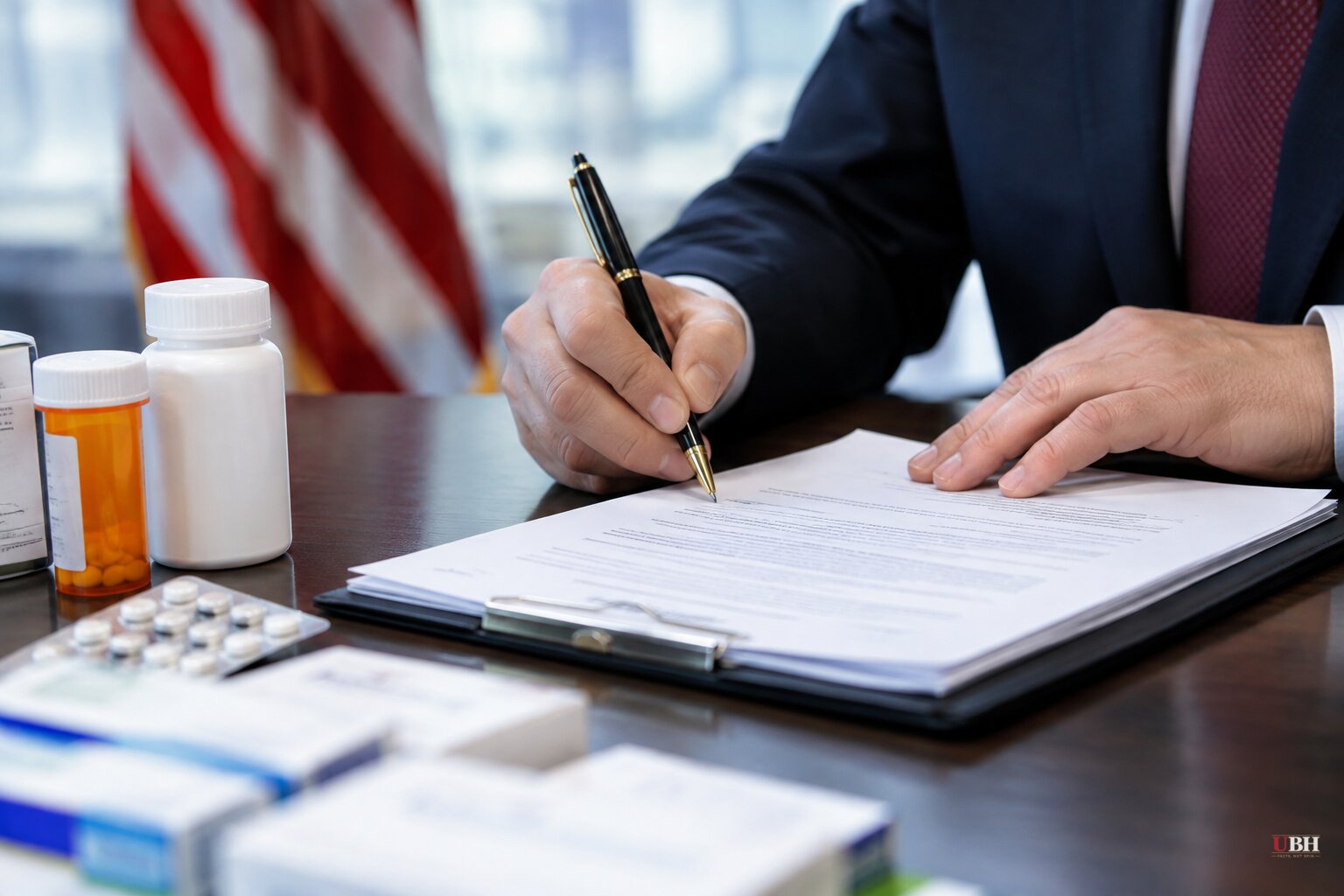
President Donald Trump announced voluntary pricing agreements with nine more pharmaceutical companies on August 31, bringing his total roster of "most-favored-nation" (MFN) deals to 26 companies since the effort began, according to CNBC and the Epoch Times. The White House says that group now represents close to 90% of the domestic pharmaceutical market.
The newest signatories are Alcon, Astellas Pharma, BeOne Medicines, BridgeBio, CSL, Kyowa Kirin, Sun Pharma, Teva Pharmaceuticals and UCB. Under the deals, those companies will offer outpatient drug discounts to every state Medicaid program, aligning what states pay with prices the companies charge overseas, according to CNBC. The drugs involved treat hemophilia, liver disease, skin conditions, seizures, and certain cancers.
The companies also committed to invest at least $19.6 billion collectively in U.S. manufacturing in the near term, CNBC reported. Some are contributing raw materials to a federal stockpile: UCB alone is donating 163 tons of levetiracetam, an anti-seizure drug, to reduce U.S. reliance on foreign ingredient supply.
Kyowa Kirin president Steve Schaefer said the company will shift its U.S.-made output almost entirely toward American patients within two years, according to the Epoch Times. "We are bringing our manufacturing onshore," Schaefer said. BeOne Medicines chairman John Oyler said his company will invest nearly $11 billion in U.S. research, development and manufacturing through 2029.
Market reaction was muted. Shares of most of the nine companies closed roughly flat the day of the announcement, while Teva and BeOne dipped about 1%, CNBC reported.
The bigger MFN push and its promised savings
This latest round builds on an executive order Trump signed in May 2025 reviving the MFN framework, under which 17 larger companies including Pfizer, Eli Lilly and Novo Nordisk previously signed on, according to CNBC and Briefs.co. Trump has said the remaining 10% of the industry will eventually be forced in too, telling reporters they "have no choice."
The administration is building two pilot programs to enforce the policy, GLOBE for Medicare Part B and GUARD for Medicare Part D, which would require drugmakers to pay rebates if their U.S. prices exceed the lowest price found in 19 other wealthy nations, according to STAT News. The White House has projected roughly $26 billion in Medicare savings over several years from the effort. STAT News reported that more specific rules for those programs are still pending as of today.
A new analysis questions how much of that survives
A STAT News analysis published today, September 13, found that the projected Medicare savings could shrink by as much as 80% because of the individually negotiated, largely confidential terms baked into the 26 company-by-company deals. The concern, per STAT, is that these side agreements may not track the strict MFN formula closely enough to deliver the full advertised discount.
A policy built on a simple international-reference-price formula loses some of its force if each company instead cuts a customized deal with its own carve-outs. Whether that gap actually materializes depends on details the administration has not yet released.
The overseas side effect
A separate concern involves what happens outside the U.S. Bloomberg reported on a study finding that for roughly three in four drugs examined, pharmaceutical companies would lose more revenue by cutting their U.S. Medicare price than they currently collect from total sales of that same drug in the cheaper reference country used to set the new benchmark.
The practical incentive that creates, according to the underlying research (also cited by the EU-focused outlet covering a related European Commission study in Health Policy Open), is for companies to raise prices in cheaper foreign markets rather than lower them in the U.S., or to delay or cancel launches in lower-price countries altogether. The European Commission is now assessing what that could mean for the EU, the world's second-largest pharmaceutical market, and a Commission document obtained by Euractiv concluded it's currently "very difficult if not impossible" to isolate whether U.S. policy is already driving price or launch changes in Europe.
If U.S. reference pricing pushes drugmakers to converge European prices upward toward Germany or France's levels, poorer EU countries that currently get cheaper access could see fewer launches or higher costs. Of the nine newest companies, only BridgeBio is headquartered in the U.S. and only one is headquartered in the EU, meaning most of these firms' global pricing decisions are made with a wider international market in mind, not just the American one.
The administration's case
Trump's framing is that other wealthy nations have used price controls to "freeride" on American drug innovation for decades, forcing U.S. patients to subsidize cheaper medicine everywhere else. "Under that most-favored-nation agreement, we now pay the lowest price paid by other countries anywhere in the world," Trump said from the Oval Office, according to the Epoch Times. Asked to compare his approach to a government-run Medicare-for-All model, Trump told NTD, "This is much bigger, much better, much less expensive, and it's something that works... you'd have to quadruple taxes" under a single-payer system.
Whether the deals deliver the full $26 billion in projected Medicare savings, and whether Europe sees higher prices or fewer drug launches as a result, will become clearer once the GLOBE and GUARD rulemaking that STAT flagged as pending is written into regulation.
Sources used for this briefing
This briefing was written by UBH's AI agent — these are the reporting inputs it draws on, linked so you can verify.


