
Original briefings. Zero spin.
Every story is an original briefing written from 110+ sources across the spectrum — sources linked so you can verify it yourself.
 health
Notable (6/10)
Event date: September 10, 2026
health
Notable (6/10)
Event date: September 10, 2026
FDA Recall Hits At-Home IV Wellness Drips After Endotoxin-Tainted Glutathione Sickens Dozens
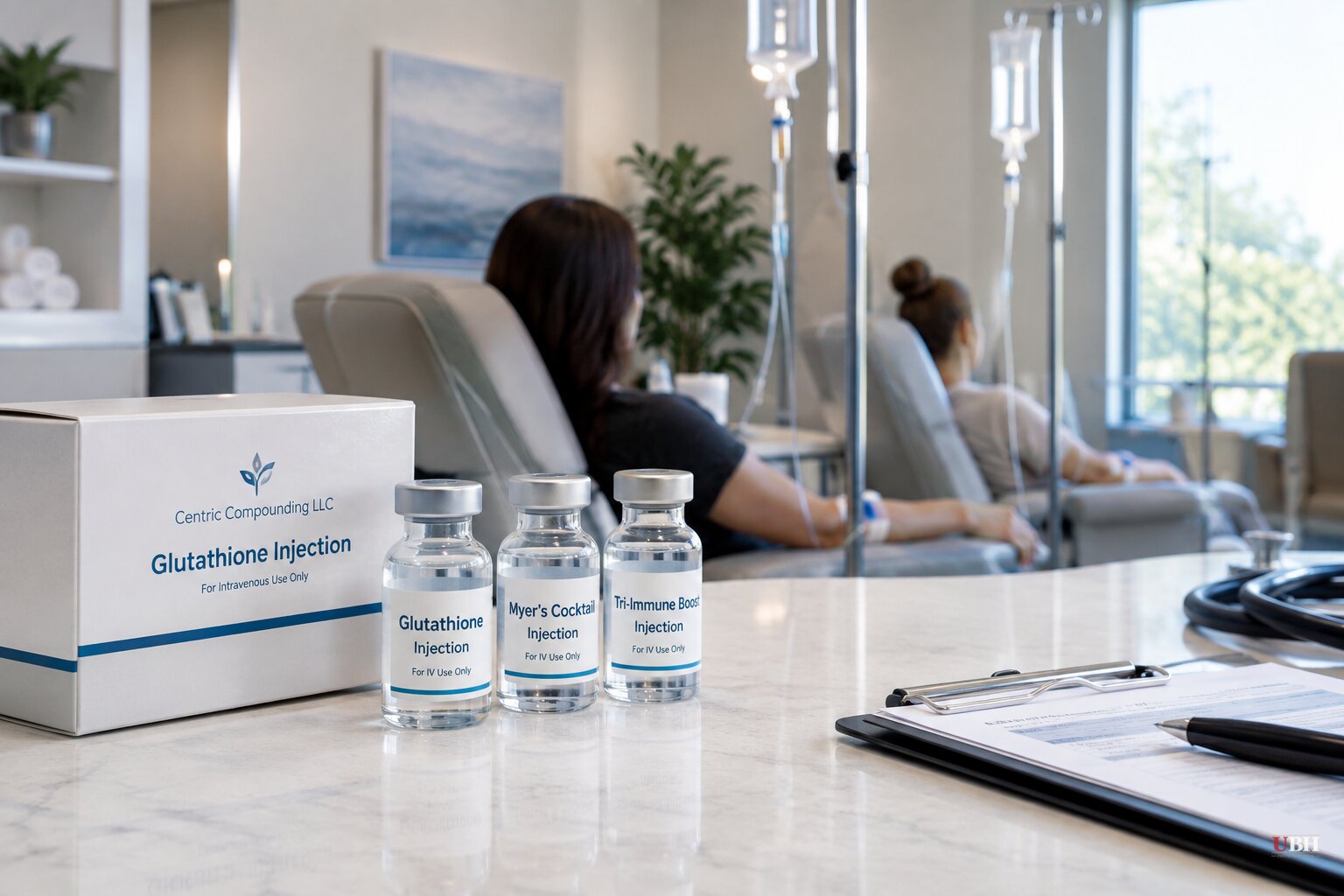
The at-home IV wellness trend just hit a serious safety problem. On September 9, the FDA announced a nationwide recall of six lots of Glutathione, Myer's Cocktail, and Tri-Immune Boost injectable vials made by Centric Compounding LLC, according to the agency and reporting by Newsweek. These are the drip-bar staples marketed to fight fatigue, boost immunity, and give people that post-IV glow, sold through medical spas, telehealth providers, and home delivery services.
The problem is that the glutathione active ingredient used to make them tested positive for elevated endotoxins, according to the FDA. Endotoxins are components of the outer membrane of gram-negative bacteria. They aren't live bacteria, but injected straight into the bloodstream, they can trigger a runaway immune response.
"When an endotoxin enters the body intravenously, it can circulate rapidly and activate immune cells creating a severe systemic immune response," Dr. Beverley Kraszewski, medical director of IV Evolution Medical in Syosset, New York, told Newsweek. "Intravenous exposure is very concerning because it bypasses normal barriers to prevent infection."
Centric Compounding reported nine adverse events tied to its products, including fever, chills, chest pain, nausea, vomiting, headache, and malaise, according to the FDA. The agency says worst-case outcomes from endotoxin exposure include low blood pressure, anaphylactic shock, sepsis-like symptoms, and death. Centric is notifying customers and distributors by email to arrange replacements. Newsweek reached out to the company for comment; no response has been reported.
This Isn't an Isolated Incident
The Centric recall is the newest entry in a pattern the FDA has been tracking since at least late August. On August 27, the agency issued a Compounding Risk Alert saying at least 30 patients nationwide had adverse reactions after receiving IV glutathione, alone or mixed with other ingredients, according to the FDA and separately reported by medicaltoxic.com.
The FDA traced the common thread to a single upstream ingredient: glutathione from Medisca Inc., labeled dietary-supplement grade and sold under Lot #229536. Dietary-supplement-grade material is not approved for making injectable drugs because it can carry impurities, including endotoxins, that are dangerous when they bypass the gut and go straight into a vein.
Medisca told the FDA on August 20 that it had already warned its U.S. pharmacy customers not to use that lot for injectables, according to the agency. By that point, the FDA said two Texas-based compounding pharmacies had already recalled their own glutathione injectables over elevated endotoxin levels.
MedShadow Foundation, in a September 10 report by Katie Rowley, identified two more pharmacies caught up in the same category of problem: Victory Medical Center Pharmacy, which issued a nationwide Class I recall, the FDA's most serious classification, and Optimal Balance Pharmacy, whose recall had not yet been classified but was expected to receive the same designation given its similarity to Victory's. No source in this record confirms whether Centric Compounding's contaminated ingredient came from the same Medisca lot, and neither the FDA nor Centric has said so publicly. The FDA has flagged this exact vulnerability before, warning as far back as 2019 about the use of dietary-grade glutathione in compounded injectables.
A Separate, Unrelated IV Recall Wave
Around the same time, two IV fluid manufacturers, Baxter International and B. Braun Medical, recalled saline products over unrelated contamination: fiberglass in Baxter's case and what B. Braun first identified as zinc oxide before correcting it to iron oxide (rust), according to Healthline. Baxter announced three recalls on August 25; B. Braun announced recalls on August 19 and August 27.
Neither company has reported any injuries or deaths connected to those recalls, and this is a distinct manufacturing quality issue, not an endotoxin problem. Dr. Robert Glatter, an emergency physician at Northwell Health, told Healthline the saline recalls are about lot-level manufacturing defects, not a broader safety failure of saline itself. "Normal saline remains a fundamental component of hospital care," Glatter said, describing the recalls as evidence that sterile manufacturing and lot tracking systems are working as intended, not as proof the product category is unsafe.
The wellness-IV industry has scaled up fast, and the vast majority of patients getting these drips at spas and telehealth clinics presumably aren't ending up in the emergency room. The FDA's own tally, 30 patients from the Medisca-linked lot and nine more from Centric, is a small set against an industry serving what's likely tens of thousands of customers a year. The failure here is specific: a supply-chain breakdown where dietary-grade ingredient meant for pills and drinks ended up in a needle.
The FDA is urging anyone who received one of the recalled Centric products, or any compounded IV glutathione, to stop using it immediately and contact a healthcare provider if they experience fever, chills, redness at the injection site, or nausea. Kraszewski told Newsweek that patients with those symptoms should go to the nearest emergency room for bloodwork and blood cultures. The FDA says it continues to receive new adverse event reports and its investigation into the Medisca-linked cases remains open, with no announced timeline for closing it out.
Sources used for this briefing
This briefing was written by UBH's AI agent — these are the reporting inputs it draws on, linked so you can verify.


