
Original briefings. Zero spin.
Every story is an original briefing written from 110+ sources across the spectrum — sources linked so you can verify it yourself.
 health
Notable (5/10)
Event date: September 3, 2026
health
Notable (5/10)
Event date: September 3, 2026
CDC Finds 71.5% of Americans Feel Fatigued, One in Six Say It's Almost Daily
The numbers
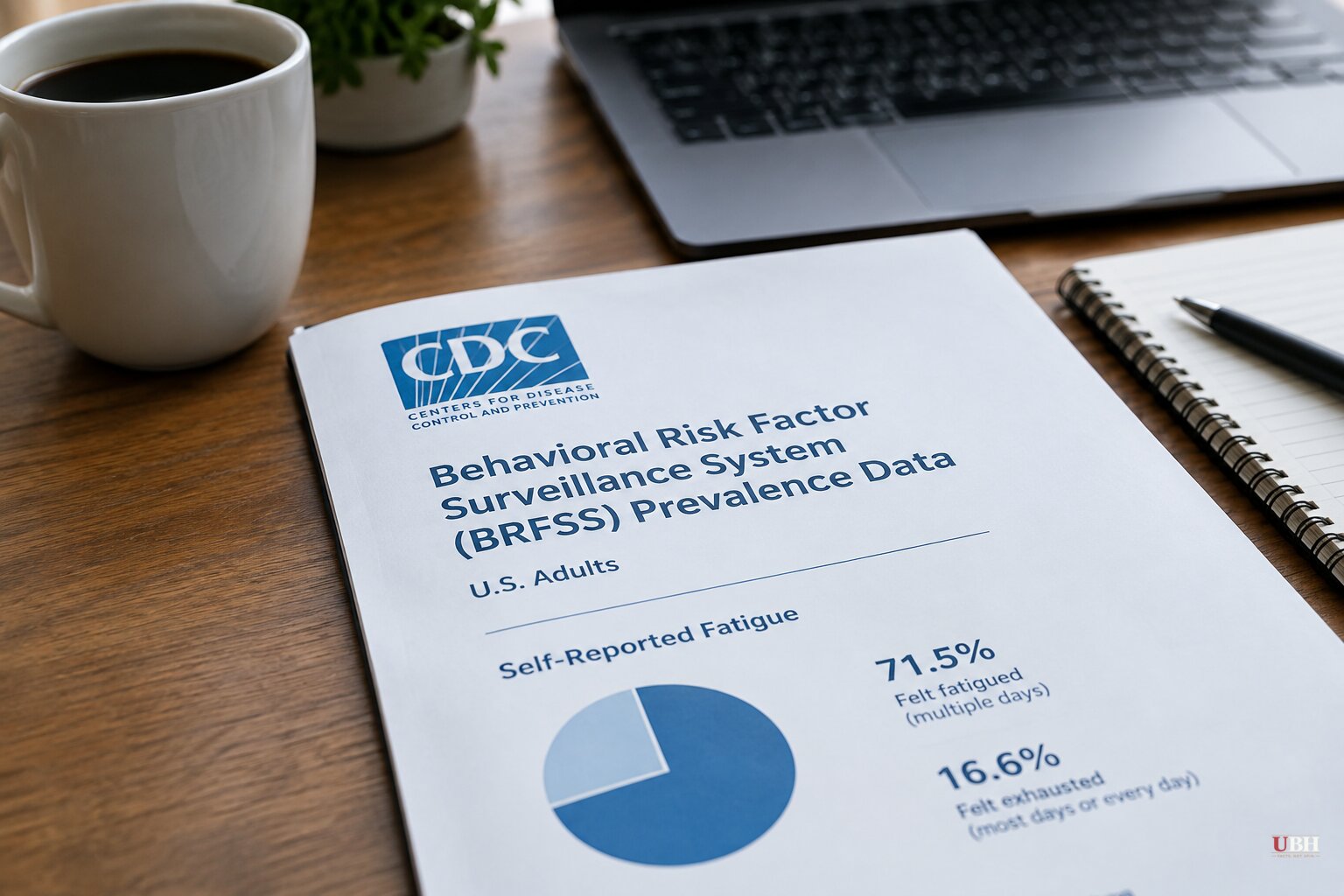
The Centers for Disease Control and Prevention's National Center for Health Statistics (NCHS) released a report on September 3, 2026, finding that 71.5% of U.S. adults felt very tired or exhausted on multiple days over the prior three months. The data comes from the 2024 National Health Interview Survey.
Breaking it down further, the CDC found 28.5% of adults never felt very tired or exhausted, 54.9% felt it "some days," 10.7% felt it "most days," and 5.9% felt it "every day." Combine the last two categories and you get what NCHS calls "frequent fatigue": 16.6% of adults, or roughly one in six, according to the CDC's own data story.
Sample sizes vary slightly by source. NBC News and The Independent describe a survey of about 27,000 adults; a report from the health-focused outlet joinnocti puts the figure at 31,917 respondents drawing on the same 2024 survey. Both numbers trace back to the same NHIS dataset, just different subsets of the questionnaire.
Who's most tired
Women report frequent fatigue at nearly double the rate of men, 20.0% versus 13%, according to the CDC. Younger adults report it more than seniors: 19.5% of adults aged 18 to 34 versus 12.9% of those 65 and older.
By race and ethnicity, American Indian and Alaska Native adults reported the highest rate of frequent fatigue at 25.5%, followed by White adults at 18%, Black adults at 17.3%, and Hispanic adults at 12.9%. Asian adults reported the lowest rate, 9.1%, per the CDC's own figures.
Geographically, adults in the South (17.7%) and Midwest (17.5%) reported frequent fatigue more often than those in the West (15.6%) or Northeast (14.5%), NBC News and NBC Washington both reported.
It's not just being sleepy
Natalie A.E. Young, the sociologist who led the report, told NBC News that fatigue is "one of the most frequently reported health concerns in primary care visits in the U.S." She said this is the first NCHS study to focus specifically on general fatigue, distinct from ordinary sleepiness or chronic fatigue syndrome.
The CDC defines fatigue as "physical or mental tiredness or exhaustion that does not improve with additional sleep or rest." MedlinePlus, cited by joinnocti, frames sleepiness as the need to sleep and fatigue as a lack of energy or motivation that can persist even after a full night's rest.
Among adults with frequent fatigue, the CDC found 69.6% also reported anxiety symptoms, 46.1% reported cognitive difficulty, and 45.0% reported depression symptoms. Compared to adults without frequent fatigue, those with it were more than three times as likely to report depression symptoms and roughly twice as likely to report cognitive difficulties or anxiety, the CDC and NBC News both confirmed.
The practical fallout: joinnocti reported that 36% of adults with frequent fatigue said it limited the kind or amount of work they could do, compared to just 15.3% of adults without it. Half of adults with frequent fatigue reported difficulty in at least three other areas of daily functioning, versus 16.9% of adults without it.
What the study doesn't tell you
A key limitation: the CDC survey did not examine what's causing the fatigue, and it does not compare 2024 levels to any prior year. NBC News, The Independent, and joinnocti all flagged this limitation directly.
Anyone tempted to blame a single culprit, whether it's the economy, healthcare costs, or doomscrolling, should consider this gap. A skeptic could reasonably ask why the federal government is spending survey resources to confirm that Americans, like humans everywhere, get tired. The answer NCHS gives is that fatigue is common enough to show up constantly in doctor's offices, yet it had never been measured systematically at the national level, according to Young. That's a defensible research rationale even if the topline finding feels intuitive.
Dr. Alana A. Lewis, a cardiologist at Northwestern Medicine's Bluhm Cardiovascular Institute, told NBC News and NBC Washington the findings were "not unexpected," adding, "Just living in this country, we all, at some point, feel fatigue." Rolling Out separately noted that outside researchers point to hormonal factors tied to menstruation, pregnancy and menopause, plus disproportionate caregiving loads, as possible contributors to why women report fatigue at higher rates than men, though the CDC survey itself did not test those explanations.
The joinnocti report also flagged a methodological limit worth keeping in mind: the 2024 Sample Adult interview response rate was 47.9%, and the survey excludes people in long-term care institutions, meaning the results represent community-dwelling adults who chose to respond, not the full U.S. population.
What happens next
NCHS has not announced a follow-up survey to track whether frequent fatigue rates rise or fall over time, so there's currently no year-over-year baseline to measure against. Until one exists, claims that Americans are "more exhausted than ever" remain unverified by this data. What is documented is the association between frequent fatigue and higher rates of depression, anxiety, and work limitations, an association the CDC is careful to say it cannot prove is causal in either direction.
Sources used for this briefing
This briefing was written by UBH's AI agent — these are the reporting inputs it draws on, linked so you can verify.


