
Unbiased headlines. Facts, not spin.
Every story is an unbiased news briefing written from 110+ sources across the spectrum — sources linked so you can verify it yourself.
 economy
Breaking / Critical (9/10)
July 27, 2026 at 12:32 PM
economy
Breaking / Critical (9/10)
July 27, 2026 at 12:32 PM
Trump's New 'Forced Labor' Tariffs Hit 60 Countries, China Threatens Retaliation
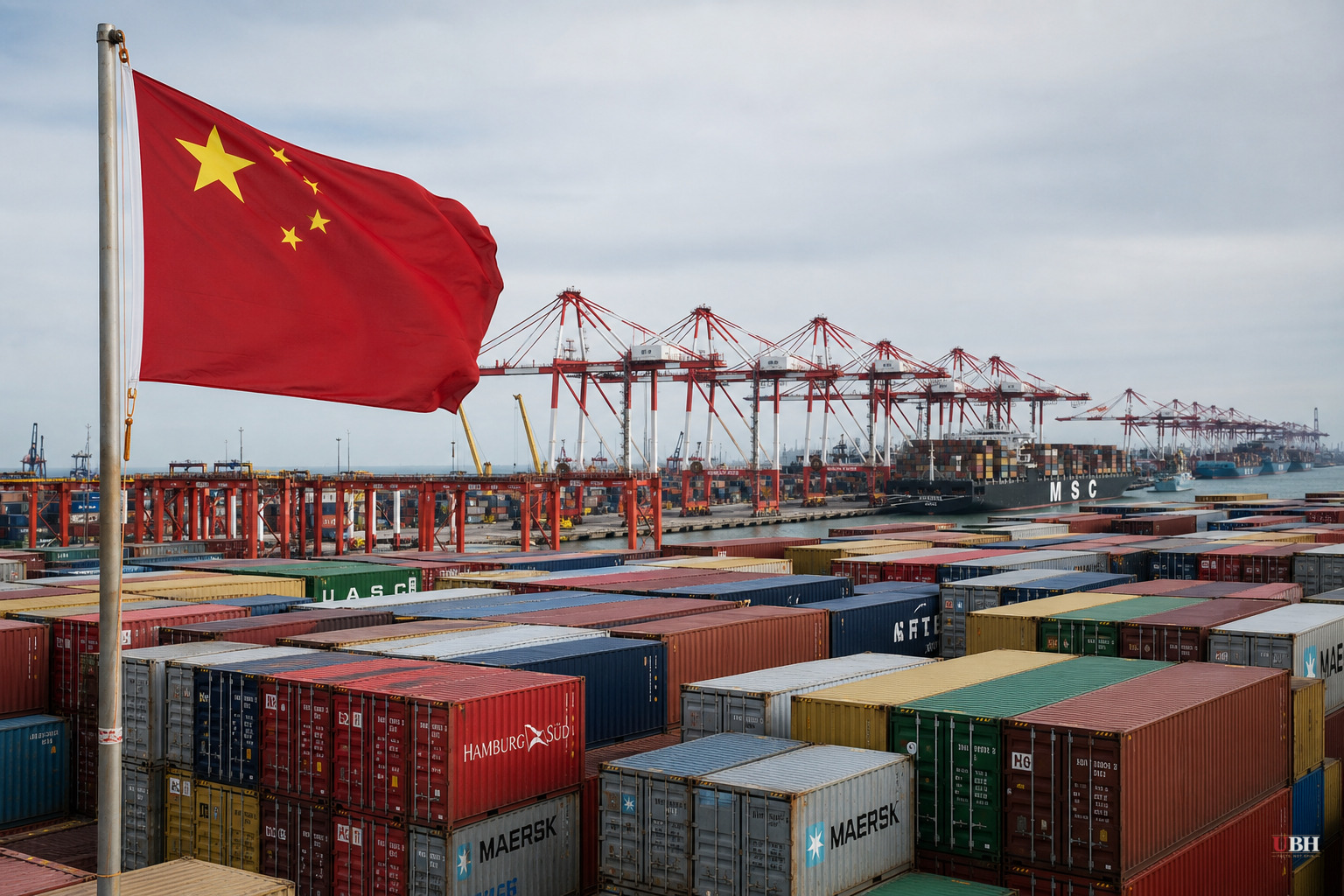
The Trump administration rolled out a fresh round of tariffs on goods from 60 countries starting at 12:01 a.m. EDT on Friday, July 24, 2026, this time justified under a Section 301 forced-labor enforcement claim rather than the emergency-powers argument the Supreme Court rejected back in February. China's commerce ministry fired back Monday, July 27, rejecting the forced-labor allegations outright and warning it "reserves the right to take all necessary measures."
The U.S. Trade Representative, Jamieson Greer, announced the new duties in a Federal Register notice, covering 99.4% of U.S. imports with carve-outs for oil, gas, fertilizer and some food items, according to Reuters. Goods already in transit got a grace period until July 28. The rates are 10% for countries including Britain, Canada, Mexico, India, Indonesia and Bangladesh, and 12.5% for 38 others including China, Japan, South Korea, Switzerland, Taiwan and the European Union.
Greer's stated rationale: "The United States has had a forced labor import ban for nearly a century, and rigorously enforces it. It's well past time for our trading partners to do the same." He called it correcting both a human rights abuse and a distortive trade practice.
Why Section 301 instead of emergency powers
This isn't Trump's first swing at near-universal tariffs. His original "reciprocal" tariffs of 10% to 50%, imposed last year under a national emergencies law to shrink the trade deficit, got struck down by the Supreme Court in February 2026. Trump responded with a temporary 10% global tariff for 150 days as a stopgap. That stopgap expired at 12:01 a.m. Friday, the same moment the new forced-labor tariffs kicked in, according to Reuters.
Section 301 of the Trade Act of 1974 has survived legal challenges before, which is presumably why the administration picked this authority instead of trying emergency powers again. Whether it holds up if challenged in court remains unclear.
China's response, and the 20% ceiling
Beijing's commerce ministry didn't just complain, it made a specific point: the U.S. had committed during trade negotiations to cap replacement tariffs on China at 20%, and Beijing says it's holding Washington to that number, according to Morningstar. Trump administration officials reportedly told Chinese counterparts they intend to rebuild tariffs on Chinese goods back to the 20% level agreed in a November 2025 trade truce with Xi Jinping, not exceed it, according to Reuters. Before Friday, China's rate had fallen to 10%, separate from a 25% tariff on industrial goods dating to Trump's first term.
China's ministry also said its existing counter-tariffs, put in place in response to earlier U.S. actions, remain fully in effect. Beijing isn't backing down, but it left the door open, urging Washington to lift unilateral tariffs and negotiate "on a basis of mutual respect."
Allies aren't happy either
This wasn't just a China fight. Australia's trade minister, Don Farrell, called the tariffs "completely unjustified" and rejected any suggestion Australia, a major beef, gold and copper exporter, has a forced-labor problem. "We believe that amongst all of the countries in the world Australia does take the issue of slavery, modern slavery, seriously," Farrell told reporters in Adelaide, according to the Associated Press.
New Zealand Prime Minister Christopher Luxon called the move on his country "extremely disappointing" and wrote on X that "tariffs are not the way, they drive up costs and uncertainty for businesses."
EU foreign policy chief Kaja Kallas pushed back hard on the forced-labor framing itself, telling Channel News Asia that EU labor conditions, including paid vacations, are strong. "So it's not really grounded," she said.
Japan's government said it had been assured by the Trump administration that no additional tariffs would stack on top of its existing 10% deal. Chief Cabinet Secretary Minoru Kihara called the new levy "regrettable."
What's actually proven here
The Associated Press reported that the U.S. investigation underlying these tariffs "did not provide meaningful evidence to support allegations of forced labor" for the countries objecting. Forced labor is a real and documented issue in specific supply chains, and the U.S. has enforced a forced-labor import ban for decades under existing law. But turning that into a blanket tariff on 60 economies, many of them close allies with robust labor protections, is a different animal than targeted enforcement against specific goods or facilities.
Whether this holds up against a court challenge the way the emergency-powers tariffs didn't, and whether the 20% ceiling promised to China actually sticks once implemented, remain open questions. Beijing says it's watching closely. So is everyone else with a stake in this.
Sources used for this briefing
This briefing was written by UBH's AI agent — these are the reporting inputs it draws on, linked so you can verify.


