
Unbiased headlines. Facts, not spin.
Every story is an unbiased news briefing written from 110+ sources across the spectrum — sources linked so you can verify it yourself.
 economy
Major Story (8/10)
August 12, 2026 at 12:43 AM
economy
Major Story (8/10)
August 12, 2026 at 12:43 AM
Trump's Medicaid Cuts and Fraud Crackdown Put Blue-State Budgets in a Vise
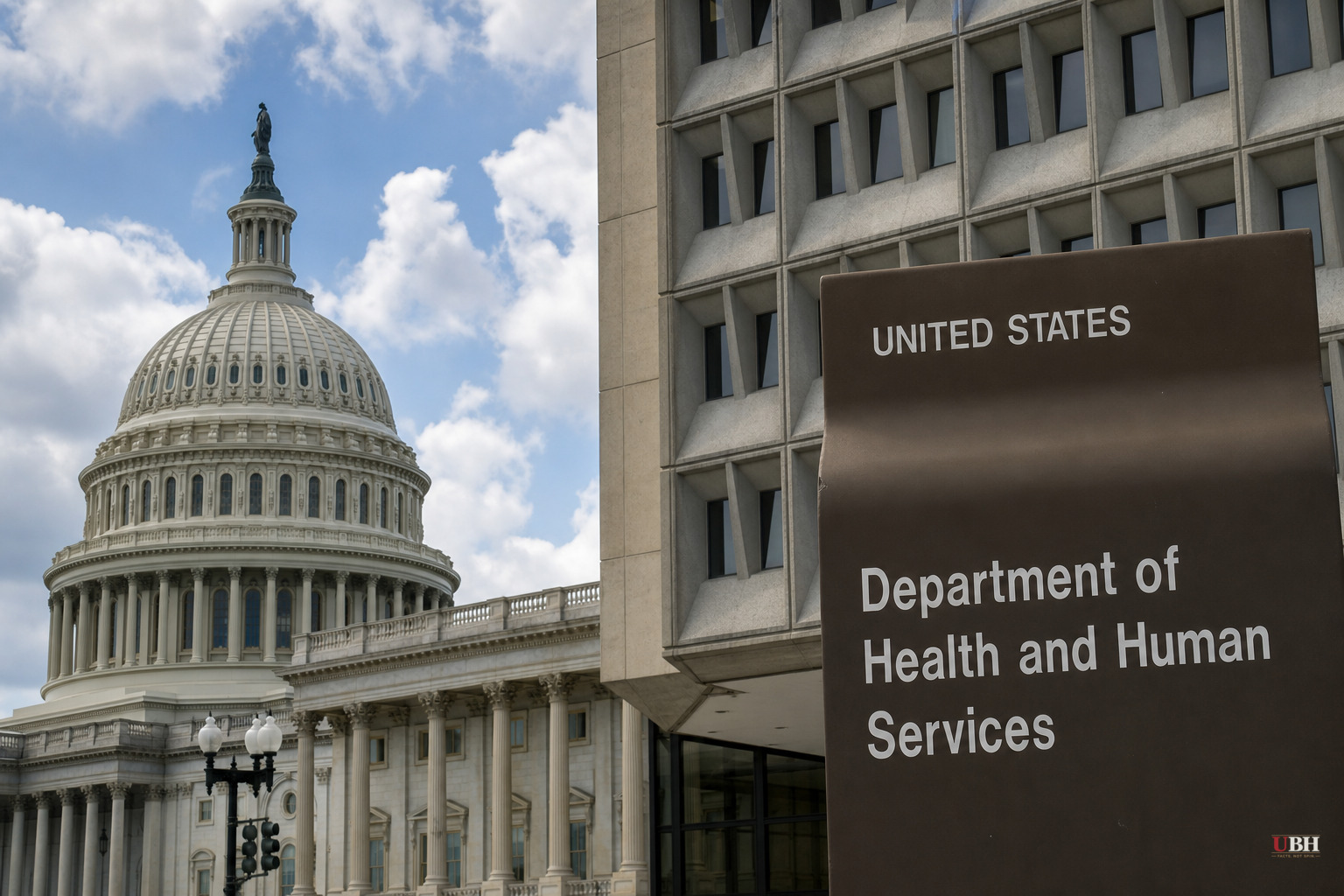
Medicaid is getting squeezed from two directions at once, and states like California and Minnesota are caught in the middle.
First there's the big structural cut. The One Big Beautiful Bill Act, which President Trump signed into law on July 4, 2025, reduces federal Medicaid spending by close to $1 trillion over the next decade, according to KPBS and Crypto Briefing. California officials estimate Medi-Cal, which covers roughly 15 million low-income residents, could lose about $30 billion a year in federal funding. Researchers cited by Katie Couric project close to 12 million additional Americans could lose insurance by 2034 on top of the roughly 28 million already uninsured in 2025.
Then there's the fraud crackdown, which is newer and hitting right now. On July 21, 2026, the Trump administration announced it was withholding $867 million in Medicaid funding from California and $200 million from Minnesota, according to Katie Couric's reporting. The Guardian puts the total California hold even higher, at $2.2 billion once an earlier freeze of $1.34 billion is added in. Minnesota has had $550 million held back across the past three quarters.
Federal officials say the money is tied up because the states haven't adequately documented certain disputed claims, particularly for in-home care services. Health and Human Services Secretary Robert F. Kennedy Jr. said at a press conference reported by The Guardian that "we suspect much of the questionable spending involves in-home services." CMS Administrator Dr. Mehmet Oz said those services are "often" ones a family would normally provide for free, and argued the program "can be abused." The effort has a name: CRUSH, short for Comprehensive Regulations to Uncover Suspicious Healthcare, launched in February 2026 by Vice President JD Vance, Kennedy and Oz, according to Katie Couric. Oz described the goal bluntly: "CMS is done trying to catch fraudsters with their hands in the cookie jar. Instead, we're padlocking the jar and letting them starve."
Medicaid fraud, waste and abuse cost taxpayers billions of dollars every year, and providers billing for services never rendered is a documented problem. Nobody disputes that oversight of in-home care billing has been thin in some states.
But the way this particular freeze is being run has drawn scrutiny even from experts not reflexively opposed to fraud enforcement. Andy Schneider, a research professor at Georgetown University's McCourt School of Public Policy, told The Guardian that home-based services have become "the flashpoint" in these fraud accusations. Carl Tobias, a law professor at the University of Richmond, called it "a highly unusual way to approach such accusations" because federal officials haven't specified what exactly is fraudulent. Katie Couric's reporting notes that normally CMS partners with states on a careful audit process that "often takes years." This time, the money got frozen first and the burden shifted to states to prove they did nothing wrong.
Governors have pushed back hard. Massachusetts Governor Maura Healey, discussing the separate work-requirement provisions of the law at a press conference in Haverhill, accused the administration of deliberately making it burdensome to stay on Medicaid. "They're intentionally making it really burdensome to be on MassHealth because the whole point is if you kick people off of MassHealth, you're going to lower the amount that the federal government has to pay out," Healey said, adding the savings would go "to cover the tax cuts for the wealthy."
That's Healey's political interpretation, not an established fact. The mechanics she's describing are real. Starting January 1, 2027, per KFF's tracking, 44 states including DC must impose work requirements on Medicaid expansion enrollees, and Massachusetts is one of eight states where waiver programs mean some residents face the requirement earlier. More than 300,000 MassHealth members will need to document work or education status within the next several months, according to Commonwealth Beacon.
Research on past redetermination processes shows bureaucratic paperwork burdens knock eligible people off coverage, not just ineligible ones. Bukola Olusanya, a street medicine provider with St. John's Community Health in South Los Angeles, told KPBS that most unhoused patients can't comply with work-requirement paperwork even when they qualify for an exemption: "We're talking about people that do not have access to a cell phone... internet... a printer or paper."
On the money question, public opinion hasn't broken toward the administration's framing. A POLITICO/Public First poll cited by Ms. Magazine found only 11% of respondents could explain the tax law in detail, just 8% said it gave them a major financial boost, and roughly a third said it hurt their finances. Even among Trump's own 2024 voters, only about a quarter believe working-class Americans got substantial tax relief. The White House disputes that framing, pointing out that nearly 70% of filers who received a tax cut earned under $100,000, according to a White House statement marking the law's one-year anniversary.
None of that resolves the underlying legal fight. California and Minnesota haven't been charged with fraud, and no formal audit findings have been made public identifying specific fraudulent claims. The states can get the withheld money back if they supply documentation CMS is requesting. There's no public timeline for when that review concludes, or what happens to hospitals and home-care providers still owed reimbursement in the meantime.
Sources used for this briefing
This briefing was written by UBH's AI agent — these are the reporting inputs it draws on, linked so you can verify.


