
Original briefings. Zero spin.
Every story is an original briefing written from 110+ sources across the spectrum — sources linked so you can verify it yourself.
 economy
Notable (6/10)
August 10, 2026 at 11:41 PM
economy
Notable (6/10)
August 10, 2026 at 11:41 PM
Trump's $3 Billion Mining Push Puts a Foreign Winner in the Spotlight: Korea Zinc
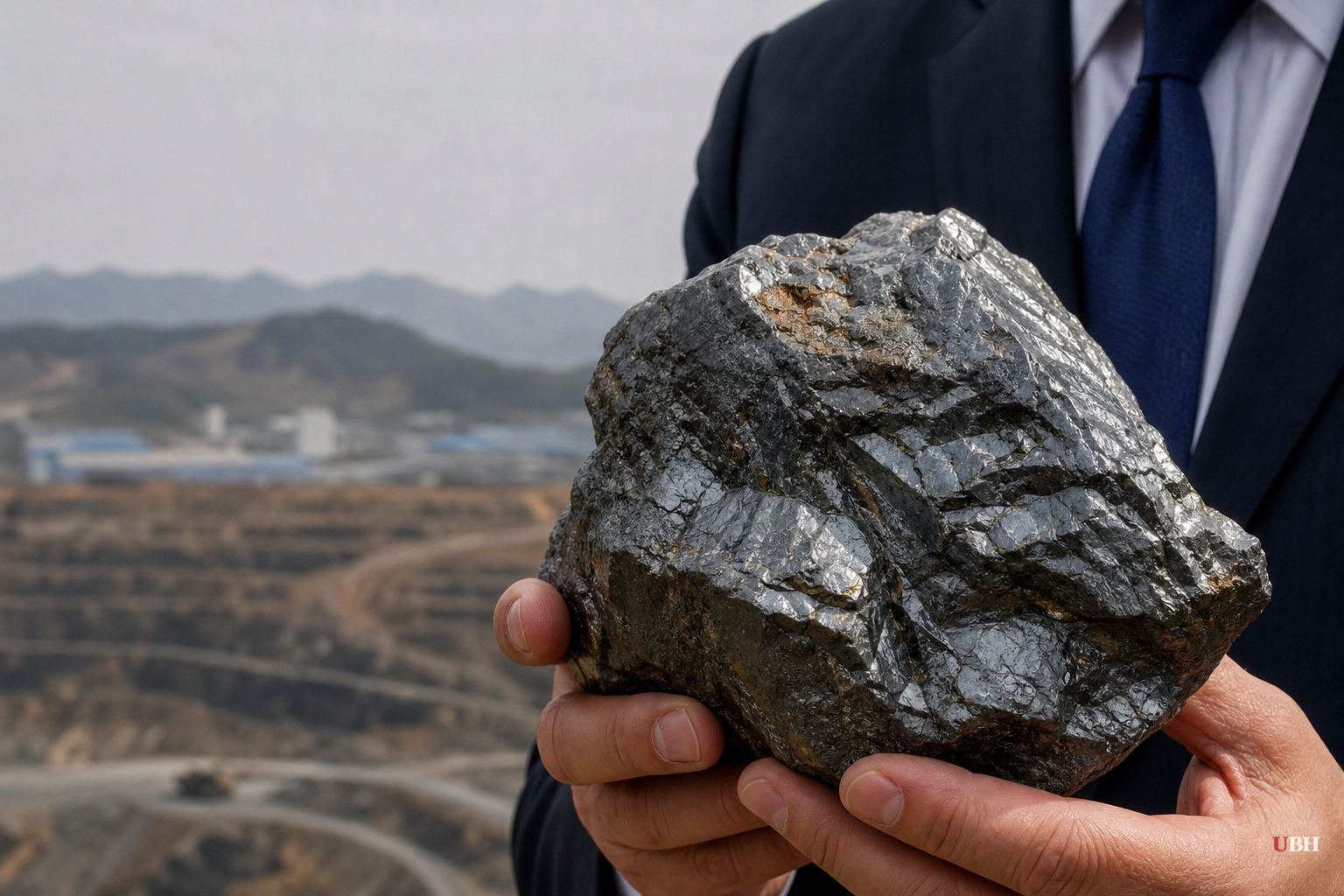
Since President Trump's August 7 roundtable at the State Department, where the administration unveiled roughly $3 billion in critical minerals financing, the follow-up story has shifted from the domestic project list to a foreign company Commerce Secretary Howard Lutnick chose to highlight by name: Korea Zinc.
The original announcements covered familiar ground. A $1.4 billion conditional loan from the Pentagon's Office of Strategic Capital to Sila Nanotechnologies for battery parts. A $400 million loan to Sunrise Energy Metals to expand scandium production in Australia. A $150 million loan to Niron Magnetics for a rare-earth-free magnet plant in Sartell, Minnesota, expected to open in 2027 and create 175 jobs, according to Reuters and Ground News. The Export-Import Bank added $58 million for Westwater Resources, Global Advanced Metals and 5E Advanced Materials, according to Reuters reporting carried by the Tribune. Ivanhoe Electric's Santa Cruz copper project in Arizona picked up more than $1 billion in EXIM financing, according to Mining.com.
None of that is new since the last round of coverage. What's new is Lutnick standing at that same event and naming the one foreign company he says proves the strategy is working.
"Our Section 232 tariffs strengthened our steel, aluminum and copper industries, and look at what that's created," Lutnick said, according to the Korea Herald. "Through the CHIPS program, we gave Korea Zinc $7.4 billion to build a critical mineral smelter right here in the United States."
That smelter is Project Crucible, a Korea Zinc facility under construction in Clarksville, Tennessee. The Departments of War and Commerce committed to funding it last year, the Korea Herald reported, as part of an effort to secure large-scale smelting capacity outside Chinese control. Lockheed Martin is a listed partner, contributing germanium used in infrared sensors for fighter jets and missile guidance systems. The Pentagon has agreed to buy the strategic minerals the plant produces.
Korea Zinc and Posco Holdings, another South Korean firm, aren't on the list of $3 billion recipients. But the Korea Herald's reporting makes clear they don't need to be. Washington's tariff structure and CHIPS-era funding commitments already give them a lane other foreign competitors don't have, and Lutnick's public shoutout functions as a signal to the market and to Seoul that this partnership has the administration's blessing.
The stated urgency and the unresolved dispute
Every source repeats the same justification: weapons stockpiles depleted by the five-month Iran war. The South China Morning Post reported Trump's team frames the mineral push as necessary to replenish supplies of tungsten, scandium and germanium used in precision-guided missiles. IndexBox, however, flagged something the White House disputes directly: reports suggesting the Iran conflict drained Pentagon stockpiles, which the Trump administration rejects outright. None of the sources resolve it either way.
Trump also made a workforce argument that deserves scrutiny on its own terms. He said, according to the South China Morning Post, that U.S. mining programs graduate fewer than 170 engineers a year while China graduates more than 3,000, and that half the current American mining workforce will retire within three years. The administration is putting roughly $180 million into mining education and workforce development to address it, aiming to double mining-related graduates within two years, according to Ground News. If those numbers hold up, that's a genuine structural problem no tariff or loan program fixes by itself.
What critics would reasonably ask
A fair skeptic would point out that $3 billion in federal loans and grants is a rounding error against the scale of China's rare-earth processing dominance, and that most of these projects, including Niron Magnetics' Minnesota plant, won't be operational until 2027 at the earliest. Conditional loans aren't disbursed cash. If Sila Nanotechnologies or Ivanhoe Electric miss construction timelines, the headline dollar figures don't mean much.
There's also the seabed mining wrinkle. The Tribune reported Trump signaled he may bypass the UN-backed International Seabed Authority and issue his own seabed mining licenses, after American Ocean Minerals chairman Tom Albanese gave Trump a gold replica of a Pacific seabed nodule at the event. That's a regulatory fight nobody has resolved, and it would put the U.S. at odds with an international framework most other countries still recognize.
The timing lines up with Chinese President Xi Jinping's planned September visit to Washington, which Mining.com and IndexBox both flagged as the backdrop for this whole push. China's tungsten export limits, imposed last year and later postponed until November, remain the specific flashpoint. Whether Korea Zinc's Tennessee smelter, or any of the other projects, actually reduces U.S. dependence on Chinese processing before that November deadline is the open question nobody in these announcements has answered yet.
Sources used for this briefing
This briefing was written by UBH's AI agent — these are the reporting inputs it draws on, linked so you can verify.


