
Original briefings. Zero spin.
Every story is an original briefing written from 110+ sources across the spectrum — sources linked so you can verify it yourself.
 economy
Notable (6/10)
Event date: August 20, 2026
economy
Notable (6/10)
Event date: August 20, 2026
California's Billionaire Tax Heads to a November Vote. Florida Is Already Cashing In.
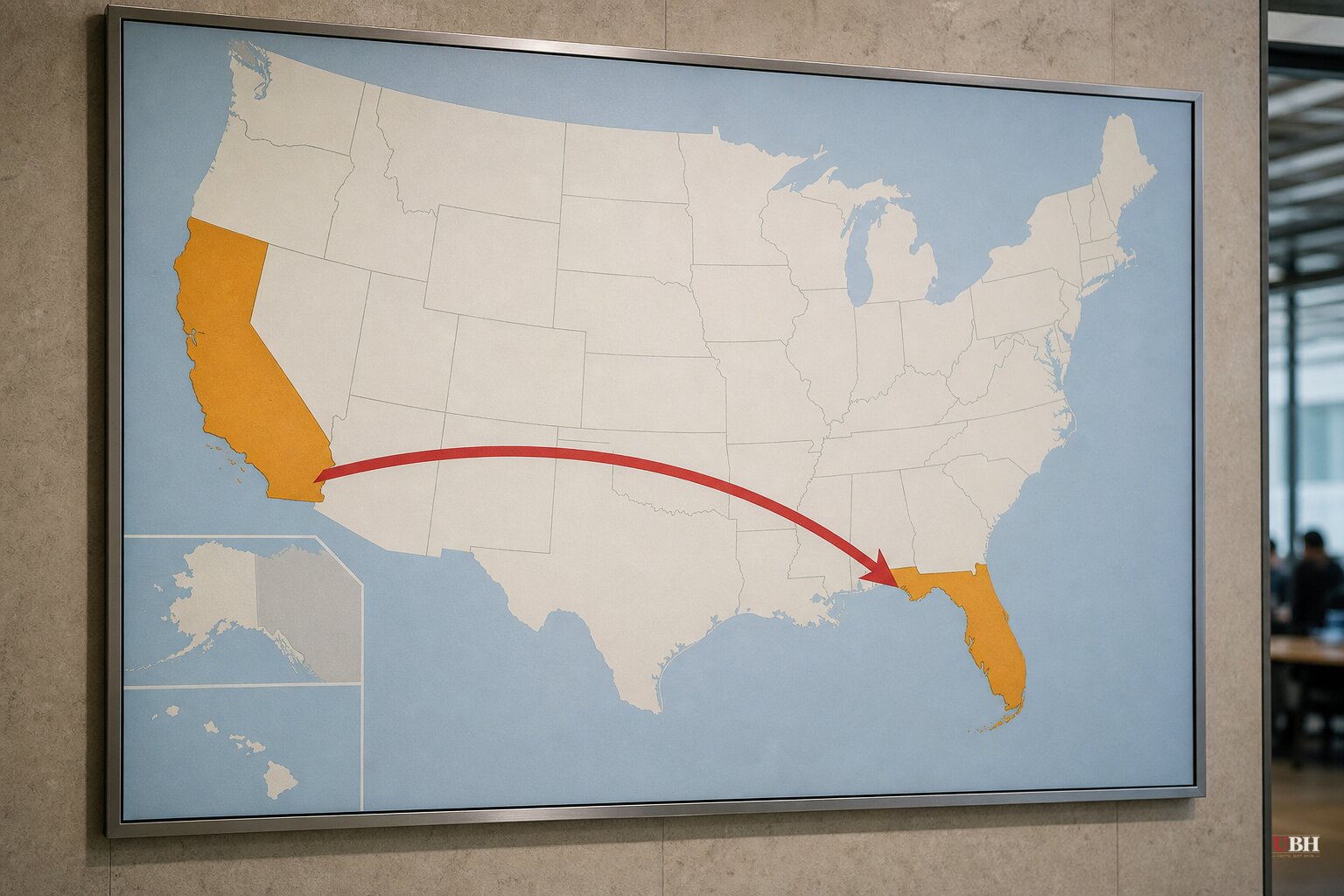
California voters will decide the fate of Proposition 40 in November, a one-time 5% tax on the assets of the state's roughly 250 billionaires. The wealthy aren't waiting to find out how the vote goes.
Google cofounders Larry Page, worth $295 billion, and Sergey Brin, worth $275 billion, both bought property in Florida and left California before a January 1, 2026 deadline tied to the tax, according to Fortune. Uber cofounder Travis Kalanick moved to Texas. Former Starbucks CEO Howard Schultz and Meta CEO Mark Zuckerberg both bought Florida property earlier this year, Fortune reported. They join a longer list of tech money that's already relocated south, including Amazon founder Jeff Bezos, Palantir cofounder Peter Thiel, Citadel's Ken Griffin, and Oracle's Larry Ellison.
The math behind the $29 billion hole
Proposition 40's backers are aiming for $100 billion in revenue, with 90% earmarked for healthcare and the remainder split between food assistance and education, according to WLRN. Fortune ran a back-of-envelope calculation on what departures could cost that target: 5% of Page's net worth is roughly $14 billion, Brin's roughly $13 billion, and Kalanick's and Thiel's combined stakes add another $1.8 billion or so. That puts the potential shortfall at about $29 billion, by Fortune's estimate, assuming those individuals are no longer California residents when the tax would apply.
Whether that estimate holds depends entirely on residency rules and enforcement, which the sources don't detail. A California wealth tax pegged to residency status is a legally novel proposition, and how aggressively the state would pursue former residents who've relocated is an open question none of the sourcing here resolves.
Who's behind it, and why
The measure was designed by Dave Regan, president of SEIU United Healthcare Workers West, according to WLRN. Regan says it's meant to backfill federal healthcare cuts coming from President Trump's 2025 tax and spending law, which the White House branded the "One Big Beautiful Bill."
"Proposition 40 was developed specifically to backfill those cuts from the One Big Bill that are scheduled to take effect in the next five years. It is a five-year solution to that plan," Regan told WLRN.
Regan frames it as a fairness issue: "We're not even talking about the top 1%, we're talking about the top 0.0001%, the billionaires: 250 individuals in California, $2.4 trillion worth of wealth."
The opposition isn't just billionaires
Brin has put real money behind killing it. He's donated $102 million total to Building a Better California, a PAC pushing three counter-measures that would gut Prop 40 even if voters approve it, according to Fortune, including a fresh $20 million gift this month. Thiel gave $3 million to the California Business Roundtable, another group fighting the tax.
But opposition isn't confined to the ultra-wealthy or their PACs. Democratic Gov. Gavin Newsom has said the tax would damage a state economy built substantially on the same tech companies that produced these billionaires, according to WLRN. René Bravo, president of the California Medical Association, told NPR he supports taxing the wealthy in principle but thinks Prop 40 is the wrong mechanism. "I'm not against taxes. But this is not the right tool," Bravo said, arguing a one-time infusion doesn't fix a structural healthcare financing problem and could leave patients with coverage today and nothing reliable in five years. Bravo also said he doesn't trust state lawmakers to spend the bulk of the money on healthcare as promised. Regan called that "not accurate, not true."
Bravo and Regan represent a sourced disagreement between two people who both claim to want better healthcare funding for the state. A June poll by UC Berkeley's Institute of Governmental Studies found voters closely split, with 48% of likely voters supporting the measure and 41% opposed.
Founders are split too
Billionaire Mark Cuban told Business Insider that "only idiot startup founders" would stay in California if the tax passes, since many are asset-rich but cash-poor and have plenty of other states competing for their business. Mainstreet.com founder Jesse Tinsley agreed, telling Business Insider he'd relocate to the Miami or Palm Beach area if it passes and predicting most billionaires would too, just quietly, to avoid backlash.
Others disagree. Nvidia CEO Jensen Huang said in January he was "perfectly fine" with the tax, telling reporters, "We chose to live in Silicon Valley, and whatever taxes they would like to apply, so be it." HiJenny founder Michal Cieplinski told Business Insider that Bay Area engineering talent and the AI boom make leaving impractical for most founders and their companies, regardless of what the wealthiest individuals decide to do.
The vote is in November. Whatever the outcome, the $29 billion figure is an estimate built on a handful of already-departed billionaires, not a final accounting, and it says nothing about how many of the state's other roughly 245 billionaires might follow Page, Brin, and Kalanick out the door before any tax bill ever comes due.
Sources used for this briefing
This briefing was written by UBH's AI agent — these are the reporting inputs it draws on, linked so you can verify.


