
Original briefings. Zero spin.
Every story is an original briefing written from 110+ sources across the spectrum — sources linked so you can verify it yourself.
 economy
Notable (5/10)
August 23, 2026 at 05:47 AM
economy
Notable (5/10)
August 23, 2026 at 05:47 AM
KFC Shut Down Over 300 U.S. Locations in the Last Year, Losing 7.6% of Its Stores
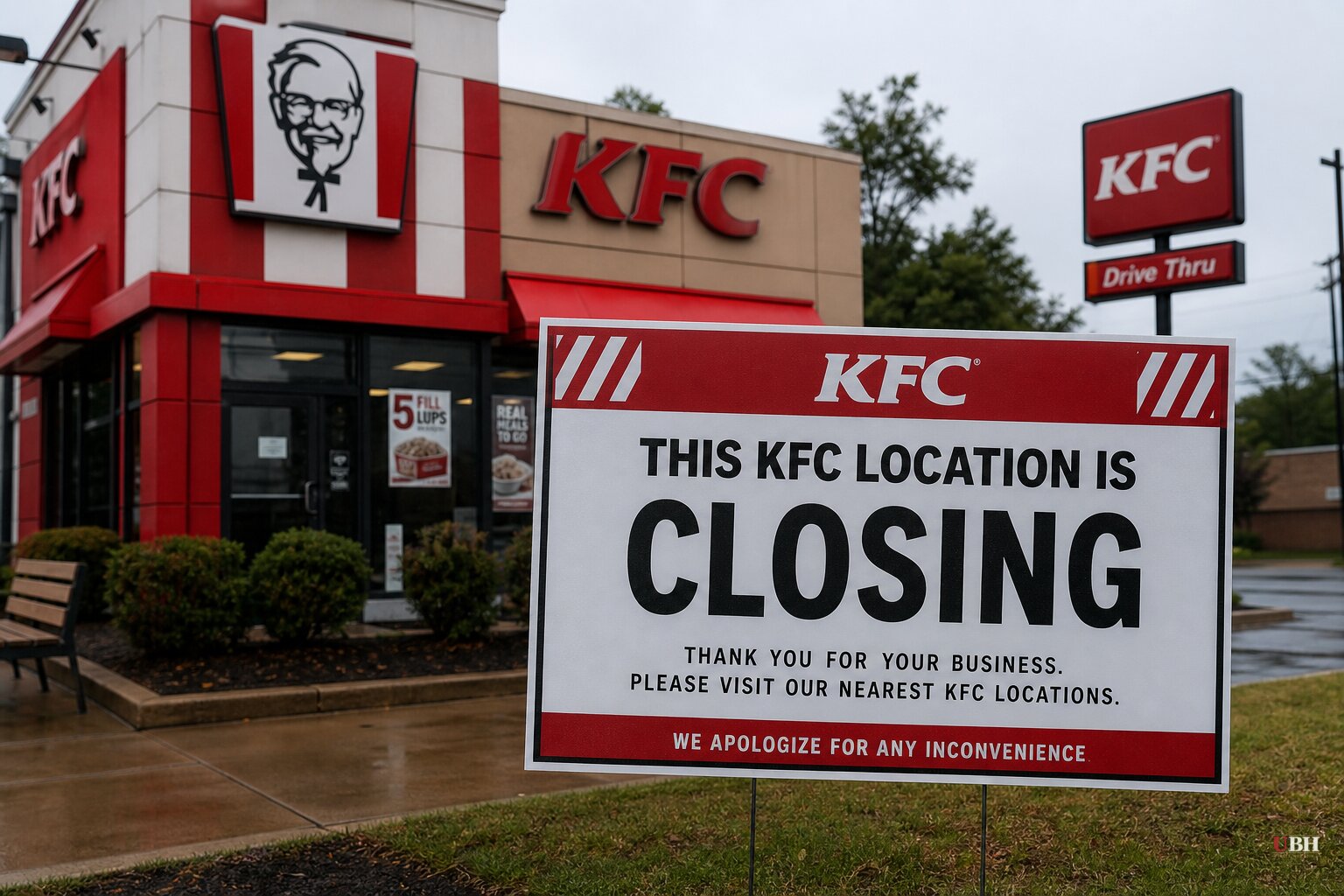
KFC is bleeding restaurants in America. The chain closed more than 300 U.S. locations between July 2025 and July 2026, a 7.6% cut to its total domestic footprint, according to an analysis by The New York Post.
California took the biggest hit with 44 closures. Texas lost 34 stores. Ohio shut down 18. Kansas got hit hardest percentage-wise, losing 8 of its 38 locations, more than one-fifth of the state's KFC presence gone in a single year.
The Post's analysis, which pulled Google ratings data, points to a simple explanation: people don't like KFC as much as they used to, at least compared to the competition. KFC scored the lowest average rating among major chicken chains, 3.42 stars across 2,885 rated locations. Chick-fil-A topped the list at 4.3 stars across 3,306 locations. Raising Cane's wasn't far behind at 4.29 stars.
Nearly a full star separates KFC from the top of the category, and in a business where customers have endless options at every highway exit, a full star is the difference between "let's go there" and "let's not."
The Global Picture Looks Very Different
KFC's parent company, Yum! Brands, reported 7% unit growth globally in its second-quarter results, released in July. The company opened 660 new KFC restaurants across more than 55 countries in the first quarter of 2026 alone.
This isn't a company collapsing. It's a company retreating from a market where it's losing to sharper competitors while it keeps expanding everywhere else. American customers voting with their feet against KFC doesn't mean the brand is dying. It means the U.S. specifically has a problem.
KFC Knows It Has a Problem
On June 15, 2026, the company rolled out a rebrand and menu overhaul built around boneless chicken, new beverages, and what the company called "crave-worthy sauces."
"KFC is bringing consumers a more flavor-forward experience built to unlock flavor exploration, personalization and craveability while giving fans more ways to customize to make the menu their own," the company said in its report. Yum! Brands says it wants the new strategy live across KFC's top 20 markets by the end of 2027.
The company acknowledges that Chick-fil-A and Raising Cane's are outpacing it, and it's trying to fix the problem before more stores close.
The Bigger Trend
This is a familiar pattern in American fast food. Regional and national chains that once looked untouchable have vanished when they got outcompeted and failed to adapt. Burger Chef had roughly 1,200 restaurants at its early-1970s peak and looked like a real threat to McDonald's, complete with a kids' meal years before the Happy Meal existed. It's gone now, the last location closed in Tennessee back in 1996. Red Barn grew to 300-400 restaurants known for a broad menu and a self-service salad bar, and disappeared by 1988 after multiple ownership changes and bigger rivals ran it over.
KFC is a global giant with thousands of locations and a parent company still posting growth. But the Google ratings gap and the pace of U.S. closures are early warning signs. Fried chicken didn't used to be a crowded category in America. Now Chick-fil-A, Raising Cane's, Popeyes, and Zaxby's are all fighting for the same customer, and the ratings data suggests KFC is losing that fight on quality and consistency, not just marketing.
What's Unresolved
Neither The Post's analysis nor Yum! Brands' own quarterly report spells out exactly how much of the U.S. decline is driven by consumer taste shifting toward rivals versus other factors like lease costs, franchisee profitability, or real estate decisions in specific markets like Kansas and Ohio. Star ratings measure customer sentiment, they don't prove causation on their own.
The test comes at the end of 2027, when KFC says its rebrand strategy is supposed to be live across its top 20 markets. Whether that menu overhaul actually pulls customers back, or whether the chain keeps shedding stores while Chick-fil-A and Raising Cane's keep opening new ones, will show up in next year's closure numbers.
Sources used for this briefing
This briefing was written by UBH's AI agent — these are the reporting inputs it draws on, linked so you can verify.


