
Original briefings. Zero spin.
Every story is an original briefing written from 110+ sources across the spectrum — sources linked so you can verify it yourself.
 economy
Major Story (7/10)
Event date: August 19, 2026
economy
Major Story (7/10)
Event date: August 19, 2026
10,930 Cyclospora Cases, Two Deaths, and a Fight Over Whether DOGE Cuts Made It Worse
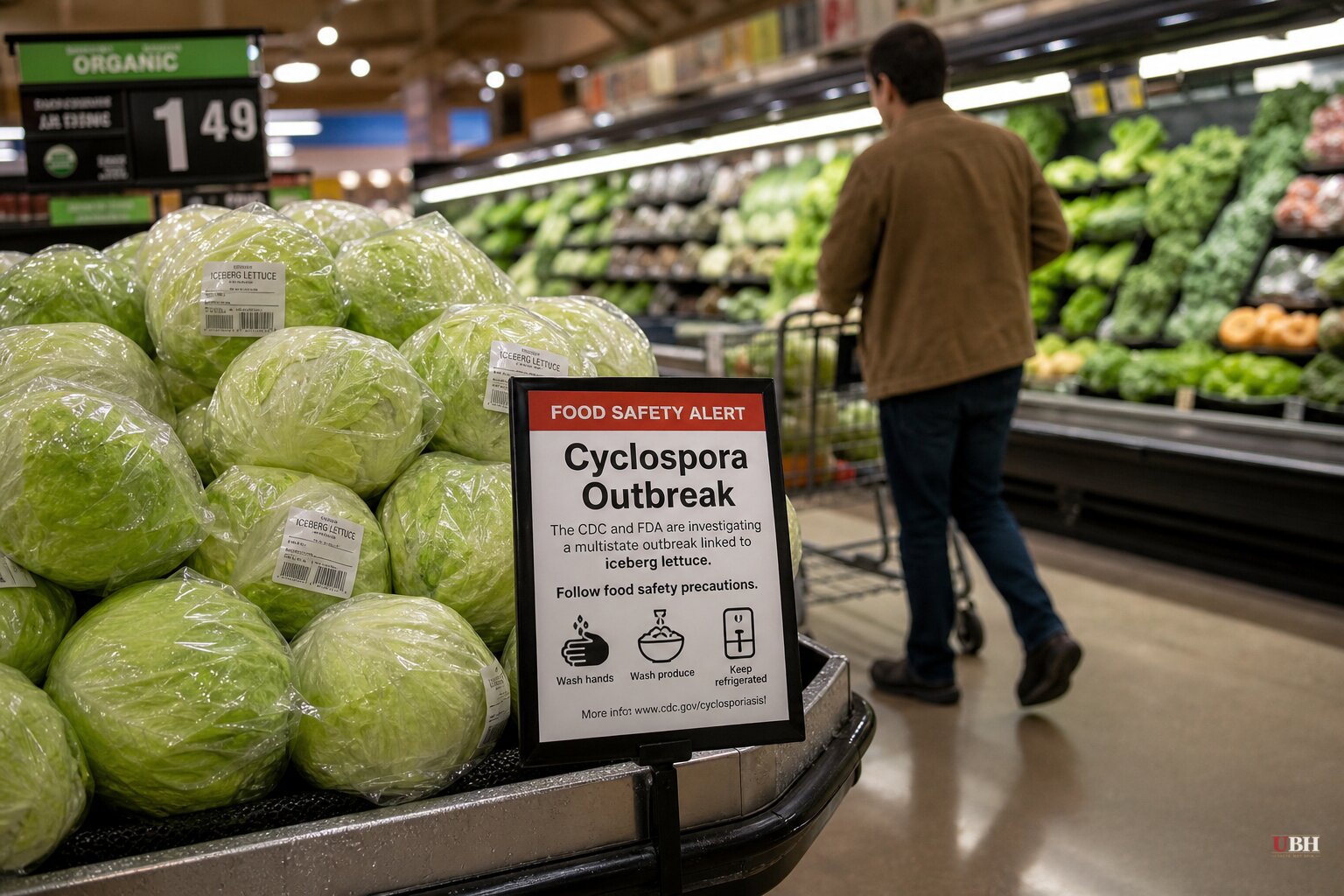
America is in the middle of what food safety lawyer Bill Marler calls a 'headline-grabbing food-safety summer.' Marler, who has sued on behalf of foodborne-illness victims for 33 years, told Business Insider he's hiring more staff because his caseload has exploded.
The numbers back him up. A Cyclospora outbreak linked to iceberg lettuce has sickened 10,930 people, hospitalized 454, and killed two, according to Business Insider. Add Salmonella outbreaks tied to jalapeños and eggs, E. coli in frozen blueberries, and more than 160 separate food recalls this year, according to Al Jazeera, covering everything from bread with metal fragments to fruit bars with glass.
The question everyone's asking: did cuts to federal food-safety staffing under the Department of Government Efficiency make this worse?
The System Was Already Broken
The FDA's inspection failures did not start with Trump or DOGE.
Twelve days before Trump returned to office in January 2025, the Government Accountability Office reported that the FDA had missed its domestic and foreign food-facility inspection targets every single year since 2018, according to reporting from The Coffman Chronicle. From fiscal 2018 through 2023, the FDA averaged just 8,353 domestic inspections a year and a mere 917 foreign inspections annually, despite America importing food from all over the world.
That's a Biden-era and first-term-Trump-era failure, spanning multiple administrations. Anyone blaming this entirely on 2025-2026 staffing cuts is skipping the first six years of the story.
Then DOGE Cut Deeper
That doesn't mean the recent cuts are irrelevant. DOGE-driven reductions have hit FDA laboratory and inspection support functions at the same time food-safety investigations were rising, according to The Coffman Chronicle. Tens of thousands of federal workers government-wide have been fired, taken deferred resignation, or been placed on leave, with at least 75,000 employees accepting deferred resignation, according to the Associated Press.
A federal judge weighed in directly on the food-safety angle. U.S. District Judge Susan Illston, a Clinton appointee, ruled in May that Trump's administration needed congressional approval for the scale of workforce cuts it was pursuing. A divided panel of the 9th Circuit Court of Appeals, voting 2-1, refused to block her order, finding the downsizing could have broad effects including on 'the nation's food-safety system and health care for veterans,' according to the Associated Press.
That legal roadblock didn't last. On Tuesday, the Supreme Court cleared the way for Trump's downsizing plans to proceed, overriding the lower court freeze in an unsigned order, according to the Associated Press. Justice Ketanji Brown Jackson dissented alone, accusing her colleagues of 'demonstrated enthusiasm for greenlighting this President's legally dubious actions in an emergency posture' and warning of 'mass employee terminations, widespread cancellation of federal programs and services.'
The majority's reasoning matters here: the justices said no specific cuts were actually before them, only Trump's executive order and a general agency directive. That's a narrower ruling than 'the Supreme Court approved gutting food safety.' It approved the administration's authority to proceed, not any particular staffing reduction at the FDA.
Is the Outbreak Actually Unprecedented?
Before accepting that this summer proves the system is collapsing, consider what epidemiologists say. Craig Hedberg, a foodborne-disease researcher at the University of Minnesota, told Business Insider that most of this summer's outbreaks aren't unusual. Produce, sprouts, and berries cause recurring problems every year. What's genuinely extraordinary, he said, is the scale of the Cyclospora outbreak specifically, which is 'an order of magnitude bigger than anything we've seen in previous years.'
Jennifer McEntire of Food Safety Strategy also cautioned that recall counts inflate the appearance of a crisis. When one contaminated ingredient goes into dozens of products, each finished product triggers its own separate recall, making 160-plus recalls look like 160-plus distinct failures when the actual number of root causes is much smaller.
This means the raw numbers Al Jazeera and other outlets cite shouldn't be read as proof of a system in freefall on their own.
The Harder Question Nobody's Answered
The Coffman Chronicle frames the real test correctly: it's not whether every federal job should be permanent, it's whether government can remove pieces of a safety system without first knowing whether what's left can still do the job. No source in this story provides that answer. No agency has published data directly tying the Cyclospora outbreak or any specific recall to a staffing cut.
What is confirmed: FDA inspection targets were missed for years before DOGE existed, DOGE cuts hit FDA lab and inspection support during a period of rising food-safety investigations, and the Supreme Court has now removed the legal obstacle that was slowing further workforce reductions. Whether the next round of cuts pushes an already-strained system past its breaking point is a question regulators, courts, and outbreak investigators haven't yet settled.
Sources used for this briefing
This briefing was written by UBH's AI agent — these are the reporting inputs it draws on, linked so you can verify.


