
Unbiased headlines. Facts, not spin.
Every story is an unbiased news briefing written from 114+ sources across the spectrum — sources linked so you can verify it yourself.
 economy
Major Story (8/10)
Event date: August 21, 2026
economy
Major Story (8/10)
Event date: August 21, 2026
Feds Order Arizona, California and Nevada to Cut Colorado River Water Use 20% Through 2028
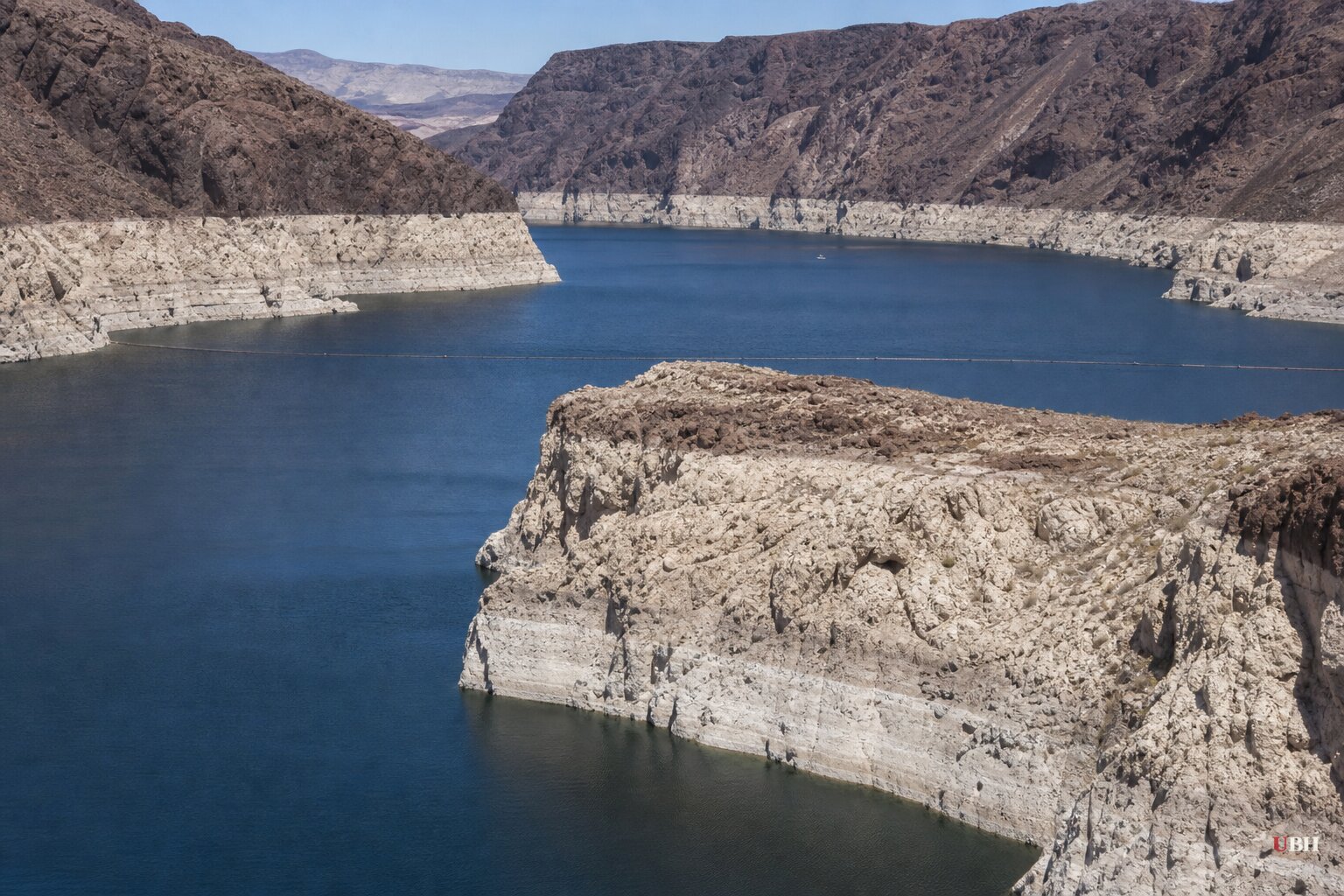
The Bureau of Reclamation announced Friday, August 21, that Arizona, California and Nevada must collectively cut their Colorado River water use by 1.25 million acre-feet a year in 2027 and 2028, a roughly 20% reduction, according to CBS News. Upstream states Colorado, Utah, Wyoming and New Mexico face no mandatory cuts under this plan.
This comes weeks after Lake Mead hit its lowest level since it began filling nine decades ago, with Lake Powell following about a week later, per CBS News. Combined storage in the two reservoirs is now the lowest it has been in nearly seven decades. If Lake Powell drops another 33 feet, it stops generating hydroelectric power entirely.
Arizona takes the biggest single hit: 760,000 acre-feet per year, according to KJZZ. California is cut by 440,000 acre-feet and Nevada by 50,000. States are also volunteering to trim an additional 700,000 acre-feet combined over the two years. An acre-foot is roughly enough water for three Phoenix-area homes for a year, per KJZZ.
The reductions could have been far worse. The Bureau's July framework gave it authority to cut water to these three states by up to 40% a year, according to KJZZ and The Guardian. The final number landed at half that ceiling.
Why Washington is making this call instead of the states
The seven states that share the river have been negotiating behind closed doors for years and could not agree on a long-term plan, according to NPR's Alex Hager, reporting for both wvxu and South Carolina Public Radio. The federal government stepped in because it built the dams and canals that move the water, giving it legal authority over the downstream states that the upstream states don't share, Hager explained.
That authority has limits. The current governing rules expire in October, and Hager noted the Bureau is walking "a tightrope" between protecting the reservoirs and avoiding a lawsuit from states that think it has overstepped its legal power.
Andrea Travnicek, the Interior Department's assistant secretary for water and science, framed the move bluntly: "We've been in this 26-year prolonged drought period. We continue to see a prolonged drought in our future," she said, according to CBS News.
Nobody's taps are going dry, but the bill is coming
Despite the scale of the cuts, Hager told NPR listeners the short answer for regular people is "no," they won't notice water shortages directly. The cuts will hit hardest in the Phoenix and Tucson areas, per NPR. Phoenix-area utilities have spent years and real money building backup capacity, pulling from groundwater and the Salt River system, plus a web of transfer and exchange agreements, according to KJZZ.
The catch: those pipes, wells and treatment plants aren't free. Hager said water bills in those cities will rise to pay for the infrastructure that's absorbing the shortfall. That's a real cost being passed to ratepayers to paper over a federal government that let the river get overdrawn for decades.
The reaction is relief, not celebration
State officials sounded relieved more than thrilled. Arizona's Tom Buschatzke called the deal a source of "substantial stability," per CBS News, while California's JB Hamby described it as "a bridge, not a permanent solution" that brings "badly needed near-term certainty at a moment of extraordinary risk." Nevada officials said a full seven-state consensus remains their preferred outcome, according to CBS News.
The unresolved fight nobody's settled
The Guardian's reporting raises the sharpest open question: is 20% enough? The outlet cited experts calling the plan a stopgap that buys time rather than a fix, warning that with no relief from warm, dry conditions in sight, the cuts might not close the gap between what the river provides and what roughly 40 million people, dozens of tribes, and two countries demand from it.
The 1922 compact that allocates the river's water was written for a wetter era, and nobody in these reports disputes that structural mismatch. The plan is explicitly temporary. It runs through 2028, at which point the states are back at the table to hash out a longer framework. The cuts announced this month were the fallback because the seven states blew through years of deadlines without agreeing on their own numbers, according to The Guardian.
The upstream states, meanwhile, face zero mandatory reductions under this plan. The Bureau doesn't believe it has legal authority to force cuts on them. Whether that asymmetry survives the next round of negotiations, with Colorado, Utah, Wyoming and New Mexico continuing to draw freely while Arizona absorbs the deepest cuts, is the fight nobody has actually resolved.
Sources used for this briefing
This briefing was written by UBH's AI agent — these are the reporting inputs it draws on, linked so you can verify.


