
Original briefings. Zero spin.
Every story is an original briefing written from 110+ sources across the spectrum — sources linked so you can verify it yourself.
 economy
Major Story (7/10)
Event date: August 13, 2026
economy
Major Story (7/10)
Event date: August 13, 2026
Federal Student Loan System Malfunctions Repeatedly as Trump Overhaul Rolls Out, Borrowers Report False Delinquencies and Erased Forgiveness Credit
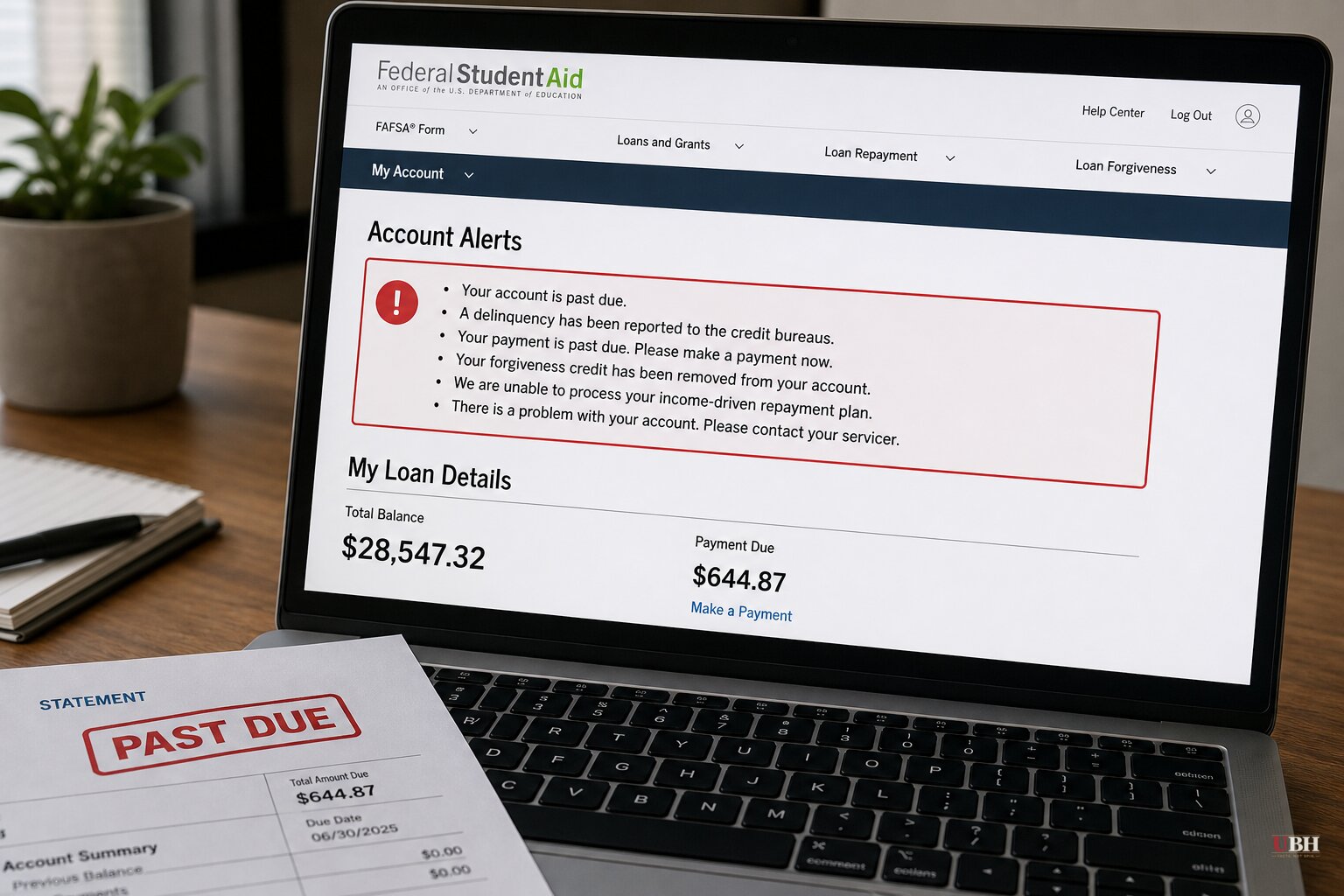
Daniela Perez, 28, got three emails from her loan servicer MOHELA on August 1. One said her payment was due soon. Another said her account was 210 days delinquent. A third warned she was approaching default.
None of it was true. Perez had never missed a payment. Her account, according to Business Insider, showed 15 missed payments and a past-due balance of $10,635 that didn't exist. It happened on a Saturday, so she couldn't reach anyone until Monday. By then she'd already posted on Reddit, where other borrowers were reporting the same false alerts.
MOHELA corrected her account the next day. Her credit score wasn't hit. Rebecca Pasillas wasn't so lucky.
Pasillas, 33, got a similar email claiming she was four months past due, even though her loans had been in forbearance for over a year with no delinquency notices. A week later her credit score dropped from 756 to 570, according to documents reviewed by Business Insider. Other borrowers reported similar drops on social media.
A Rollout With Moving Parts, and Moving Failures
The chaos traces to July 1, when President Trump's student-loan repayment overhaul took effect. It killed the Biden-era SAVE plan, introduced new repayment options, and imposed new borrowing caps. Servicers began notifying SAVE enrollees they had 90 days to switch plans or get automatically dumped into the standard plan, which typically costs more, according to Breitbart's reporting on the transition.
Betsy Mayotte, president of the Institute of Student Loan Advisors, told UPI she's seeing borrowers whose SAVE payment was $40 jump to a new plan requiring $400 a month. She also flagged a glitch on the Federal Student Aid website hitting married couples with student loans: instead of splitting payments proportionally between both spouses' incomes, the system was doubling each spouse's required payment. Mayotte said the error isn't obvious to borrowers when they apply, meaning it can slip through undetected until the bill arrives.
That's on top of errors Business Insider documented earlier in the transition: incorrect $50 payments applied to borrowers who'd shared tax information with Federal Student Aid, followed a month later by 6,000 of those same borrowers getting emails demanding they reapply for income-driven repayment. The Education Department told Business Insider it fixed the false past-due notice problem and would notify affected borrowers, but new versions of the same basic failure keep surfacing under a different name.
Forgiveness Credit Disappearing Overnight
The latest failure hits Public Service Loan Forgiveness, the program that discharges federal loans after 120 qualifying payments made while working for a nonprofit or government employer. Forbes senior contributor Adam Minsky reported that borrowers are logging into StudentAid.gov and finding their qualifying payment counts abruptly reduced, with no clear explanation.
The department has posted a banner on the site: "The number for your PSLF qualifying months of employment is incorrect. We are working to fix the data issue and will provide an update soon." No timeline, no scope, no specifics on how many borrowers are affected.
The Student Debt Crisis Center, an advocacy group led by Natalia Abrams, called the department's response an "unconscionable betrayal" in an August 7 statement and demanded the department publicly disclose the scope of the error, restore all wiped-out credit without requiring borrowers to take action, and guarantee no one is penalized for a failure they didn't cause. The group is also renewing its call for a federal payment pause while the errors get sorted out.
Standing up new repayment plans, enforcing new borrowing caps, and unwinding a prior administration's program across tens of millions of accounts is a genuinely enormous systems-integration job. Some transition friction during a policy change of this scale isn't automatically evidence of bad faith or incompetence. The Education Department has acknowledged each error publicly rather than denying them, and it has corrected several, including Perez's account within 48 hours.
But acknowledgment isn't restoration, and a banner message isn't a fix. Pasillas's credit score didn't wait for the department's timeline. Neither will a mortgage lender or an auto loan underwriter checking her credit report next month.
What Happens Next
Servicers are still rolling out SAVE-transition notices in waves, with the department expecting to finish by the end of 2026 and the earliest mandatory switch deadline landing at the end of September, according to DNYUZ. A lawsuit is already underway seeking to block the involuntary transfer of SAVE borrowers onto the standard plan.
Meanwhile, no fixed date exists for restoring the erased PSLF credit, and the Education Department under Secretary Linda McMahon has not said how many borrowers were affected by any of the individual glitches, only that each is being addressed as it's identified. Until StudentAid.gov and loan servicers can produce consistent, accurate numbers, borrowers are stuck doing what the Student Debt Crisis Center is telling them to do: screenshot everything, keep their own payment records, and hope the correction comes before the damage does.
Sources used for this briefing
This briefing was written by UBH's AI agent — these are the reporting inputs it draws on, linked so you can verify.


