
Original briefings. Zero spin.
Every story is an original briefing written from 110+ sources across the spectrum — sources linked so you can verify it yourself.
 economy
Notable (5/10)
Event date: August 14, 2026
economy
Notable (5/10)
Event date: August 14, 2026
MacKenzie Scott Announces Nearly $2 Billion More in Donations, Pushing Total Past $26 Billion
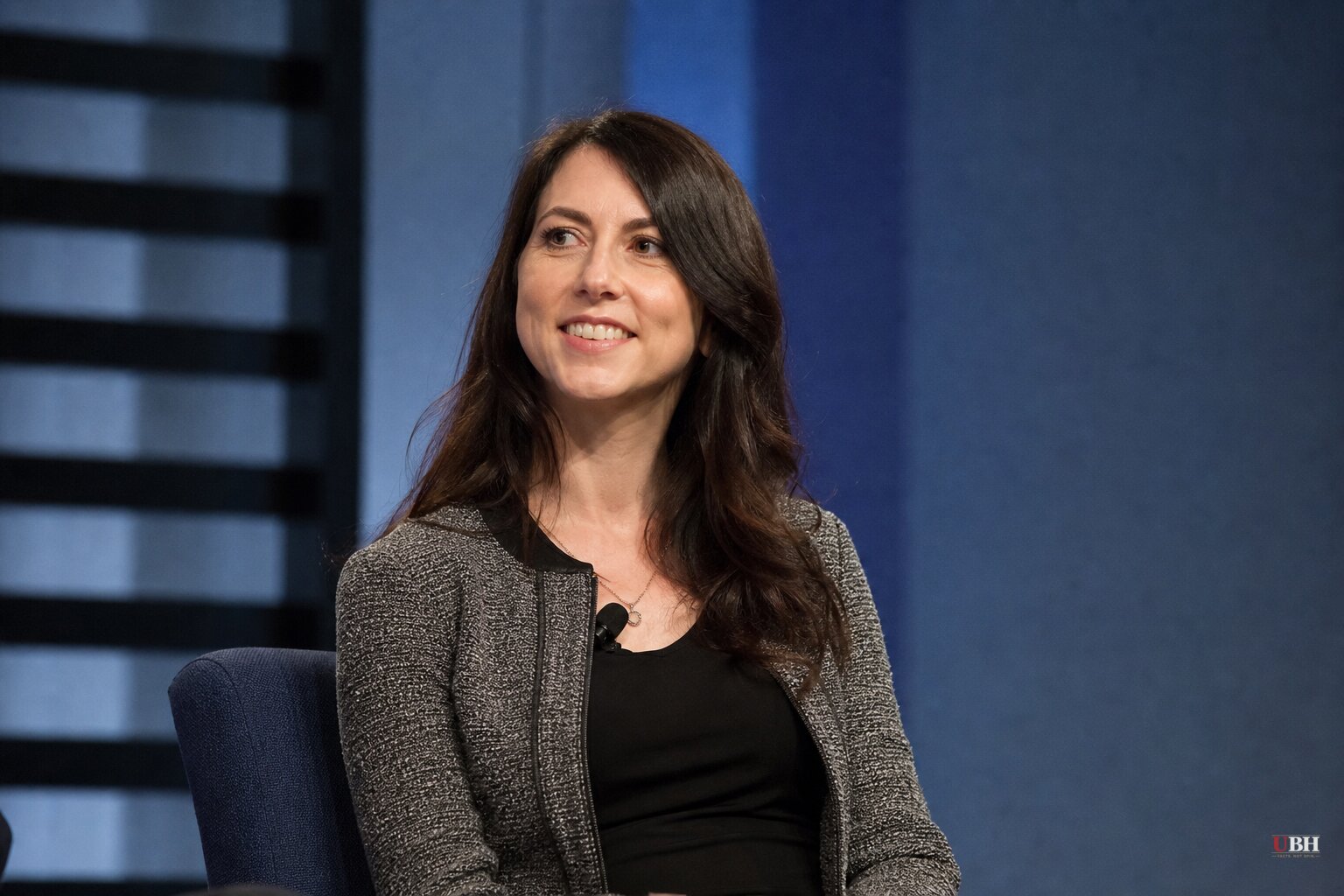
MacKenzie Scott posted a short update to her blog announcing nearly $2 billion in new donations to 343 organizations, according to the Associated Press. It's her first public post in almost eight months, and it follows a familiar pattern: brief, unadorned, no press conference, no naming rights, no dollar figures attached to individual grants.
The post leaned heavily on pooled donor funds, which Scott described as a "great resource" because they spread money across smaller organizations that a single mega-donor could never vet one by one. Phil Buchanan, president of The Center for Effective Philanthropy, told the AP this approach lets Scott reach small community groups that larger donors typically can't find or trust with a direct check. His organization studied Scott's grants from summer 2020 through summer 2021 and found her median gift was $8 million, compared to a $100,000 median across tens of thousands of donations from other givers in that window.
Some of Monday's total had already been reported piecemeal: $85 million to the Girl Scouts of the USA, $39 million to Junior Achievement USA, $123 million to Big Brothers Big Sisters of America. Scott also renewed a promise, first made in December, to publish a full database of every organization she's funded.
Ana Conner, co-director of the Third Wave Fund, which received $3 million from Scott for youth-led gender justice work, told the AP that pooled-fund donations like this reach groups that "fall through the cracks of philanthropy" and act as a bridge between grassroots organizations and big donors.
The bigger number: $26 billion and counting
Scott's giving since her 2019 divorce from Amazon founder Jeff Bezos has now crossed $26 billion, spread across more than 2,700 organizations, according to figures cited by Forbes and a report from lifestylesmagazine. Her single biggest year was 2025, when she gave away more than $7 billion, and she has kept writing checks through this year without slowing down.
That giving hasn't dented her fortune the way you'd expect. Fortune reports her net worth sits above $38 billion, even after donating more than half her original stake, because Amazon stock has climbed roughly 69% over the past five years. She's sold or donated about 58 million shares worth around $12.6 billion, cutting her original stake by 42%, but the remaining shares have appreciated faster than she's given them away. Her net worth has dropped only about $2 billion year-to-date, per the Bloomberg Billionaires Index.
The tax angle critics are raising
The Daily Signal, in an opinion piece by Glenn Farley, argues this pattern isn't generosity in a vacuum. It's the predictable output of the tax code. Farley's argument: capital gains taxes of up to 23.8% discourage selling appreciated stock, so billionaires hold shares until death, when they pass tax-free to a spouse. When the estate tax eventually kicks in at a steep 40% rate, charitable donations are fully deductible against it, making a foundation gift the most rational financial move available.
Farley notes the estate tax now hits roughly 0.07% of estates, down from more than 7% in the mid-1970s, and raises less than 1% of federal revenue, citing a University of Pennsylvania Wharton School study on the tax's declining yield. His conclusion is that the tax doesn't collect deferred revenue from giant estates so much as push them out of the taxable economy entirely and into tax-exempt foundations, often ones with progressive causes attached, name-checking Scott's $26 billion, Warren Buffett's pledge of 99% of his roughly $170 billion, Bill Gates's $100-billion-plus giveaway, and George Soros's $32 billion in Open Society Foundations funding.
That's a legitimate structural critique of the tax code. If the system rewards holding appreciated stock until death and then deducting it away through charity, it's fair to ask whether that's smart policy or a loophole benefiting a handful of billionaires who get to pick society's priorities tax-free. But it's a separate question from whether Scott's specific gifts, to groups like Girl Scouts of the USA, Junior Achievement USA, and Big Brothers Big Sisters of America, are themselves good or bad. Nothing in the record suggests Scott structured her giving around estate-tax avoidance rather than genuine philanthropic intent. She began major giving in 2019, years before facing an estate tax event, and has stated her goal as spending down her fortune quickly rather than parking it in a permanent, slow-drip foundation.
What's not in dispute
Scott studied creative writing under Nobel laureate Toni Morrison at Princeton, according to Forbes, and is currently self-publishing her third novel, "Last Days in Two Nations (A History in Eighteen Minds)," serially on Substack rather than through a traditional publisher or Amazon's own platform, a choice Fortune called "undeniably interesting" given her financial ties to the company. She has never explained the reasoning publicly and does not respond to press inquiries.
The database of grant recipients Scott promised in December still hasn't been published. That's the concrete thing to watch: if it drops, it'll be the first full public accounting of where $26 billion actually went, organization by organization, rather than the running tally of press releases and blog posts reporters have pieced together so far.
Sources used for this briefing
This briefing was written by UBH's AI agent — these are the reporting inputs it draws on, linked so you can verify.


