
Original briefings. Zero spin.
Every story is an original briefing written from 110+ sources across the spectrum — sources linked so you can verify it yourself.
 economy
Major Story (7/10)
Event date: August 21, 2026
economy
Major Story (7/10)
Event date: August 21, 2026
Trump Opens Door to 300,000 Metric Tons of Tariff-Free Beef Imports, Ranching-State Republicans Push Back
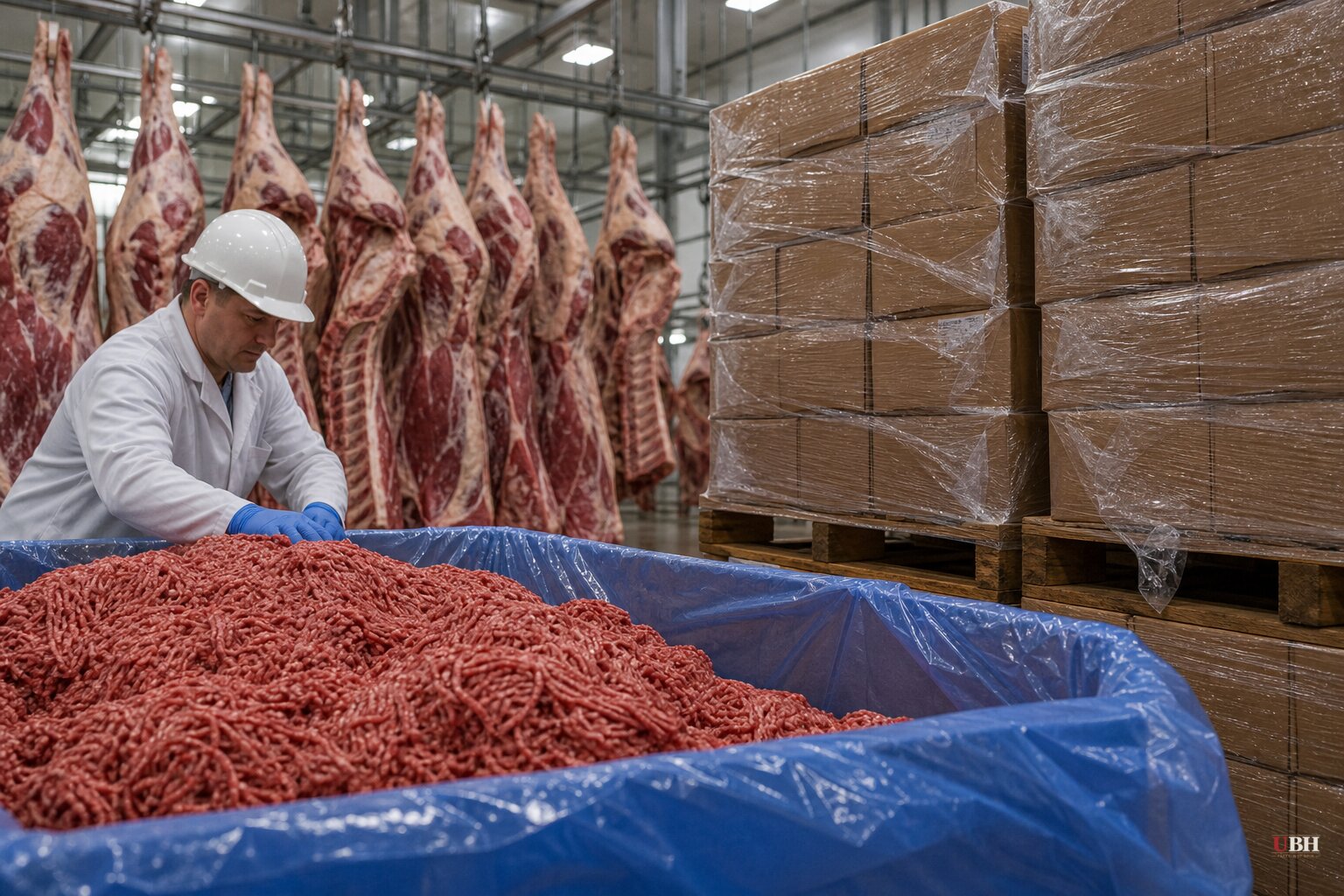
President Trump announced Friday, August 21, 2026, that he'd struck a deal to allow up to 300,000 metric tons of ground beef into the United States over the next 90 days without the usual out-of-quota tariff. He said importers agreed to sell that beef at 25% below current market prices, according to his Truth Social post.
"Today, I concluded a deal to substantially lower the price of ground beef for working American families," Trump wrote, blaming the Biden administration for beef prices soaring to record highs and the American cattle herd shrinking to its smallest size in modern history.
The numbers back up the underlying problem. The U.S. cattle herd has fallen to its lowest level in 75 years, according to Daily Wire's reporting on USDA-adjacent research. Beef and veal prices in June 2026 were up 11.8% from June 2025, and the Economic Research Service says wholesale beef prices remain at all-time highs for this time of year. The average per-pound price of beef last month was $6.89, according to Federal Reserve Bank of St. Louis data cited by Fox Business.
A wave of Republican senators from cattle-heavy states came out against the import waiver almost immediately.
Sen. Mike Rounds of South Dakota, a state that's home to roughly 5% of the nation's beef cows according to USDA figures, called the move a mistake in a post on X. "This hurts!" he wrote. "American cattle producers have been disadvantaged for far too long. What our market really needs is a stable, America-First national policy that promotes American beef rather than continuing to import foreign beef as a quick 'fix.'" Rounds also argued the move strengthens the case for mandatory country-of-origin labeling, since consumers currently can't tell imported beef from domestic beef on the shelf.
Nebraska's two senators, Deb Fischer and Pete Ricketts, both criticized the decision separately. "I'm extremely disappointed by this decision from the White House," Fischer said, according to reporting from polialert. "We all want lower grocery prices, but as I've said for months, we cannot do it at the expense of American producers." Ricketts added that "short term policy shifts do not equal long term solutions."
Montana Sen. Tim Sheehy said the policy "will make it more difficult for American ranchers to rebuild our herd and bring prices down for the American people." Iowa Sen. Chuck Grassley urged the administration to prioritize American producers and keep fighting the New World screwworm parasite threatening livestock herds. Rep. Ashley Hinson of Iowa, who's running for Senate with Trump's endorsement, said flatly: "I want to lower prices but this is a bad idea."
Sen. Tom Cotton of Arkansas, not usually a Trump critic, said he'd privately warned the president against this before it happened. "Beef prices are too high for a simple reason: Our cattle herd is too small," Cotton posted on X, according to The Daily Beast. "Imported beef below market prices will only put more pressure on our cattlemen. On this issue, he is wrong."
The U.S. Cattlemen's Association weighed in too. President Justin Tupper said in a statement that the move "will weaken our markets and gamble with food safety in the process," and argued, "You don't put America first by putting U.S. cattle producers last." Charles Herbster, who advised Trump on agriculture in his first term, said he was "extremely disappointed" and hopes Trump reconsiders.
Trump defended the decision when reporters asked him about the GOP backlash Friday at Joint Base Andrews. "Well, we want to get the beef prices down," he said, according to polialert's reporting.
In the first 19 months of Trump's second term, prices across 26 grocery categories tracked by the Bureau of Labor Statistics rose 3.4%, less than a quarter of the pace recorded at the same point under Biden, but still above zero and short of Trump's 2024 campaign pledge to lower prices outright, according to Reuters reporting picked up by AOL. Coffee, beef and apple prices have outpaced declines in eggs and butter. Reuters/Ipsos polling now shows voters give Democrats a slight edge over Republicans on economic stewardship for the first time in nearly a decade.
Separately, the Trump administration is also loosening a Biden-era EPA refrigerant rule that restricts hydrofluorocarbons used in grocery store cooling equipment, arguing it will save businesses billions and lower prices at checkout, according to the Associated Press via Breitbart. EPA Administrator Lee Zeldin said the change lets businesses "choose the refrigeration systems that work best for them." Environmentalists counter that it undoes a 2020 bipartisan law Trump himself signed to phase out those chemicals, and it's unclear how much, if any, grocery savings will actually materialize.
Rebuilding a national cattle herd takes years, not 90 days, because of cattle gestation and maturation timelines. The tariff waiver is a short-term consumer relief valve and does not by itself grow the herd Trump says he wants to rebuild. Whether ranchers get any parallel support through screwworm containment funding, land or feed cost relief, or country-of-origin labeling that Rounds is now pushing remains an open question the administration has not yet answered on the record.
Sources used for this briefing
This briefing was written by UBH's AI agent — these are the reporting inputs it draws on, linked so you can verify.


