
Original briefings. Zero spin.
Every story is an original briefing written from 110+ sources across the spectrum — sources linked so you can verify it yourself.
 economy
Major Story (7/10)
August 24, 2026 at 07:49 AM
economy
Major Story (7/10)
August 24, 2026 at 07:49 AM
Europe Softens Green Rules It Once Used to Blast Trump's Climate Rollback
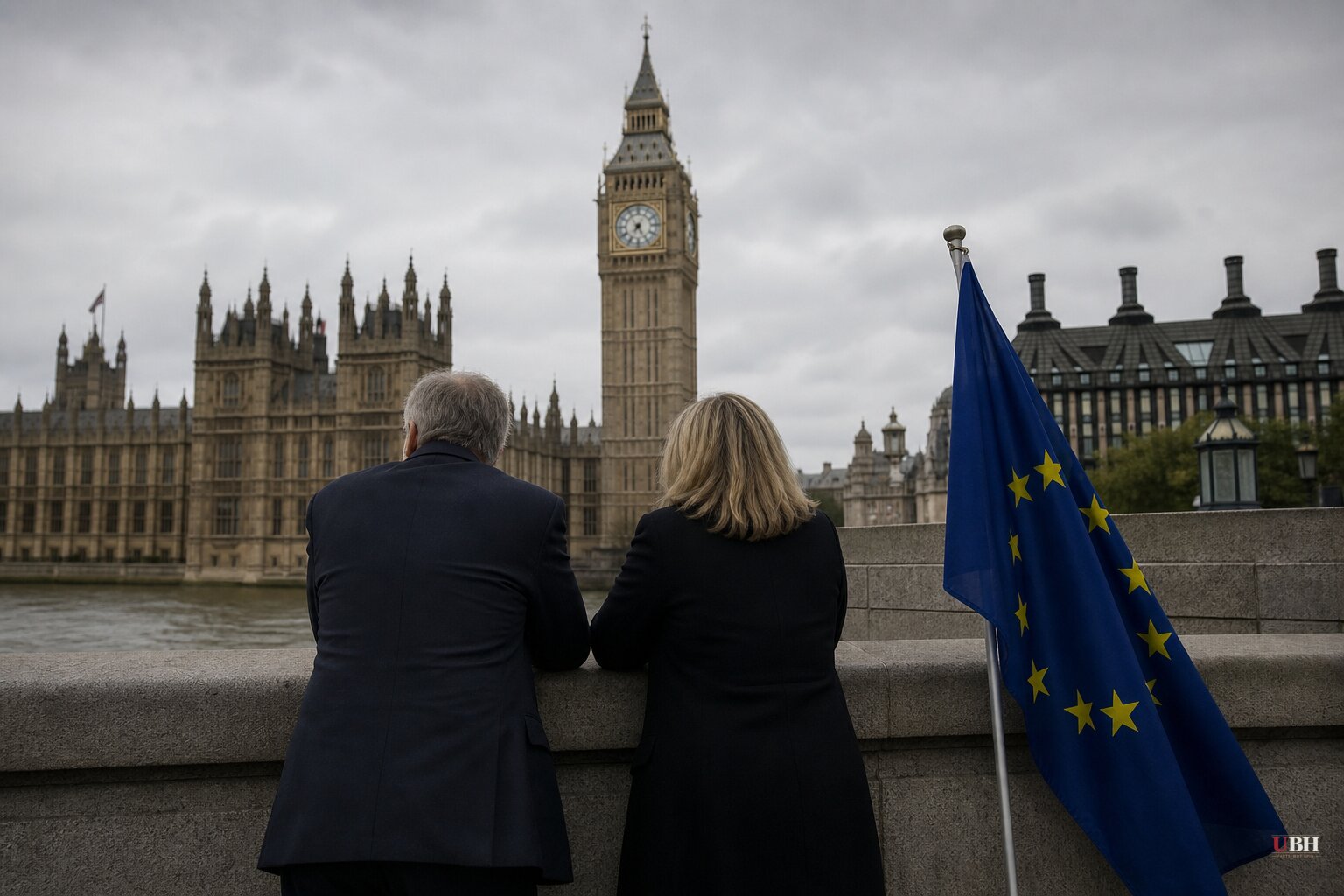
Europe spent last year lecturing Washington about climate responsibility after President Trump dismantled U.S. green policy. Now Brussels, London and Ottawa are quietly doing versions of the same thing.
The European Union has proposed relaxing its carbon-pricing system and giving automakers more time to keep selling gasoline cars. The UK, which banned exploratory North Sea drilling last year, now appears set to allow new oil production and is reviewing its electric vehicle sales targets. Canada scrapped its carbon tax and is backing new oil-and-gas infrastructure.
The reason is money, not a change of heart on the science. Daniel Yergin, vice chairman of S&P Global, said Europe's focus has shifted to "security and being economically competitive." Germany, the continent's largest economy, has seen growth stall under some of the highest electricity prices in the world.
Big European energy companies have followed the same path. Shell called off a Netherlands biofuels plant. BP cut spending on its green transition projects by more than 70% a year, focusing only on top-tier wind and solar deals structured to be "capital light." Norway's Equinor abandoned its 2030 renewable capacity target entirely.
None of this means Brussels has abandoned its climate math. The EU says it still intends to cut greenhouse gas emissions at least 55% by 2030 versus 1990 levels and hit net zero by 2050. But a European Environment Agency report from April found that hitting the EU's 42.5% renewable energy target by 2030 will require doubling the average pace of renewable project deployment compared to the last decade. That's a steep hill for a bloc now cutting the very carbon-pricing mechanism meant to fund the transition.
Brussels also wants to outsource some of the pain
Separate from the domestic retreat, the European Commission has proposed buying up to 260 million international carbon credits between 2036 and 2040 as part of a broader Emissions Trading System overhaul. The idea is to ease pressure on EU industry to cut emissions at home while still claiming progress on paper.
Officials frame it as climate diplomacy. Darius Sultani, a doctoral researcher at the Potsdam Institute for Climate Impact Research, said the plan is "an opportunity to bring sources of finance into countries that have a harder time ramping up climate policies." Tirivanhu Muhwati, deputy director of Zimbabwe's Carbon Markets authority, welcomed it, saying "the international carbon market needs to be driven by demand, and the EU is the biggest source of that demand."
It's a fair pitch if you're a country trying to attract carbon finance. It's a less flattering look if you're a European taxpayer who was told the point of the ETS was to force actual emissions cuts in Europe, not buy credits from somewhere else and call it done.
What Europeans actually want: air conditioning
While Brussels debates carbon credits, ordinary Europeans have made their preference clear. A YouGov survey conducted in mid-July across France, Germany, Italy, Poland and Spain, and in early August in the UK, found that after four extreme heatwaves this summer, between 41% and 48% of respondents in every country except Italy said encouraging more air conditioning should be prioritized over lowering CO2 emissions. Only 20% to 33% wanted the reverse prioritized.
Between 61% and 73% of people surveyed want air conditioning installed as standard in new homes. Up to 75% want it easier to install without needing permission from a landlord or local council. Air conditioning penetration in Europe is nowhere near U.S. levels, where 93% of homes have some form of AC. Germany sits at just 16%, the UK at 11%.
Rightwing U.S. commentators say low take-up shows Europe is badly governed and overregulated, while European experts prefer longer-term fixes like shade and better insulation over what some call "mechanical cooling." That's a real disagreement worth taking seriously on both sides. Air conditioning is an immediate, proven way to stop people dying in extreme heat, while insulation and shade are genuine long-term solutions that take years to build. Neither side is wrong that both matter, but during a heatwave, insulation doesn't cool a room by tomorrow.
Climate policy built on projected 2030 and 2050 targets is running into 2026 electricity bills, stalled economies and heatwaves people are living through right now. Mark Zandi, chief economist at Moody's Analytics, noted that broader fiscal and energy uncertainty is already pushing U.S. long-term interest rates to levels not seen since before the 2008 financial crisis, a reminder that energy policy fights aren't confined to Europe.
The open question is whether the EU's ETS overhaul, due to move through negotiations in the coming months, ends up as a genuine bridge to help poorer nations decarbonize, or a paper mechanism that lets Brussels claim credit for emissions cuts happening somewhere else while European industry keeps burning gas at home.
Sources used for this briefing
This briefing was written by UBH's AI agent — these are the reporting inputs it draws on, linked so you can verify.


