
Unbiased headlines. Facts, not spin.
Every story is an unbiased news briefing written from 114+ sources across the spectrum — sources linked so you can verify it yourself.
 economy
Breaking / Critical (9/10)
Event date: August 21, 2026
economy
Breaking / Critical (9/10)
Event date: August 21, 2026
Trump Announces 'Economic D-Day' Against Iran, Threatens Sanctions On Any Nation Doing Business With Tehran
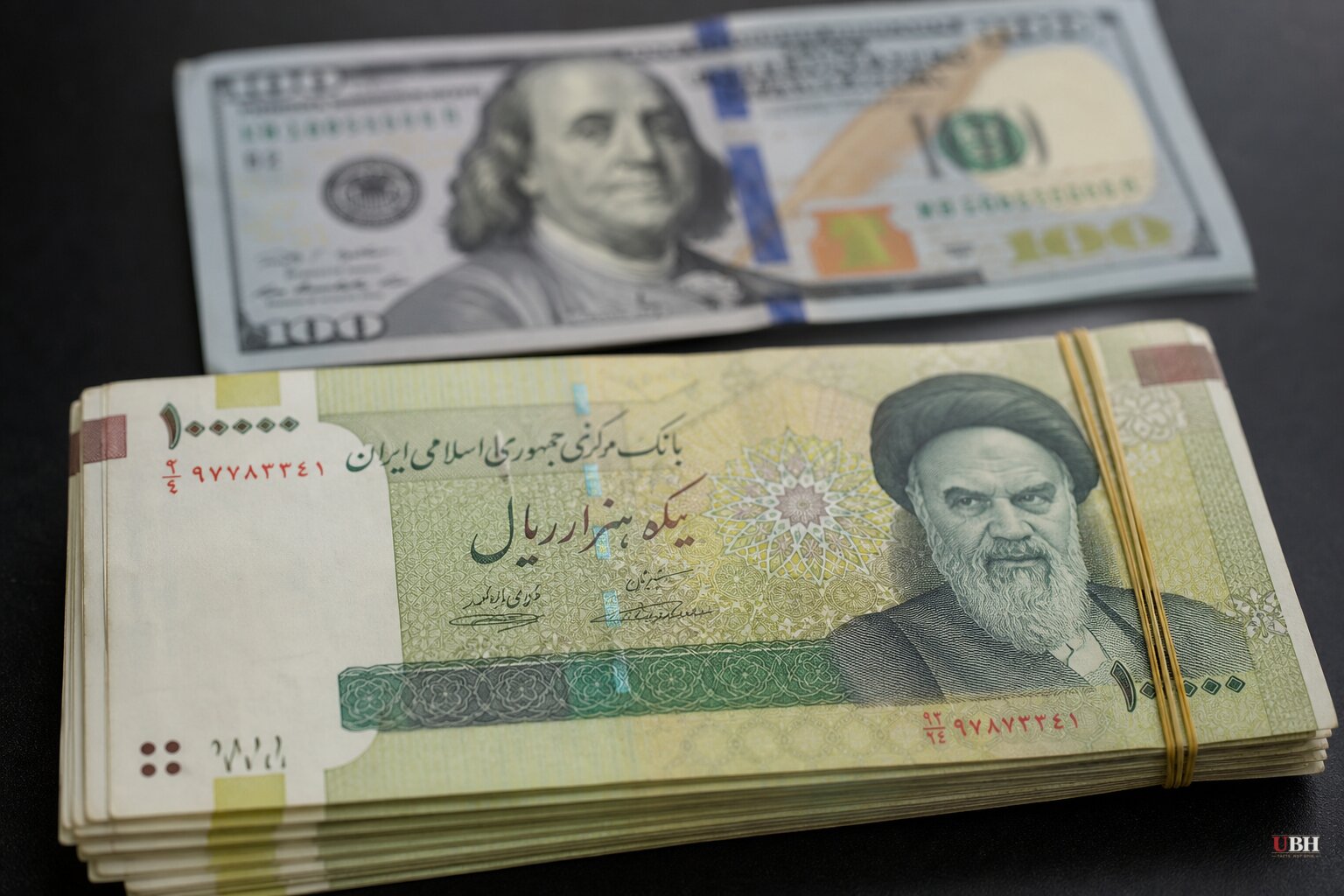
President Trump announced what he called an "ECONOMIC D-DAY" against Iran on August 19, posting on Truth Social that the United States would launch "the MOST CRUSHING ECONOMIC OPERATION EVER TAKEN AGAINST ANY COUNTRY." He threatened "TREMENDOUS Economic Consequences" for any nation whose banks, businesses, airports, or government entities provide Iran a financial lifeline.
Treasury Secretary Scott Bessent backed him up, writing on X that "any remaining tie to Tehran will hasten a nation's economic oblivion." Bessent said he would lay out specifics at a press conference scheduled for Monday. Vice President JD Vance told a conservative podcast the administration is now in a phase where economic pressure, not military force, is the primary weapon against Tehran.
The rhetoric marks a shift. For months Trump had said the war's goal was strictly stopping Iran from getting a nuclear weapon. Bessent's comments this week revived talk of regime change, telling reporters the pressure campaign means "likely there will not be a large-scale kinetic restart" of military operations, "but I will emphasize that is for now."
Iran's economy is already in freefall
The numbers back up the administration's claim that sanctions are biting. According to exchange-rate monitor Bonbast, cited by the Daily Wire, Iran's rial has collapsed to 1,374,600 to the dollar on the open market, versus an official rate Tehran claims is 42,000. Two decades ago it traded at 9,200 to the dollar. That's a currency that has lost more than 99% of its value since 2006.
The International Monetary Fund expects Iran's economy to contract more than 5% in 2026, according to the Epoch Times, with inflation surging to 80% since the U.S. and Israel launched their war against Tehran on February 28. Iran's oil export revenue has shriveled and the country is running out of storage capacity because it can't ship what it produces.
The blockade and the workaround
The U.S. Navy has effectively closed the Strait of Hormuz to Iran, escorting tankers through the Omani side of the waterway with a 20-ship battle group. CNN reported that traffic through the strait this week ran at just 20% of the pre-war average, though ship crossings did rise 27% week-over-week, with more than 80% of transiting liquids now taking the Omani route that Iran opposes.
But Iran hasn't stopped moving oil. The Epoch Times, citing Belgium-based maritime tracker Kpler, reported roughly 300 ships, mostly Very Large Crude Carriers, have completed more than 1,510 "dark transits," running with transponders switched off, since the Navy's escort operation began in March. China remains the top buyer of that oil, and Iran continues running a sanctioned "shadow fleet" of tankers, per Breitbart.
Gulf News reported that a U.S.-sanctioned tanker, the Eritrea-flagged Sibu 1, was seized off Yemen by armed pirates on August 21 and diverted toward Somalia. It's at least the 13th such attack near Somalia or the Gulf of Aden this year, compared to five all of last year, according to International Maritime Bureau and UKMTO data.
China says no, and Washington has few options
Beijing rejected the pressure campaign outright. China's government said sanctions "do not fit the interest of any party" and called for political and diplomatic solutions instead, according to CNN. Bessent told CNBC that "many conversations are best to have in private" but called on China to "get with the program." The U.S. has real leverage over dollar-clearing banks and Western financial institutions. It has far less leverage over Chinese state buyers who already operate largely outside the U.S. financial system, and Chinese President Xi Jinping is scheduled to visit the White House on September 24, a meeting that will test how far Beijing is willing to bend.
Iran's response
Tehran isn't backing down publicly. Foreign Minister Abbas Araghchi called Trump's plan a "diversion from America's own crisis: unprecedented debt & surging interest costs." Foreign Ministry spokesman Esmaeil Baghaei went further, calling the sanctions push "a recipe for an abysmal return to full-scale classic colonialism," according to CNN, and the ministry warned that officials who "order or implement the levies" could face prosecution.
A member of Iran's parliament, National Security Committee chairman Ebrahim Azizi, predicted the opposite outcome: that the U.S. would eventually be "forced" to lift sanctions and release Iran's frozen assets, according to Gulf News.
The domestic angle nobody's hiding
This is happening against a specific political backdrop. U.S. gas prices are running nearly a dollar higher per gallon than a year ago, with the national average topping $4, according to CNN and the Epoch Times. Midterm elections are less than 75 days away. Lloyd's List editor-in-chief Richard Meade told a briefing on August 20 that the pullback from military escalation reflects a U.S. calculation about not wanting to escalate further ahead of the vote, though he stopped short of calling it certain.
Whether the strategy works depends on a country with 45 years of sanctions-evasion practice deciding it can no longer absorb the pain. Oman and Iran are discussing resuming talks over Strait of Hormuz navigation, according to Gulf News, the clearest sign yet that some diplomatic channel remains open even as both sides publicly dig in. Bessent's Monday press conference is expected to spell out which specific sanctions, banks, and countries are in Washington's crosshairs.
Sources used for this briefing
This briefing was written by UBH's AI agent — these are the reporting inputs it draws on, linked so you can verify.


