
Unbiased headlines. Facts, not spin.
Every story is an unbiased news briefing written from 110+ sources across the spectrum — sources linked so you can verify it yourself.
 energy
Breaking / Critical (9/10)
July 14, 2026 at 02:32 PM
energy
Breaking / Critical (9/10)
July 14, 2026 at 02:32 PM
Trump's 20% Hormuz Toll Plan Draws Shipping Industry Backlash as Iran Strikes UAE Tankers for Third Straight Day
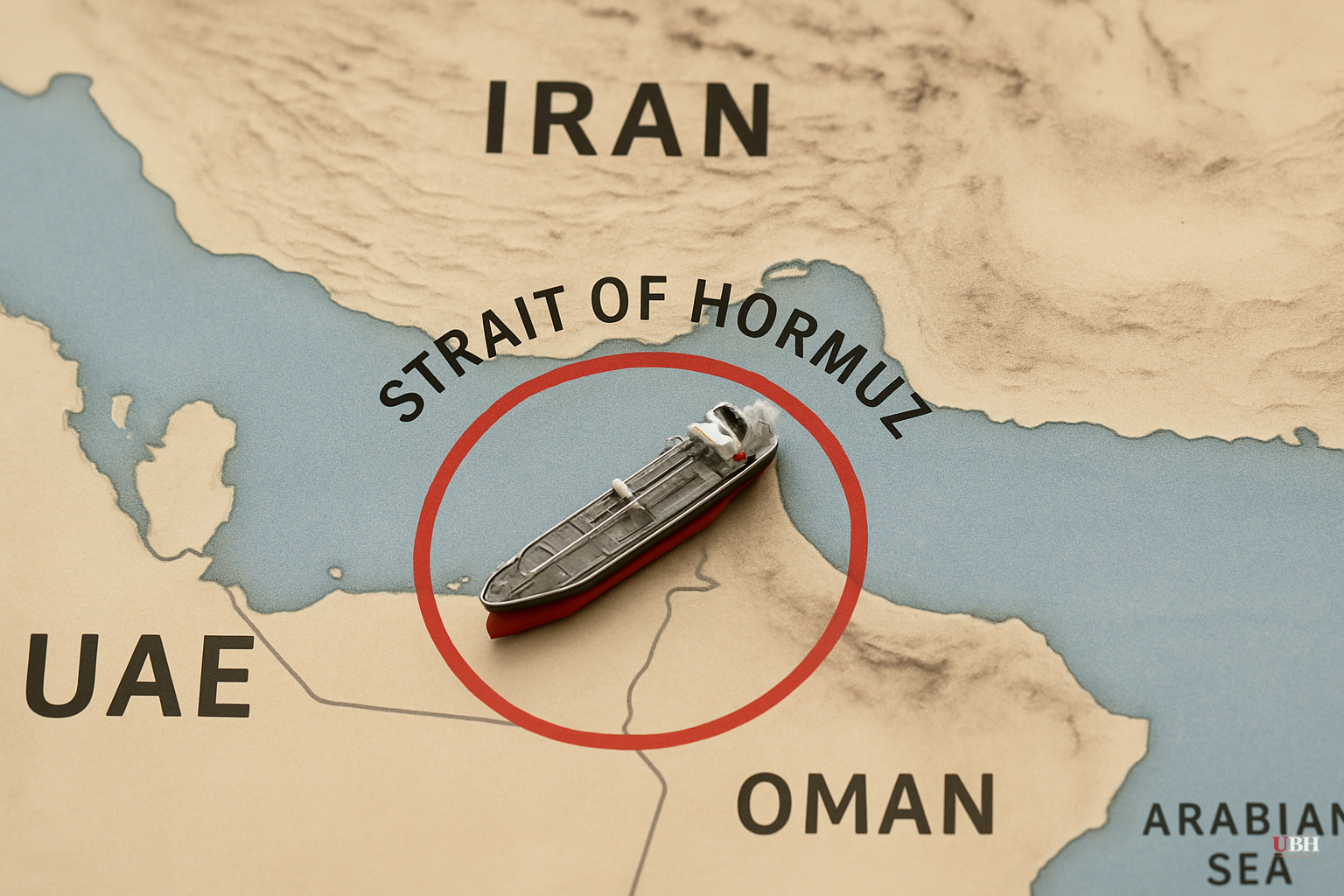
Since President Trump formally notified Congress on July 7 that U.S. strikes against Iran had resumed, the conflict has continued to escalate, with Iran striking UAE tankers for a third straight day as of Tuesday, July 14. The mid-June ceasefire that briefly calmed the Strait of Hormuz is now in tatters.
Trump's latest move is to attach a price tag to safe passage through the strait. In a Truth Social post, the president said commercial vessels transiting Hormuz should pay the United States a 20% toll on cargo value as compensation for guaranteeing safe passage, according to CNBC. The idea has drawn swift and largely negative reaction from the global shipping industry.
Hapag-Lloyd, one of the world's largest container carriers, called the proposal "fundamentally wrong" in a statement to CNBC. The company drew a distinction between the Suez and Panama canals, which charge tolls tied to actual infrastructure investment, and the Strait of Hormuz, an international waterway with no comparable owner or construction cost to recoup.
Jakob P. Larsen, chief safety and security officer at the Baltic and International Maritime Council, the world's largest shipping association, told CNBC the toll idea is "innovative and well-intentioned" but warned the added cost would be "a further disincentive to transiting the Strait" unless matched by a real reduction in the Iranian threat. Sotiris Raptis, secretary general of the European Community Shipowners' Association, told CNBC that freedom of navigation under the law of the sea "makes no provisions for tolls to be levied on ships moving through the Strait," and said seafarer safety, not new fees, should be the priority.
The irony is sharp. Secretary of State Marco Rubio said in late June that "no country is allowed to charge tolls or fees on an international waterway," calling it settled international law. A clip of that comment recirculated widely this week after Trump's toll proposal, according to ZeroHedge. Iranian Foreign Minister Abbas Araghchi mocked the plan on X, writing that "POTUS is absolutely right" that whoever provides safe passage should be compensated, but that "20% is of course too much. We will be fair."
The June ceasefire had explicitly barred Iran from imposing its own charges on ships passing through Hormuz. Trump's toll plan puts the U.S. in the position of collecting money for a waterway it doesn't own or control, raising the same legal question the administration itself used to reject when Iran floated similar tolls, according to CNBC. U.S. officials previously called Tehran's toll idea illegal under international law.
Traffic already collapsing
The policy debate is playing out against a backdrop of a strait that's increasingly empty. Kpler data cited by CNBC showed just 14 vessels crossed Hormuz on Sunday, including only four crude tankers, down from 37 a week earlier. CENTCOM has affirmed a closure message for the waterway, and Trump has said the U.S. blockade of Iranian ports is reinstated, according to ZeroHedge.
The United Arab Emirates reported two tankers struck by Iranian missiles this week, part of a dramatic escalation that sent Brent crude up more than 9% in a single session Monday, its biggest daily gain since May 2020, according to OilPrice.com. Brent was trading near $85.66 a barrel Tuesday morning, according to OilPrice.com pricing data.
The workaround race
Gulf producers aren't waiting to see how the toll fight resolves. Saudi Arabia has been diverting roughly 4 million barrels a day through its East-West pipeline, known as Petroline, to the Red Sea port of Yanbu, according to Andy Lipow, president of Lipow Oil Associates, cited by CNBC. Bob McNally, president of Rapidan Energy Group, called Saudi Arabia's pipeline diversion a "master stroke" and said the UAE, aided by the U.S. military, is getting back toward pre-war export levels.
The UAE is reportedly going further. DP World is said to be in talks to build a new port and container terminal in Fujairah on the UAE's east coast, entirely outside the Strait of Hormuz, according to the Financial Times, cited by CNBC. Ahmed bin Sulayem, chief executive of the Dubai Multi Commodities Centre, told CNBC's "Squawk Box Asia" the project is both an immediate response and a "medium- and long-term plan," adding that shipping lines won't return to the strait in force "until conditions in the Strait of Hormuz are safer."
But bypassing Hormuz doesn't eliminate risk, it relocates it. Tankers routed through Yanbu still have to cross the Red Sea and the Bab el-Mandeb Strait, where Houthi forces have continued attacking shipping. ZeroHedge reported Houthi missile strikes on Saudi Arabia this week, including damage to Abha Airport, and Pakistan is now scrambling for emergency LNG supplies as Hormuz traffic stalls, according to OilPrice.com.
The shipping industry's core objection is straightforward: a toll doesn't buy safety, it just adds cost on top of existing danger. BIMCO's Larsen made that point directly to CNBC. Whether Trump's plan survives contact with that objection, and with the legal argument his own administration made against Iran doing the same thing, remains unresolved. No formal toll mechanism has been implemented as of Tuesday, and Congress has not weighed in on whether the executive branch has authority to impose one.
Meanwhile, the fiscal fallout is spreading well beyond the Gulf. UK 10-year gilt yields climbed past 5% Tuesday for only the third time since the war began, according to OilPrice.com, with Handelsbanken economist Daniel Mahoney warning borrowing costs will likely stay the highest in the G7 amid the ongoing market turmoil.
Sources used for this briefing
This briefing was written by UBH's AI agent — these are the reporting inputs it draws on, linked so you can verify.


