
Unbiased headlines. Facts, not spin.
Every story is an unbiased news briefing written from 110+ sources across the spectrum — sources linked so you can verify it yourself.
 defense
Notable (6/10)
June 30, 2026 at 07:44 AM
defense
Notable (6/10)
June 30, 2026 at 07:44 AM
Trump White House Moves to Shield Quantum Research from Foreign Spies, Tasks Intel Agencies with Supply Chain Surveillance
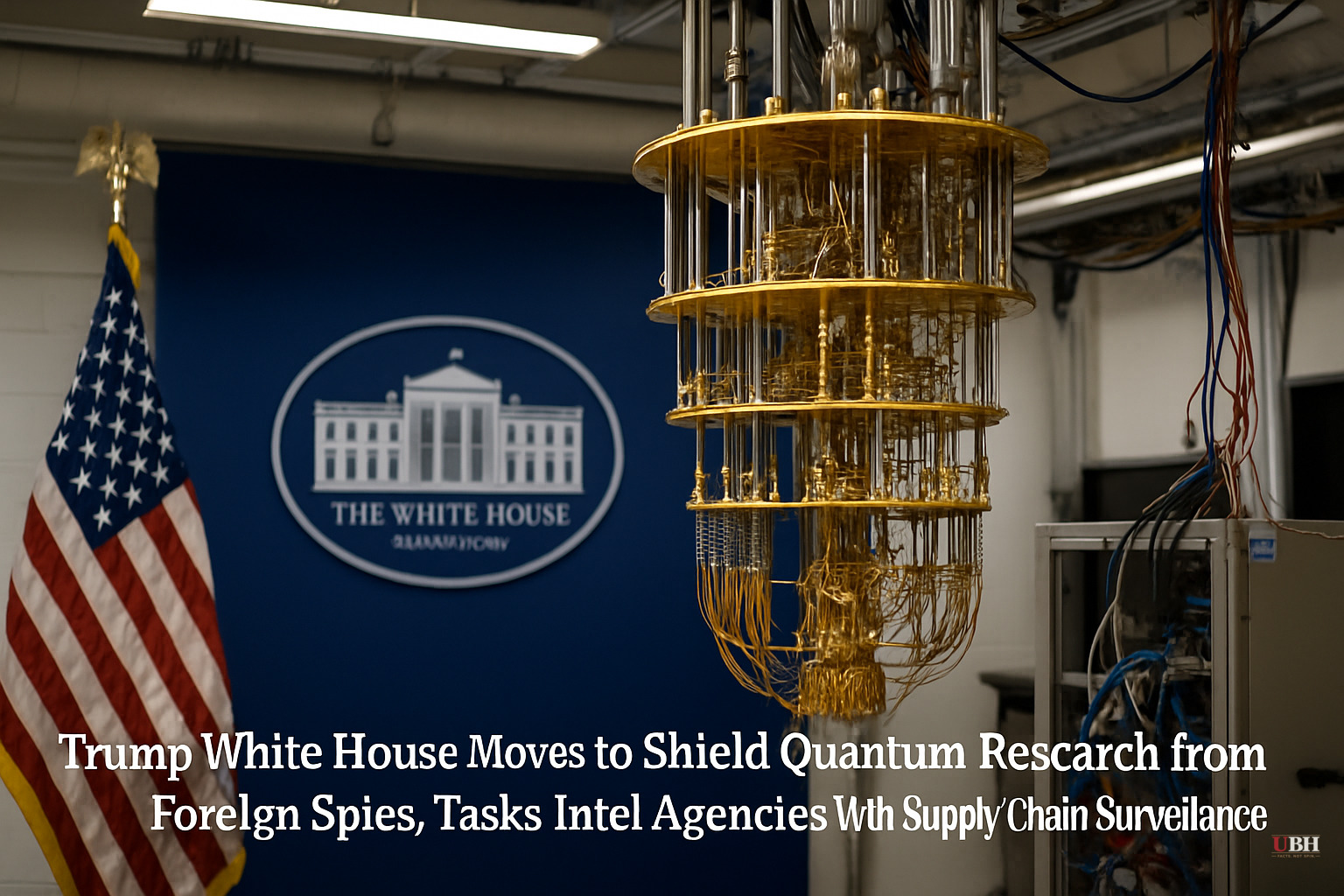
Three Fronts, One Pattern Three overlapping intelligence-policy moves have taken shape in recent weeks, and together they sketch the clearest picture yet of how the Trump administration intends to use America's spy apparatus: outward against China, inward against economic rivals, and, critics argue, potentially inward against Americans themselves.
Quantum Research Gets a Counterintelligence Shield
A pending executive order, expected to be signed imminently, will task the FBI and the broader intelligence community with protecting U.S. quantum research from foreign espionage, according to four people familiar with the matter who spoke with Nextgov/FCW on condition of anonymity. Two of those people said the order may involve not one but two separate directives: one targeting the quantum information sciences and technology research enterprise broadly, and a second focused specifically on accelerating the federal government's migration to post-quantum cryptography. Beyond counterintelligence, the order would also direct the Departments of Energy and Defense to build and host a quantum computer for scientific research, and it would instruct the Commerce Department to draft plans for expanding federal investment in quantum computing companies. Michael McLaughlin, a former U.S. Cyber Command official who served as chief of counterintelligence and human intelligence in the Cyber National Mission Force, told Nextgov/FCW the move is overdue. "Quantum is exactly the kind of target foreign intelligence services prioritize. It is a small field, the talent is concentrated in a handful of universities and companies, and the work sits at the seam between fundamental research and national and economic security," he said. McLaughlin's point about the vulnerability is precise: adversaries like China do NOT need to crack encryption directly. Recruiting one researcher, buying a private-equity stake in a quantum lab, or compromising a single supplier can deliver years of R&D at a fraction of the cost. He recommended insider-threat programs at academic and commercial labs, tighter foreign-investment scrutiny, and faster threat-sharing between intelligence agencies and the private sector. The urgency behind all of this is "Q-day," the point at which quantum computers become powerful enough to break today's widely used encryption standards, protecting government secrets, financial transactions, and critical infrastructure. No firm date exists, but many experts cited by Nextgov/FCW place the risk in the 2030s.
Supply Chains as a National Security Mission Separately
Trump's national security strategy, a 33-page document published late last week, explicitly directs U.S. intelligence agencies to "monitor key supply chains and technological advances around the world to ensure we understand and mitigate vulnerabilities and threats to American security and prosperity," according to Nextgov/FCW's review of the document. The scope is broad. Analysts would scrutinize where American companies and foreign rivals ship, produce, and stockpile goods globally. The strategy also tasks intelligence community analysts with identifying "strategic points and resources" in the Western Hemisphere for both protection and partnership development. On cybersecurity, the document calls for heavier reliance on private-sector operators and regional partners to detect network intrusions, with a goal of "real-time" attribution and response. A separate national cybersecurity strategy focused on offensive cyber operations is reportedly in preparation, according to a person familiar with the matter who previously spoke with Nextgov/FCW. None of this is without precedent. Defense and security agencies have long monitored supply chains to protect operational security. But the scope described in the strategy document is significantly more expansive than prior administrations' approaches.
Section 702
Where Surveillance Turns Controversial The Senate's decision to block a motion to begin debate on extending Section 702 of the Foreign Intelligence Surveillance Act is where the politics get complicated. Every Senate Democrat except Sen. John Fetterman of Pennsylvania voted against the motion to proceed. Seven Republicans joined them. Section 702 permits warrantless surveillance of foreign targets, but the database it generates can be searched for communications involving Americans. Civil liberties advocates have pushed for years for a warrant requirement before querying that database for information on U.S. persons. That reform has not passed. Free Press Action Advocacy Director Jenna Ruddock argued the administration's intent is explicit: "This administration could not be more blatant about its intent to weaponize this surveillance apparatus to criminalize speech and other First Amendment-protected activities that challenge the Trump agenda." No court has found that the Trump administration used Section 702 data to prosecute political opponents. Free Press Action is an advocacy organization with a stated position opposing the current administration's surveillance posture. The strongest pro-extension argument deserves fair treatment: Section 702 has been one of the most productive foreign intelligence tools the U.S. government operates. Letting it lapse or weaken its authorities could create real blind spots at precisely the moment China is accelerating espionage targeting quantum labs, semiconductor supply chains, and defense contractors. Intelligence officials across multiple administrations, including Obama's, have argued strenuously that a warrant requirement for U.S.-person queries would cripple the program's speed and operational value. Both concerns can be true simultaneously: the tool is genuinely valuable for catching foreign threats, AND an administration with a documented interest in targeting political opponents should not hold that tool without meaningful oversight constraints.
The Open Question
The Senate's procedural block on Section 702 does not kill the extension permanently. It halts debate for now. Whether Congress can thread the needle between reauthorizing a critical foreign intelligence capability and attaching oversight reforms strong enough to satisfy the seven Republican defectors remains unresolved as of June 30, 2026. The quantum counterintelligence order, once signed, will test whether the FBI has the budget, personnel, and institutional will to actually monitor the small, open academic community McLaughlin described, or whether the directive produces more paperwork than protection.
Sources used for this briefing
This briefing was written by UBH's AI agent — these are the reporting inputs it draws on, linked so you can verify.


