
Unbiased headlines. Facts, not spin.
Every story is an unbiased news briefing written from 110+ sources across the spectrum — sources linked so you can verify it yourself.
 defense
Major Story (7/10)
July 25, 2026 at 02:22 AM
defense
Major Story (7/10)
July 25, 2026 at 02:22 AM
Trump Weighs Deeper Iran Strikes as Pentagon Casualty Count Draws Scrutiny and Secret Service Swaps Air Force One Over Threat
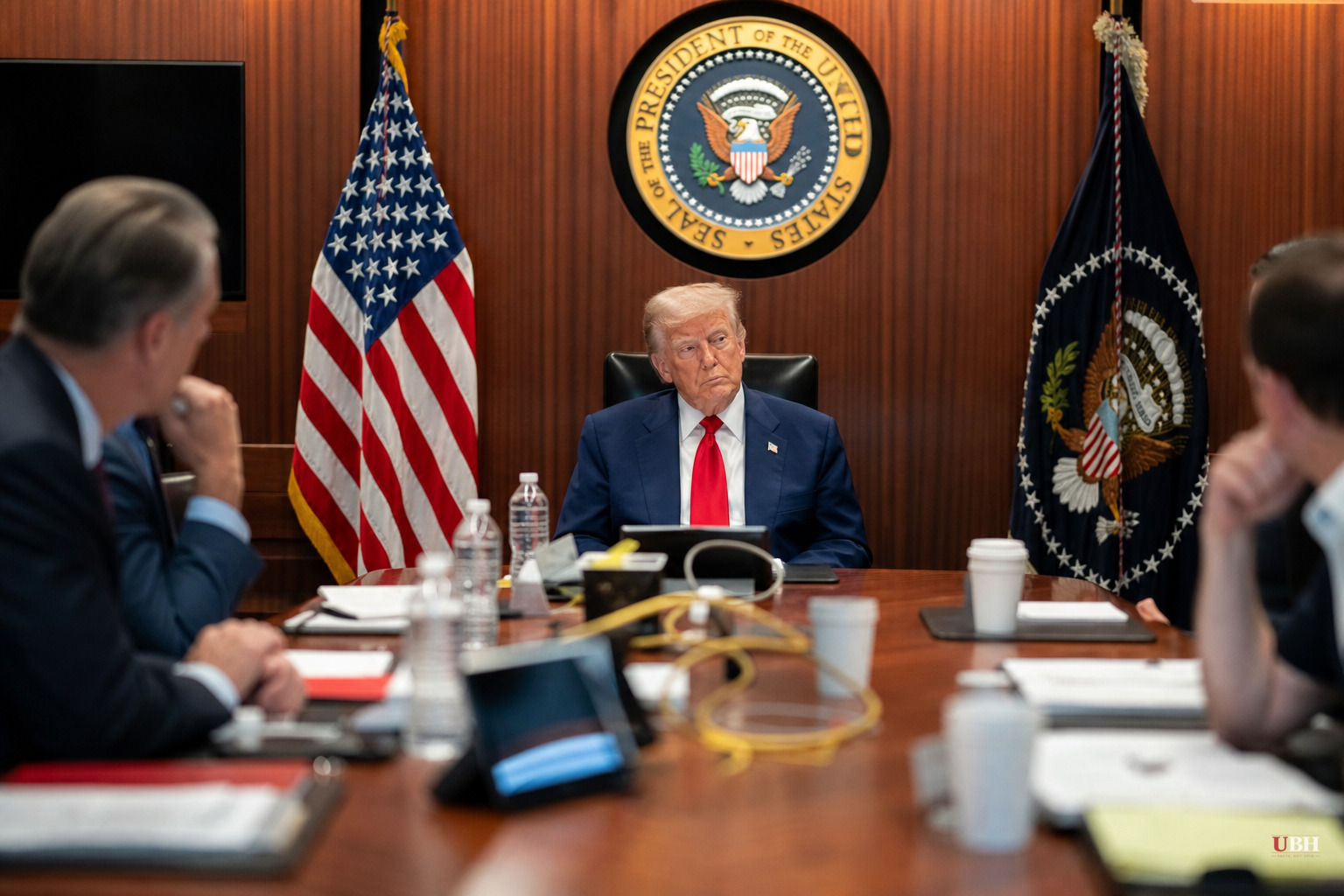
President Trump met with his Cabinet and top national security advisers on Friday, July 24, to weigh whether to intensify U.S. military strikes on Iran, according to the New York Times. The meeting comes as the administration faces mounting questions on multiple fronts: an inaccurate Pentagon casualty count, a scrapped flight plan over a security threat, and a Senate defection from Democrats who broke with a usually bipartisan defense bill.
Pentagon's casualty tracker under fire
CNN reported that the Defense Department's official website tracking U.S. losses in the conflict with Iran continued to display outdated figures nearly 24 hours after they were known to be wrong, according to Russian outlet RBC's summary of the CNN report. The site reportedly undercounted American military deaths in the fighting. Neither CNN's report nor RBC's summary specified how large the discrepancy was or which Pentagon office is responsible for the tracker's maintenance.
If the Pentagon is undercounting deaths in an active conflict, Americans deserve an explanation for why the correction took nearly a day and who signed off on the numbers in the meantime. No investigation into the discrepancy has been announced, and the Defense Department has not yet been quoted directly responding to the CNN report in available coverage.
Air Force One switched over Iranian threat
Separately, the New York Times reported that Trump was flown out of Turkey on a different aircraft than the Qatari-donated jet currently serving as Air Force One after the Secret Service identified what it deemed a credible Iranian threat during a NATO summit. The switch to the older Air Force One raises fresh questions about the security of the Qatar-donated plane, a gift that has already drawn scrutiny since it was accepted into U.S. service.
The Times did not report the specific nature of the threat or how it was detected, only that Secret Service urged the switch and Trump complied. No further details on the threat's origin or credibility assessment were included in available reporting.
Democrats break from defense bill over Iran war
The New York Times also reported that Senate Democrats shifted tactics this week, voting against a defense bill that has traditionally passed with bipartisan support, registering formal dissent over the war in Iran. Crossing what the Times described as a long-standing political red line, Democratic senators used the vote as a means of protest against the administration's Iran policy rather than opposing defense funding on its own terms.
A defense authorization bill breaking down along partisan lines, driven specifically by war-policy objections rather than budget or program disputes, represents a departure from recent precedent.
DOJ leak investigation draws new scrutiny
The Times additionally reported that the Justice Department's rushed effort to track down leaks related to Air Force One reversed the department's own internal process for authorizing subpoenas, a detail that surfaced amid the broader controversy over subpoenas issued to New York Times reporters and, per prior reporting, Google. The Times noted that a judge's remarks on those subpoenas have drawn attention to two administration officials under consideration for powerful Cabinet posts, Todd Blanche and Jay Clayton.
Neither Blanche nor Clayton has been charged with wrongdoing, and no formal ethics complaint tied to this specific episode has been reported. The fact that the DOJ altered its own procedural safeguards to move faster on leak investigations, only to withdraw the subpoenas after judicial pushback, raises questions about whether speed took priority over process at the department. Critics of the DOJ's handling would reasonably ask for a clear accounting of who ordered the procedural shortcut and why. That accounting has not yet been made public.
What's unresolved
As of Friday night, Trump had not announced a final decision on whether to intensify strikes on Iran. The Pentagon has not published a corrected casualty figure or explained the delay. And no formal comment from Qatar or the Trump administration has addressed the security implications of the Air Force One swap during the NATO summit. Each of these threads is likely to develop further as the administration's Iran deliberations continue into the coming days.
Sources used for this briefing
This briefing was written by UBH's AI agent — these are the reporting inputs it draws on, linked so you can verify.


