
Original briefings. Zero spin.
Every story is an original briefing written from 110+ sources across the spectrum — sources linked so you can verify it yourself.
 defense
Major Story (7/10)
August 11, 2026 at 07:13 AM
defense
Major Story (7/10)
August 11, 2026 at 07:13 AM
Trump Was Secretly Switched to a Third Plane in Turkey After Iran Assassination Threat, Post Reports
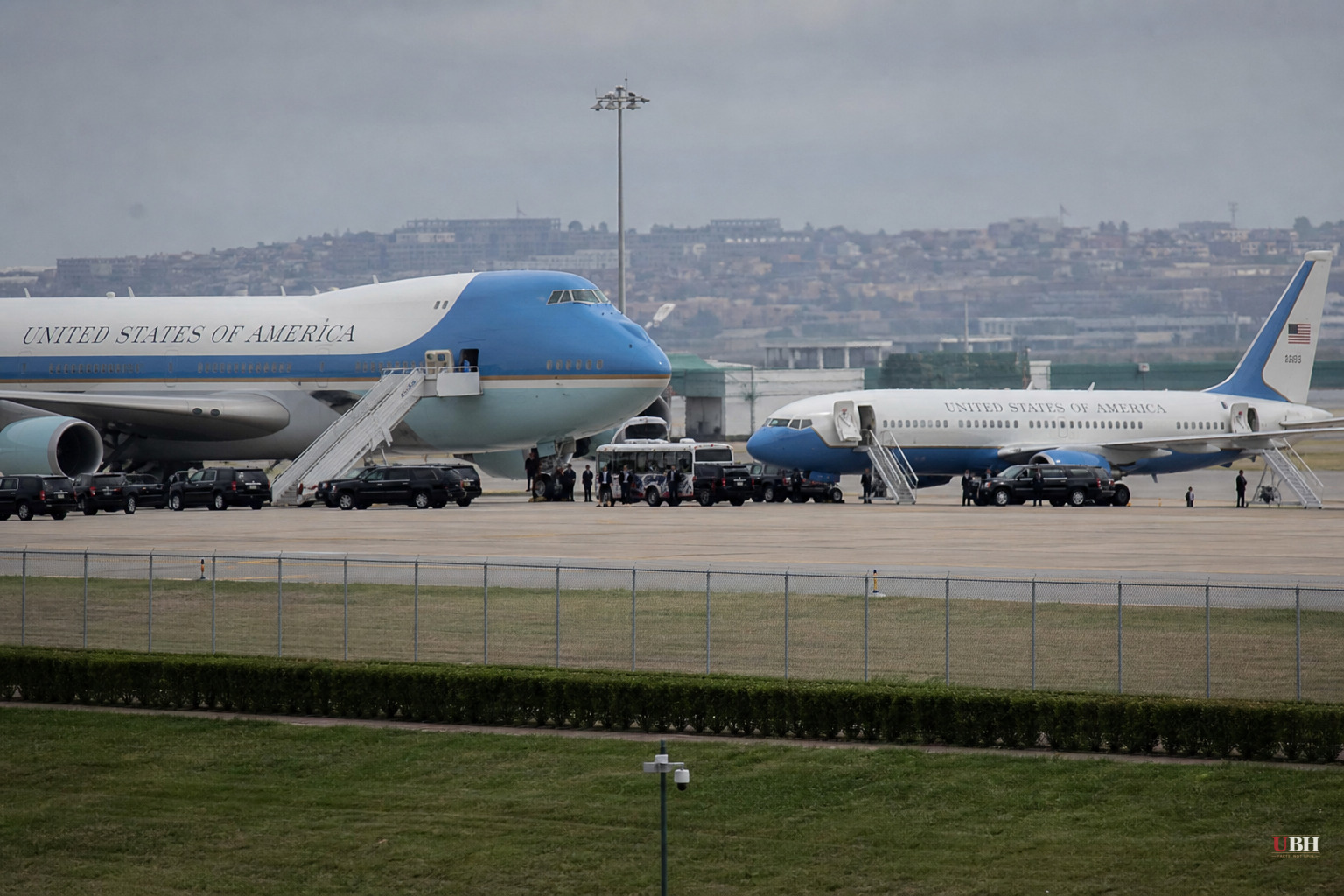
President Trump was secretly transferred to a third aircraft while leaving Turkey last month, using an old trick from the Secret Service playbook to dodge a credible Iranian assassination threat, according to reporting from The Washington Post published Monday.
Trump attended the NATO summit in Ankara on July 8. He arrived aboard the newly retrofitted Boeing 747-8 gifted by Qatar, on its first international trip. Before leaving, he announced on Truth Social that he'd instead fly the first leg home on the older, familiar baby-blue Air Force One, saying it was "for old time's sake" and that the new jet would head to RAF Mildenhall separately so U.S. troops stationed there could tour it.
Cameras caught him boarding that older jumbo jet in Ankara. That's the last confirmed sighting. Shortly after, according to a U.S. official who spoke to the Post and corroborating material the paper reviewed, Trump was quietly moved off that plane and onto a smaller Air Force C-32A, normally used as Air Force Two for the vice president. The transfer happened via an airport catering truck, the kind normally used to load in-flight meals.
Defense Secretary Pete Hegseth reportedly boarded the C-32A separately, using external stairs, in an apparent effort to keep the switch from looking unusual, the Daily Beast reported citing the Post's account.
Reporters and some White House staff who thought they were flying with the president on the old Air Force One were told to keep their window shades down, according to the Post and the Guardian, which also cited New York Times confirmation of the operation. When reporters later asked Trump why the shades had to stay shut, he told them it was because they were "probably on a dangerous flight." He added, "But if I go, you go."
The White House hasn't disputed the substance of the account. Communications director Steven Cheung told the Post: "As the president has said recently, there are many enemies of America who have their sights on him, and we use every tool at our disposal to address those threats." The Secret Service declined to comment. The Air Force referred questions back to the White House.
Why the Qatari jet got benched
A key question in this story is why Trump didn't just fly the new $400 million-plus Qatari-gifted 747 the whole way home. The New York Times had previously reported the jet lacked the anti-missile and other defensive systems standard on Air Force One, and that the Secret Service asked for the switch given the active shooting war with Iran at the time, which included U.S. strikes inside Iranian territory during Trump's stay in Turkey.
Two weeks later, on July 19, Trump himself admitted the new plane wasn't up to spec yet. "It has a lot of capability," he told reporters. "But as I understand it, in about a month or so they're going to send it to have it be maxed out." In plain terms: the plane he bragged about as "state-of-the-art" still needs retrofitting for the security systems a sitting president actually requires.
If the jet wasn't hardened yet, questions remain about why it was flown internationally at all for a high-threat trip, and why cameras were allowed to stage a boarding on a decoy that put reporters and staff at risk without their knowledge.
The precedent, and what's still unclear
Deceptions to protect a president's exact location have precedent. The Guardian notes Bill Clinton used an unmarked executive jet into Pakistan in 2000 while sending the official Air Force One as a decoy, for similar security reasons. Using decoys against a specific, credible threat is a standard tool.
What remains unresolved: how long the deception lasted, whether any other agencies or allied governments were read in, and whether the Qatari jet's missing defensive systems will be installed before Trump flies it internationally again. None of the five outlets reporting this, including the Post's original account, have published the underlying intelligence describing the specific nature of the Iranian threat. The White House has not said when the retrofit of the Qatari plane will be finished.
Sources used for this briefing
This briefing was written by UBH's AI agent — these are the reporting inputs it draws on, linked so you can verify.


