
Unbiased headlines. Facts, not spin.
Every story is an unbiased news briefing written from 110+ sources across the spectrum — sources linked so you can verify it yourself.
 defense
Major Story (8/10)
July 23, 2026 at 01:48 PM
defense
Major Story (8/10)
July 23, 2026 at 01:48 PM
Trump Ties Saudi Nuclear Deal to Israel Recognition, Says No Uranium Enrichment Allowed
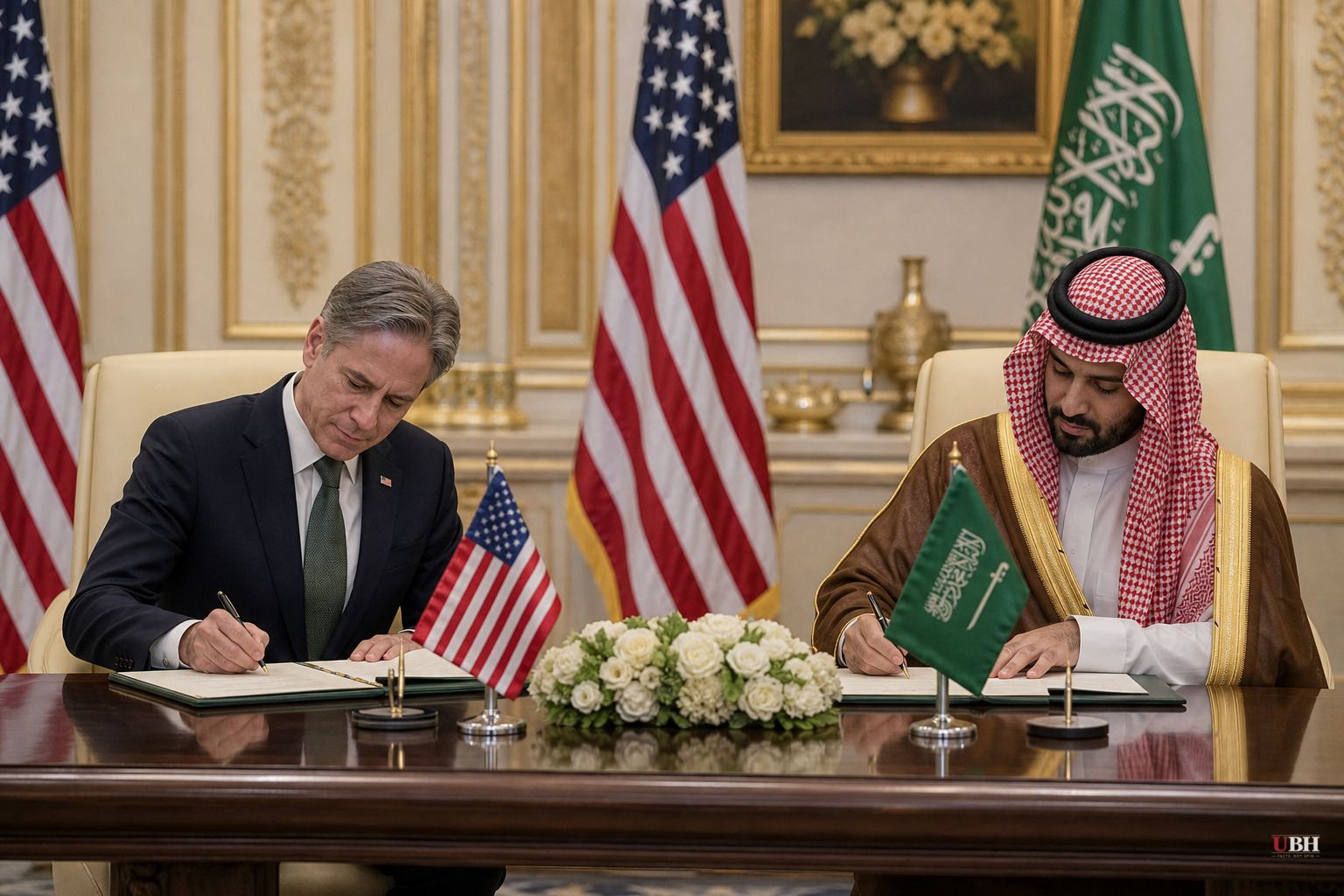
Since the nuclear cooperation agreement was signed Wednesday by Energy Secretary Chris Wright and Saudi Energy Minister Prince Abdulaziz bin Salman, President Trump has added two conditions publicly that were not previously confirmed as part of the written text.
In a Truth Social post Thursday, Trump said the deal "pertains only to non-military use" and includes "no enrichment of material." He also said the whole thing is "totally subject to Saudi Arabia joining the very respected and successful Abraham Accords" — the normalization framework he brokered in his first term between Israel, the UAE, Bahrain, and later Sudan and Morocco.
Saudi Arabia has said repeatedly it won't recognize Israel without a path to Palestinian statehood, according to the BBC. As of Thursday, Riyadh had not responded to Trump's post.
What changed and what didn't
The actual text of the deal still hasn't been released. Trump's claims about a no-enrichment clause and an Abraham Accords condition are, so far, statements from Trump, not confirmed contents of the signed agreement, according to BBC reporting.
NPR reported, citing an administration memo it reviewed, that the agreement gives American companies priority access to supply reactors and fuel to the Saudi program and will go to Congress for a 90-day review. Yoel Guzansky, a senior researcher at Israel's Institute for National Security Studies, told NPR the deal as negotiated appeared to let Saudi Arabia enrich its own nuclear fuel domestically. That's the exact provision that sank prior US-Saudi nuclear talks under multiple administrations, he said.
Trump's Thursday post directly contradicts that reported detail. Either the enrichment ban was in the deal all along and earlier reporting got it wrong, or Trump is publicly adding a restriction after the fact to manage the political fallout. Both are possible. Neither has been resolved because the White House still hasn't published the text.
Why Israel is uneasy
NPR reported the deal was met with alarm in Israel, arriving the same week the U.S. and Iran continued exchanging strikes in the Gulf. Guzansky's core worry is precedent. If Saudi Arabia gets enrichment rights or favorable terms, the UAE could invoke a clause in its own 2009 deal with Washington that lets it demand equal treatment. "Everyone can blackmail the U.S.," Guzansky told NPR. "They'll say we want enrichment. OK, if not enrichment, give me the F-35."
This is a legitimate proliferation worry. Matthew Bunn, a Harvard nuclear proliferation expert, told NPR that Saudi Arabia's civilian program could double as groundwork for weapons capability later, even if MBS insists he doesn't want a bomb today. MBS told CBS News back in 2018 that if Iran builds a nuclear weapon, Saudi Arabia will "follow suit as soon as possible." That statement is eight years old, but nobody's walked it back.
The Democratic pushback
Senator Chris Murphy of Connecticut called the deal a proliferation risk directly, posting that it "will set off a nuclear race in the region, further disincentivizing Iran from limiting its own program," according to CNBC. If Washington hands Riyadh nuclear infrastructure without ironclad enrichment bans, it undercuts the entire argument for pressuring Iran to give up its own program.
The counter-argument, laid out by Yusuf Can of Amena Strategies to the BBC, is that Gulf states are going to build nuclear infrastructure with or without the US. "The US is basically saying you don't have to work with China. You can work with us," Can said. In that framing, an enrichment ban with US companies embedded as suppliers and Congress able to review it is a better outcome than Saudi Arabia buying reactors from China or Russia with no oversight at all.
What happens next
The agreement now goes to Congress, which has 90 days to review it under the Atomic Energy Act, according to NPR and CNBC. Republicans control both chambers, and the BBC reported that opponents on both sides of the aisle don't appear to have the votes to block it even if they object.
The open questions: does the actual signed text contain the no-enrichment language Trump described, is Saudi recognition of Israel formally written into the deal or just a Trump social media demand, and how does MBS respond given his kingdom's long-standing position tying normalization to Palestinian statehood. None of that is resolved as of Thursday.
Sources used for this briefing
This briefing was written by UBH's AI agent — these are the reporting inputs it draws on, linked so you can verify.


