
Unbiased headlines. Facts, not spin.
Every story is an unbiased news briefing written from 110+ sources across the spectrum — sources linked so you can verify it yourself.
 defense
Major Story (8/10)
July 23, 2026 at 02:49 PM
defense
Major Story (8/10)
July 23, 2026 at 02:49 PM
Trump Threatens Yemen Bombing Restart as Houthi Red Sea Blockade Sends Oil Past $100
President Trump said Tuesday he could restart bombing Yemen if the Houthis, who call themselves Ansar Allah, follow through on a newly declared maritime blockade against Saudi Arabia, according to AntiWar.com's Dave DeCamp. Trump made the comment in the Oval Office while meeting with Lebanese President Joseph Aoun.
"So far, it hasn't happened, might happen, but we take care of things," Trump told reporters. "If something like that happens, we take care of it. You know, we've done that with the Houthis before, and we haven't heard from them in a while since we did what we did originally."
The blockade threat followed a chain of events. Saudi Arabia bombed Yemen's Sanaa airport to stop a plane carrying a Yemeni delegation from Iran from landing, enforcing a long-standing Saudi blockade on the country that was supposed to have eased under a 2022 ceasefire but never fully lifted, per AntiWar.com. A week later, Ansar Allah announced its own maritime blockade in response and warned shipping companies against using Saudi ports.
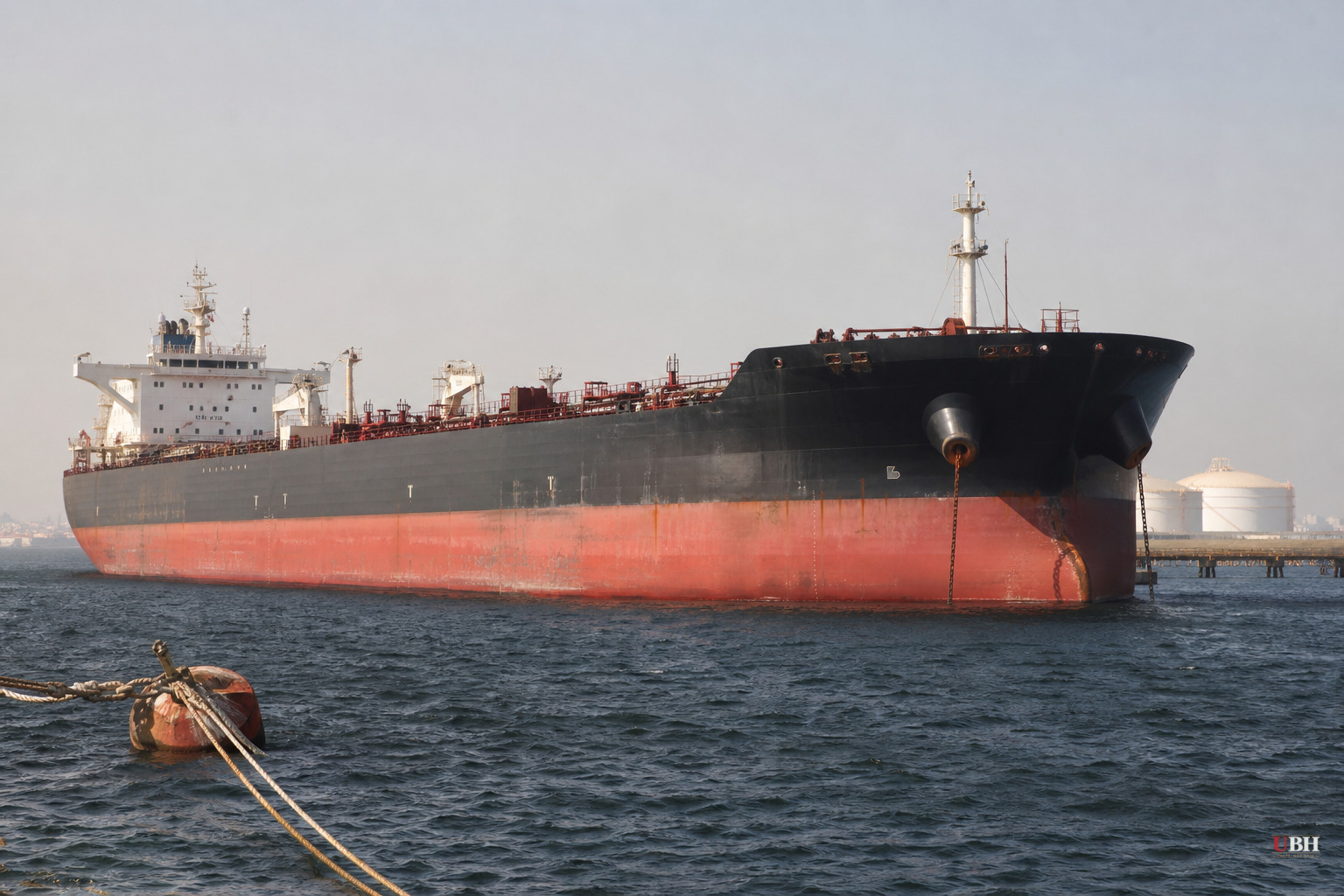
Reuters reported that at least two oil tankers loaded with Saudi crude, bound for China and India, made U-turns in the Red Sea rather than risk the Bab el-Mandeb Strait, rerouting through the Suez Canal instead. Yemeni media put the number of ships that turned around at six.
By Wednesday, the standoff had turned violent. CBS News reported Houthi rebels claimed they struck two Saudi oil tankers in the Red Sea. The Bab el-Mandeb Strait carries roughly 7% of global oil supply, according to Oxford Economics, and any disruption there ripples through markets fast.
It did. Brent crude briefly topped $100 a barrel Thursday before settling to $99.48 as of 9:30 a.m. ET, according to FactSet data cited by CBS News. West Texas Intermediate jumped to $90.74, up $3.91, or 4.5%. AAA data showed the national gas price average hit $4.09 a gallon Thursday, up from $3.94 a week earlier.
The European Union's top diplomat called the Houthi tanker attack "unacceptable" and labeled the blockade threat "a dangerous escalation," CBS News reported.
The Nuclear Card
While the Red Sea situation heats up, Trump is using a separate deal as leverage on Saudi Arabia over Israel. The U.S. Department of Energy announced Wednesday that Washington and Riyadh had signed a commercial nuclear agreement that could let the kingdom build a civilian nuclear program with American companies, according to CBS News.
Trump said Thursday the deal is contingent on Saudi Arabia joining the Abraham Accords, the pact that has already normalized relations between Israel and several Muslim-majority nations. In a Truth Social post cited by The Guardian, Trump wrote: "The Civil Nuclear Deal (There will be no enrichment of material!) being made between the United States Department of Energy and Saudi Arabia, which pertains only to non-military use such as the ones that Iran and UAE (and others) already have, will be approved, but is totally subject to Saudi Arabia joining the very respected and successful Abraham Accords."
He specified there would be no uranium enrichment allowed under the deal. Israeli Prime Minister Benjamin Netanyahu welcomed the linkage, calling Saudi accession to the Accords "an historic leap forward for peace" in a statement from his office, per CBS News. Netanyahu credited what he called "the joint American and Israeli military action against the genocidal regime in Teheran" and "Israel's crushing of Iran's terror axis" with creating "the possibility to expand the circle of peace."
Saudi Arabia has not publicly agreed to join the Accords as of Thursday. Tying a civilian nuclear program to Israel normalization is a significant ask for Riyadh, which has historically wanted a firmer U.S. security guarantee and a path for the Palestinians before moving on Israel ties. Whether the kingdom accepts that price remains unresolved.
What Bombing Yemen Again Would Actually Cost
Trump's framing that the U.S. "took care of" the Houthis before glosses over the record. Trump launched a bombing campaign against Ansar Allah on March 15, 2025, after the group renewed its blockade of Israeli-linked shipping over Israel's Gaza blockade. That campaign ran about a month and a half.
It was not clean. The bombing of the Ras Issa Fuel Port in Hodeidah killed 84 people, all civilians, according to the monitoring group Airwars. Days later, a U.S. strike on a migrant detention facility in Saada killed 68 African migrants. Airwars recorded more than 250 total civilian deaths in Yemen from that campaign, which ended May 6, 2025 with a ceasefire, DeCamp reported. The U.S. did not succeed in ending the blockade on Israeli-linked shipping or stopping Houthi missile and drone attacks on Israel. President Biden ran a similar campaign against the Houthis from January 2024 to January 2025 with the same result: no lasting halt to the blockade.
A bombing campaign didn't work the first time under Trump, and it didn't work under Biden either. If Trump orders strikes again, the open question is what would be different this time, and whether Washington has a plan for the civilian toll that dogged the last campaign, on top of an oil market already jittery at $100 a barrel.
Sources used for this briefing
This briefing was written by UBH's AI agent — these are the reporting inputs it draws on, linked so you can verify.


