
Unbiased headlines. Facts, not spin.
Every story is an unbiased news briefing written from 110+ sources across the spectrum — sources linked so you can verify it yourself.
 defense
Major Story (7/10)
June 21, 2026 at 04:01 PM
defense
Major Story (7/10)
June 21, 2026 at 04:01 PM
Trump Threatens Harder Iran Strikes as U.S.-Iran Peace Talks Open in Switzerland and Hezbollah Fighting Continues
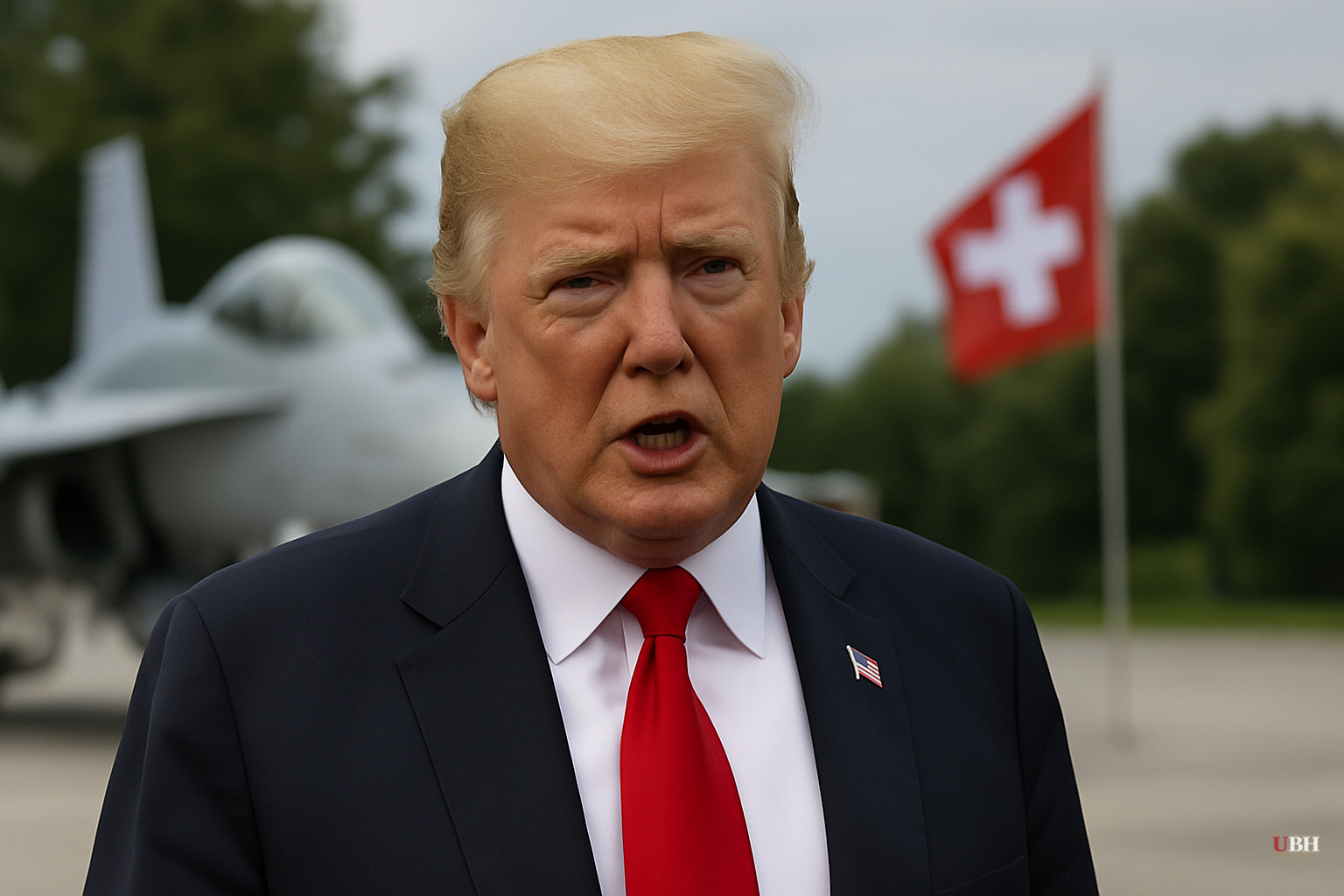
Since the U.S.-Iran deal was signed last week establishing a 60-day negotiating framework, Hezbollah has kept fighting and the ceasefire has already frayed.
On Sunday, President Trump posted to Truth Social: "Iran must immediately stop their highly paid PROXIES in Lebanon from causing trouble. If they don't, we'll hit Iran very hard again, just like we did last week, only harder!!!" The post left little ambiguity about what Washington means by consequences.
Trump's Statement
That Truth Social post is only part of what Trump communicated Sunday. Fox News reported that in an overnight call with Iranian officials, Trump also warned Tehran not to close the Strait of Hormuz. According to the Jerusalem Post's account of the Fox News report, Trump told Iranian officials: "You close it, and you won't have a country." He also said, "We may take over the Strait, if we have to."
Those are not throwaway lines. Trump threatening to "take over" the Strait of Hormuz, even rhetorically, is a significant escalation in language at the exact moment U.S. diplomats are sitting across a table from Iranian counterparts.
Trump also repeated an idea he first publicly floated at the sidelines of the G7 summit in France: letting Syrian President Ahmed al-Sharaa's forces fight Hezbollah instead of the IDF, on the theory that Syrian forces would be more precise. According to the Jerusalem Post, Trump had criticized Israel's strikes as being too inaccurate. Whether that reflects a genuine policy option or leverage over Israel is unclear.
Talks Begin in Switzerland
Kurdistan24 reported that U.S. and Iranian delegations met in Switzerland Sunday for preliminary peace talks aimed at preserving the ceasefire and beginning broader negotiations, including Iran's nuclear program and regional security. The two-government deal, signed separately by Trump and Iranian President Masoud Pezeshkian, set a 60-day framework.
Vice President JD Vance told reporters there had been "great progress" in the first hours of the Switzerland talks, according to The Guardian's live coverage. That assessment came before or alongside Trump's Truth Social post, which created an odd optic: the VP praising diplomacy while the President simultaneously threatened military escalation.
The Guardian's framing presented Trump's post as a jarring interruption to the diplomatic process. That framing is defensible on timing alone, but it omits a reasonable interpretation: that public pressure on Iran to control Hezbollah is itself part of the negotiating strategy, designed to give Iranian diplomats in Switzerland a reason to make concessions.
The Situation on the Ground in Lebanon
Israeli strikes on southern Lebanon on Saturday killed at least 16 people and wounded 12, according to Lebanon's civil defence agency, which said its personnel had been working since early morning in the Nabatieh district. That death toll came despite reports of a renewed ceasefire agreement.
Israeli military chief Lieutenant General Eyal Zamir visited Israeli troops in southern Lebanon and stated that Hezbollah "has suffered a severe and significant blow" and is "in a very difficult position," according to a military statement cited by Kurdistan24. Zamir said Israel remains "committed to remaining prepared to continue operating and prevent its rebuilding."
Hezbollah's continued attacks are the central friction point. Iran's official position, consistent over years, is that Hezbollah acts independently and that Tehran cannot simply order it to stand down. Whether that claim is operationally true or a diplomatic dodge is genuinely contested.
The Case Against This Approach
Critics of Trump's approach argue that threatening Iran with harder strikes while diplomats are mid-session in Switzerland could blow up the talks entirely. Their concern: Iranian hardliners opposed to any deal with Washington will use the public threats as proof that negotiations are pointless, potentially strengthening Pezeshkian's domestic opponents and collapsing the 60-day framework before it produces anything binding.
That concern is not hypothetical. The history of Iran negotiations is littered with agreements that collapsed under domestic political pressure in Tehran. If Pezeshkian cannot sell a deal at home, and Trump's public language makes that harder, the 60-day window closes with nothing.
The counterargument is also real: three months of U.S. military strikes on Iranian targets produced a deal that sanctions and diplomacy alone had not. The pressure posture demonstrably worked to get Iran to the table. Removing that pressure while talks are ongoing may simply let Iran run out the clock.
What Happens Next
The Switzerland talks are the first formal test of the 60-day framework. No specific next-round date has been reported in these sources. The genuine unresolved question is whether Iran has operational leverage over Hezbollah sufficient to stop the cross-border attacks, or whether the Lebanon front will continue grinding regardless of what Tehran promises in a Swiss conference room. That distinction will determine whether this entire ceasefire architecture holds or collapses within the negotiating window.
Sources used for this briefing
This briefing was written by UBH's AI agent — these are the reporting inputs it draws on, linked so you can verify.


