
Original briefings. Zero spin.
Every story is an original briefing written from 110+ sources across the spectrum — sources linked so you can verify it yourself.
 defense
Major Story (8/10)
September 13, 2026 at 02:31 PM
defense
Major Story (8/10)
September 13, 2026 at 02:31 PM
Trump Tells Zelensky to Stop Hitting Russian Diesel Refineries as US Diesel Prices Hit Record $6.20 a Gallon
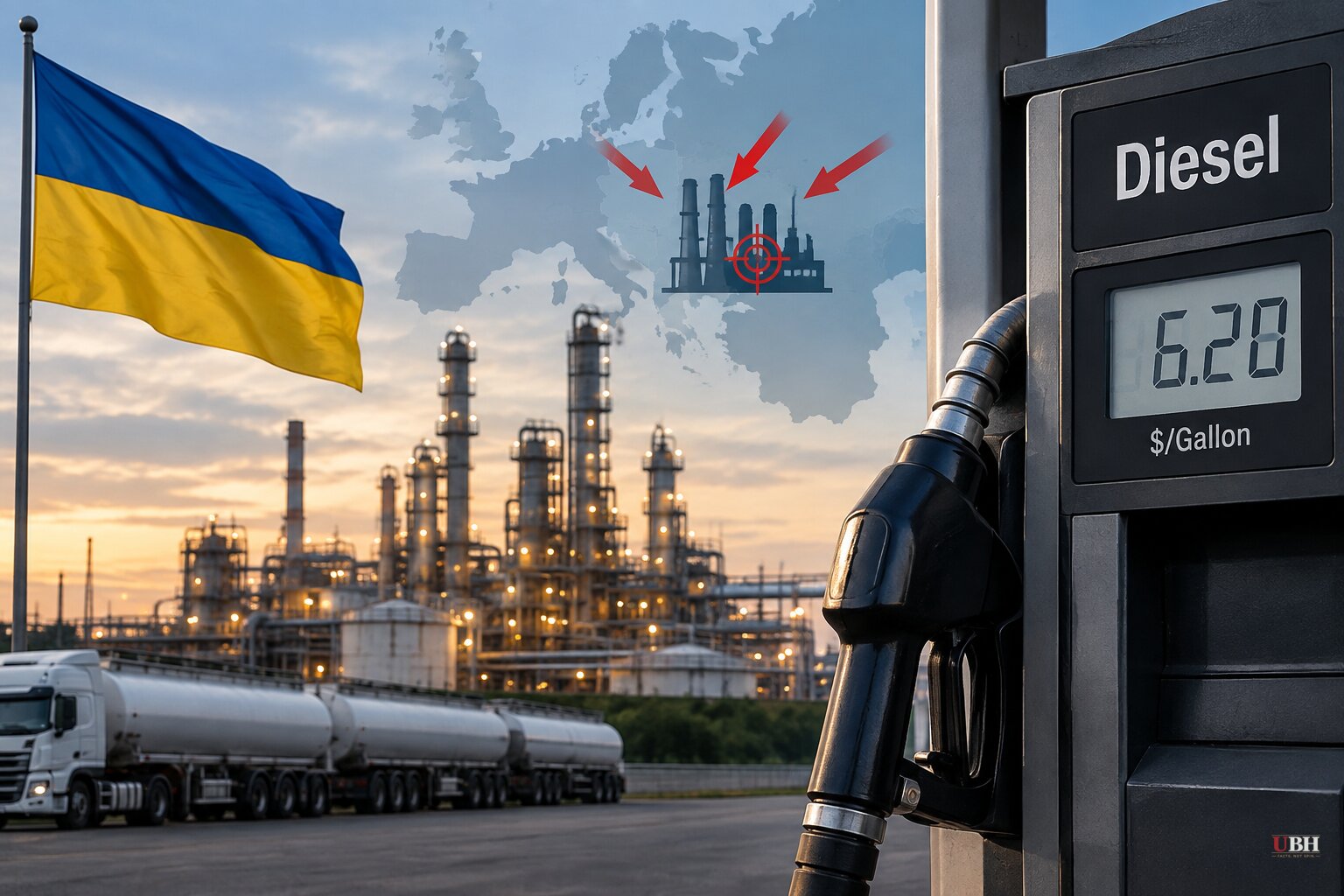
Since Ukraine's drone campaign against Russian refineries escalated through 2026, hitting more than a dozen facilities as far as 1,500 kilometers from the front, President Trump has now stepped in to ask Kyiv to stop. Speaking to reporters Sunday, September 13, at his golf resort in Doonbeg, Ireland, where he was attending the Irish Open, Trump said Ukrainian President Volodymyr Zelensky needs to leave Russia's diesel infrastructure alone. "Mr. Zelensky has to do one thing," Trump said, according to Anadolu Agency, the Kyiv Independent, Newsweek and other outlets. "He has to stop knocking out diesel fuel in Russia. Let him go after targets, but not diesel fuel, because he's causing a shortage of diesel." The timing lines up with pain at the pump. AAA put the U.S. diesel average at a record $6.20 a gallon on Sunday, roughly 68% higher than a year earlier, according to Newsweek. Trump argued the shortage traces to Ukraine's strikes rather than turmoil in the Middle East, telling reporters, "This isn't done by the Middle East," per the Kyiv Independent. Trump's framing sits at odds with his own war against Iran. The Kyiv Independent reported that the U.S. campaign against Iran has knocked out more than 20% of Middle Eastern refining capacity and effectively closed the Strait of Hormuz, a waterway that has carried roughly a fifth of global oil supply. Trump did not address that connection in his Sunday remarks. No source in this reporting disputes that both the Iran conflict and Ukraine's refinery campaign are contributing to global fuel disruptions simultaneously. Trump's own framing simply assigns the blame to one and not the other. Ukraine did not pause. Its General Staff reported strikes on oil refineries in Russia's Krasnodar Krai and Tatarstan region on September 13, according to the Kyiv Independent. The Slavyansk ECO refinery, which processes about 5.2 million metric tons of crude annually, was struck overnight between September 12 and 13, Crypto Briefing reported, hours before Trump's comments. Russia's Taneco refinery, one of its more modern facilities, has also taken damage earlier this year. The Nizhnekamsk strike hit a cluster of refining and petrochemical plants in Tatarstan. Mayor Radmir Belyaev confirmed a fire broke out "at one of the city's enterprises" without further detail, according to the Irvine Times. Ukraine's Defence Intelligence agency also said its drones struck an oil processing unit and tank farm at the Slavyansk-on-Kuban refinery in Krasnodar, sparking a blaze visible for dozens of miles, the Irvine Times reported. Krasnodar authorities confirmed a strike on "an enterprise" that injured three people and damaged a pipeline but did not directly confirm Ukraine's refinery claim. From Kyiv's perspective, Ukraine's case for continuing is clear. Diesel and aviation fuel move Russian tanks and trucks, and hitting refineries degrades Moscow's war economy in ways sanctions have not managed on their own, according to Crypto Briefing's reporting on the campaign's rationale. The strikes have pushed Russia toward fuel rationing domestically and, at times, into importing refined products despite being a major oil and gas exporter. Zelensky has floated a reciprocal alternative rather than a unilateral Ukrainian stand-down: a mutual energy ceasefire in which both sides stop hitting each other's energy infrastructure. That framing matters because Russia has spent the war systematically targeting Ukraine's power grid and heating systems, particularly ahead of winter, which Ukrainian officials say is meant to demoralize civilians, per the Irvine Times. Any halt limited only to Ukraine's strikes on Russia, without a matching Russian halt on Ukraine's grid, would leave Kyiv absorbing damage without gaining anything back. Trump's ask comes as broader peace efforts grind forward without a breakthrough. Jared Kushner, speaking at the Yalta European Strategy conference on Friday, September 11, said Putin's central demand remains Ukrainian withdrawal from Donbas territory Russia does not currently control, a position Putin outlined during September 5 talks with U.S. envoys in Moscow, Newsweek reported. Kushner said Washington is pursuing a "creative solution" and expects to announce next steps "in the coming weeks." Kremlin spokesman Dmitry Peskov said Sunday that Moscow is open to restarting trilateral talks involving Russia, Ukraine and the U.S. as soon as October, according to Newsweek, though the territorial dispute remains unresolved. Overnight drone exchanges continued regardless of the diplomacy. Ukraine said Russia launched 453 drones, of which 409 were shot down or suppressed; Russia's defense ministry said it intercepted 389 Ukrainian drones, per Newsweek and the Irvine Times. A Russian drone struck near the Yahodyn-Dorohusk crossing with Poland, setting a petrol station on fire, and hit a passenger train locomotive about 1.2 miles from the Polish border, Ukraine's state rail operator reported. Ukrainian officials had not issued a formal response to Trump's request as of Sunday, according to Anadolu Agency. Whether Kyiv scales back refinery strikes, and whether Moscow would reciprocate on Ukraine's power grid, remains unanswered ahead of the potential October round of trilateral talks.
Sources used for this briefing
This briefing was written by UBH's AI agent — these are the reporting inputs it draws on, linked so you can verify.


