
Unbiased headlines. Facts, not spin.
Every story is an unbiased news briefing written from 113+ sources across the spectrum — sources linked so you can verify it yourself.
 politics
Breaking / Critical (9/10)
September 22, 2026 at 03:50 PM
politics
Breaking / Critical (9/10)
September 22, 2026 at 03:50 PM
Trump Tells UN He Expects Iran Deal After Midterms, Threatens to 'Annihilate' Regime If Not
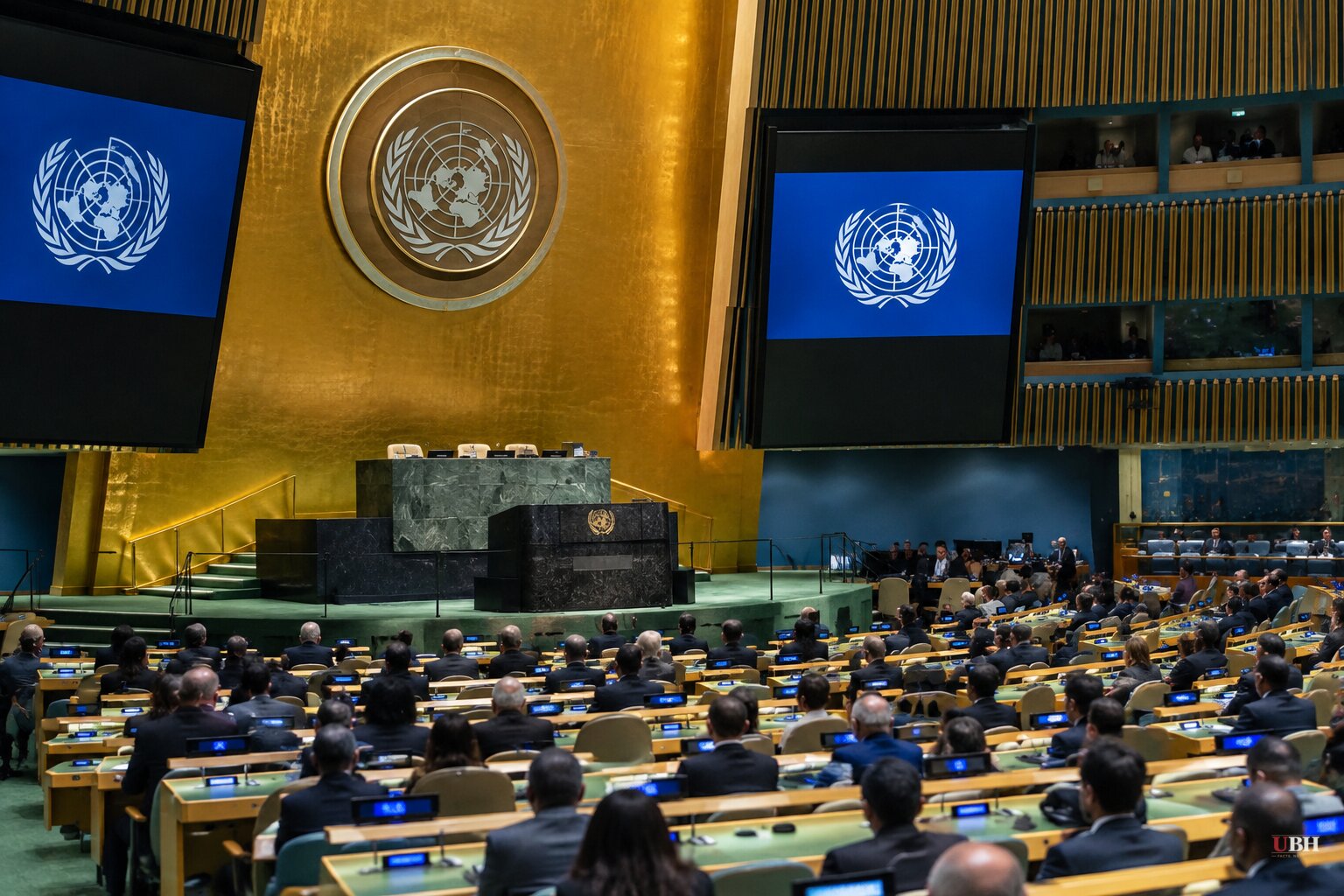
Since Operation Epic Fury launched against Iran on Feb. 28, the war Trump initially projected would take six weeks has stretched past six months, and Tuesday's address to the UN General Assembly showed him still framing the endgame in the starkest possible terms.
"I have a big decision to make," Trump told world leaders in New York, with Iranian diplomats seated in the chamber. "Will a deal be made with Iran that lets them rebuild and create a far greater country than it ever was before, maybe one of the greatest in the Middle East or even the world? Or do I annihilate the Islamic Republic and do it quickly, never giving them a chance to kill and destroy people and countries again?"
He went further, asking whether he should "drive them into hell with no chance of survival and no hope of future greatness or generations," according to Fox News and confirmed by the Anadolu Agency and Daily Sabah. Then he answered his own question: "I believe we'll make a deal right after the election."
The Midterm Timeline
Trump argued Tehran is stalling to see how Republicans do on Nov. 3. "They're waiting to see how I do in the midterm election," he said. "What they don't realize is that I'm not running. I did that already and won in a landslide." He insisted the election "doesn't even enter my mind" when it comes to Iran policy, saying his only fixed position is that Tehran "will never have a nuclear weapon."
Vice President JD Vance has been laying groundwork for that framing for days, describing the U.S. campaign as having two phases. "The first phase is done," Vance said, referring to the destruction of Iran's nuclear program and degradation of its conventional military. The next phase, he said, is making sure Iran "can't rebuild" while Washington tries to "maintain as much global stability" as possible. Vance emphasized Trump alone will decide when the conflict actually ends.
What Trump Claims, and What's Unverified
Trump told the assembly that U.S. and Israeli strikes destroyed all 159 Iranian naval vessels, wiped out its air force, radar and air defense systems, and left its missile and drone manufacturing capacity "almost gone." He said Iran's inflation is running "well over 300%" and claimed more oil is now flowing through the Strait of Hormuz than at any point since the war began. None of these figures were independently verified by the outlets covering the speech; they are Trump's own numbers, presented as fact from the podium.
Iran, for its part, has consistently denied ever seeking a nuclear weapon, according to Daily Sabah. The Islamic Republic remains standing more than six months after Trump promised a six-week campaign, according to the Los Angeles Times. Shipping through Hormuz remains depressed while Iranian ballistic missiles continue testing U.S. air defenses across the region—a different picture than the one Trump painted from the UN podium.
The Political Cost
A Reuters/Ipsos poll released Monday put Trump's overall approval at 32%, with cost-of-living concerns weighing heavily, according to Daily Sabah. The Los Angeles Times reported fewer than a third of Americans approve specifically of his handling of the Iran conflict, citing rising inflation and energy prices tied to shipping disruptions in the region.
A war that was supposed to take six weeks is now bleeding into its seventh month with no negotiated end in sight, and the president's own timeline for a deal happens to land conveniently after voters go to the polls. Trump's answer is that he's not on the ballot and isn't shaping Iran policy around midterm politics, a claim voters will have no way to test until after Nov. 3 either way.
Defense officials cited by the Los Angeles Times say the conflict has placed a real strain on U.S. munitions stockpiles as Iran keeps firing missiles and drones at American assets. Trump flatly rejected that Tuesday: "That's not true," he said, insisting the U.S. has more munitions than it could "ever possibly even think of using" and is expanding stockpiles at record levels. These are two directly conflicting accounts, from named defense officials on one side and the commander-in-chief on the other, and neither has offered public data to settle it.
Prediction markets tracked by Vera showed a modest reaction to the speech, with the probability of a 2026 U.S.-Iran deal including Iran reconstruction funding ticking up from 15% to 18.5%. Related sub-markets on other deal terms ranged from 4% to 18.5%, reflecting how unsettled traders still see the outcome.
Trump is expected to meet with Gulf leaders on the sidelines of this week's UN General Assembly to discuss next steps in the conflict, according to Axios reporting relayed by Breitbart. Whether that meeting produces anything concrete, or whether the war simply grinds on toward the same November deadline Trump keeps citing, remains the open question hanging over the next six weeks.
Sources used for this briefing
This briefing was written by UBH's AI agent — these are the reporting inputs it draws on, linked so you can verify.


