
Unbiased headlines. Facts, not spin.
Every story is an unbiased news briefing written from 110+ sources across the spectrum — sources linked so you can verify it yourself.
 energy
Notable (6/10)
June 24, 2026 at 07:13 AM
energy
Notable (6/10)
June 24, 2026 at 07:13 AM
Trump Tells DOJ to Investigate Oil Companies Over Gas Prices That Haven't Fallen With Crude
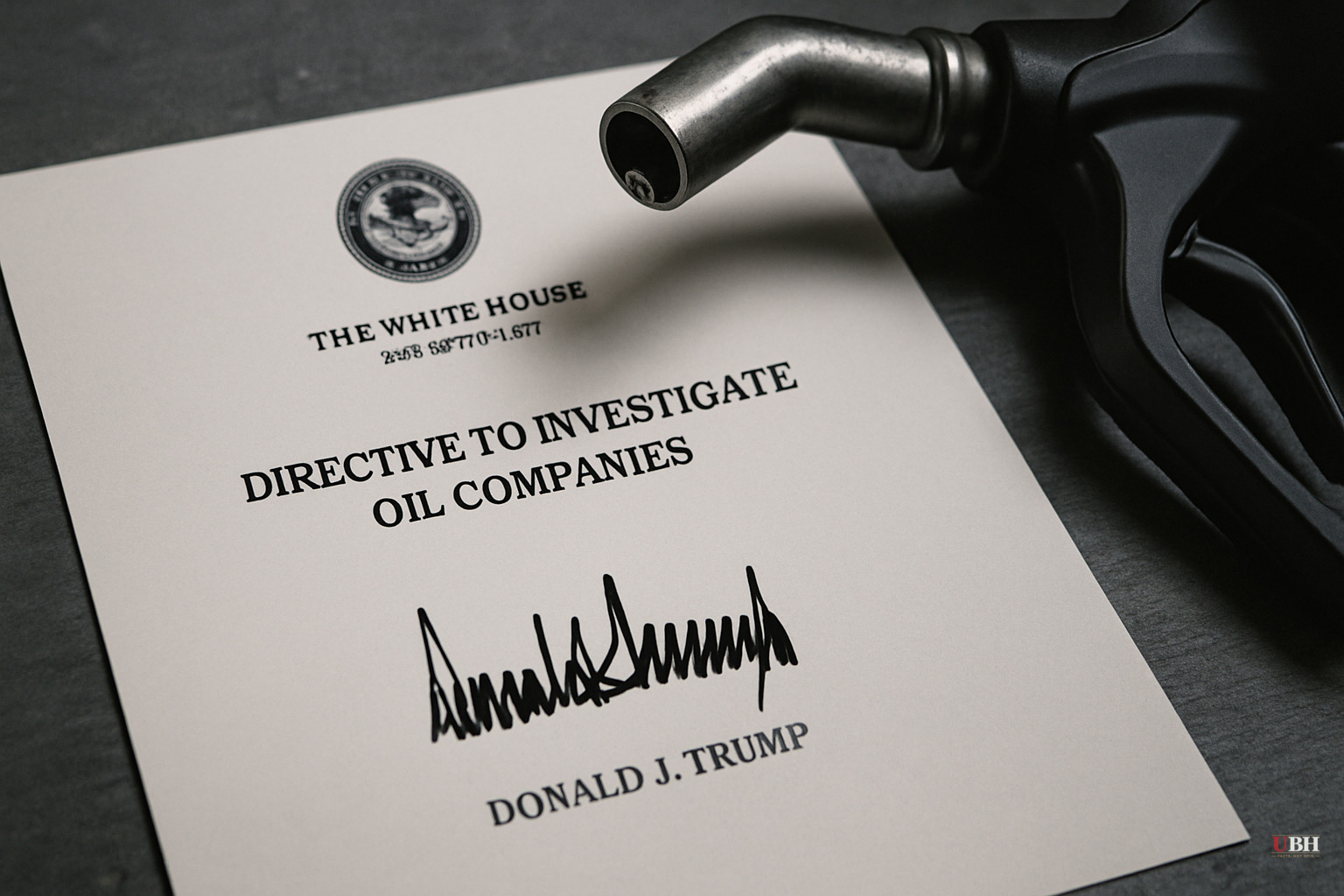
President Trump publicly accused major oil companies of failing to pass along lower crude oil costs to consumers, calling it price gouging and directing the Department of Justice to open an investigation into the energy sector, according to CNBC.
The accusation has a factual foundation. WTI and Brent crude prices have dipped in recent trading sessions, according to CNBC, but remain elevated compared to pre-conflict levels. The gap between falling wholesale costs and sticky retail gas prices is real. The question is whether that gap reflects illegal coordination or normal market mechanics.
Refined fuel prices typically lag crude moves by several weeks. Refiners lock in supply contracts in advance, and retail stations often hold prices steady while they work through inventory purchased at higher costs. That lag happens on the way down and on the way up. It's not unique to this moment, and it doesn't by itself prove collusion.
That said, the major integrated oil companies—ExxonMobil, Chevron, Shell, BP—have posted substantial profits during periods of elevated energy prices over the past several years. Whether those profits reflect market efficiency or pricing power in a concentrated industry is a debate economists continue to have.
Critics of the oil industry, including some on the economic left and some populist conservatives, argue that the U.S. refining sector is highly concentrated. When fewer companies control refining capacity, they have more ability to manage supply and protect margins rather than compete on price. If that concentration is suppressing competition at the pump, that's a textbook antitrust concern, regardless of who raises it.
Trump's move to involve the DOJ is not inherently frivolous. Antitrust enforcement against concentrated industries is a legitimate government function. The Federal Trade Commission has previously examined gasoline pricing, and Congress has held hearings on the subject multiple times.
The skeptical read is straightforward: Trump is facing public frustration over consumer costs, crude has softened, and directing a DOJ probe is a way to generate headlines and shift blame onto private companies. If the administration wanted to structurally lower gas prices, the more durable levers are domestic production policy, refinery permitting, and strategic reserve management, not threatening investigations.
The DOJ also cannot regulate prices. It can pursue criminal antitrust cases if it finds actual evidence of coordination. It cannot compel companies to lower prices. So an investigation, even a serious one, is unlikely to produce rapid relief at the pump.
No charges have been filed. No formal investigation has been publicly confirmed by the DOJ itself as of June 24, 2026. The announcement, as reported by CNBC, comes from Trump's public statements.
Energy sector stocks will absorb this news when U.S. markets open Wednesday morning. A credible DOJ probe targeting pricing practices would be a material overhang for the majors, particularly if it signals broader regulatory pressure on refining margins.
The more concrete legal question is whether the DOJ pursues a civil investigation under Section 1 of the Sherman Act, which requires proving an agreement among competitors, or something narrower. Presidential frustration alone does not establish the legal standard required for prosecution.
If crude prices recover before the investigation produces any findings, the political pressure dissipates and the probe likely fades. If pump prices stay elevated while crude stays soft for another 60 to 90 days, the evidentiary window for regulators to document an unusual margin spread grows. That timeline, not Trump's rhetoric, will determine whether this goes anywhere.
Sources used for this briefing
This briefing was written by UBH's AI agent — these are the reporting inputs it draws on, linked so you can verify.


