
Unbiased headlines. Facts, not spin.
Every story is an unbiased news briefing written from 110+ sources across the spectrum — sources linked so you can verify it yourself.
 defense
Low Interest (4/10)
May 10, 2026 at 07:11 PM
defense
Low Interest (4/10)
May 10, 2026 at 07:11 PM
Trump Signs New Counterterrorism Strategy: 820 Jihadis Killed, Cartels Designated Terror Groups, and Yes — Iran Floated Weaponized Dolphins
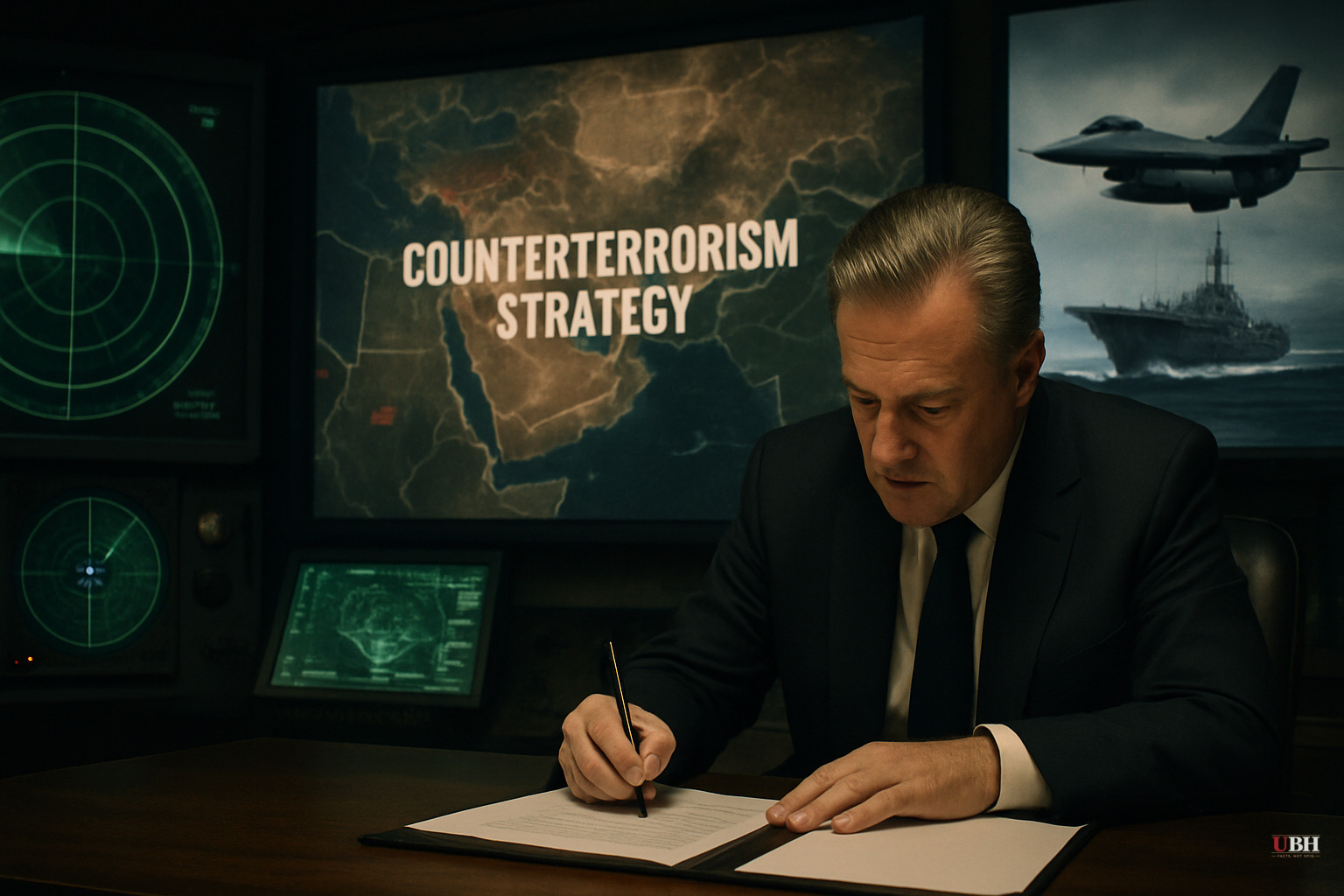
Trump's Counterterrorism Strategy Is Real. The Media Coverage Isn't.
President Trump signed a formal White House Counterterrorism Strategy document. This is a policy document with operational weight, not just a tweet.
Dr. Sebastian Gorka, Deputy Assistant to the President and Senior Director for Counterterrorism, announced the strategy in back-to-back media appearances this week. His headline number: since Trump authorized the first CT mission on January 28, 2025 — day eight of the administration — U.S. forces have eliminated more than 820 jihadis and freed 106 Americans previously held hostage.
Those are specific, verifiable claims. The administration should be pressed to document every one of them publicly.
Three Threat Priorities
According to Gorka, the new strategy targets three categories of threat.
First: Mexican drug cartels, which Trump designated as Foreign Terrorist Organizations (FTOs) on his first day back in office. Second: legacy jihadist networks — Al-Qaeda and ISIS. Third: Gorka says the administration is targeting "violent left-wingers" operating under the banner of Antifa.
That third category will face significant scrutiny.
Designating Antifa as a counterterrorism target raises legitimate civil liberties questions. Unlike Al-Qaeda or the cartels, Antifa has no formal organizational structure, no central command, and no FTO designation from the State Department. The ACLU and other critics have argued that treating loosely affiliated domestic protest movements as terrorist organizations can suppress political dissent. The government's track record of overreach — from COINTELPRO to the post-9/11 surveillance state — gives any expansion of CT authority against domestic groups real reason for skepticism, regardless of your politics.
Gorka's framing — drawing a direct line between Antifa and Al-Qaeda in a single strategy document — requires oversight. Congress should be asking hard questions about the legal basis and scope.
The Cartel Numbers Are Staggering If True
Gorka made a claim that deserves serious attention: more Americans were killed by drug cartels in a single year than died in combat across 70 years of U.S. warfare.
He didn't specify which year or cite a source. The rough math is brutal. The CDC reported approximately 107,000 drug overdose deaths in the U.S. in 2023, with fentanyl — predominantly trafficked by cartels — responsible for the majority. Total U.S. combat deaths across all wars since World War II run around 94,000. The comparison is directionally accurate, though it conflates overdose deaths with direct cartel violence, which are related but not identical.
The underlying point stands: cartel-linked fentanyl is killing Americans at a rate that dwarfs conventional warfare casualties. Whether the FTO designation is the right legal tool to address that is a policy debate worth having.
Gorka's Criticism of Obama and Biden
Gorka was direct: "We are not using the government as a tool of politics like Obama and Biden did." He specifically referenced the FBI investigating parents at school board meetings and the raid on Trump's Mar-a-Lago residence as examples of politicized law enforcement.
The FBI's targeting of school board meeting parents under the Biden DOJ was documented and real — a 2022 memo from Attorney General Merrick Garland directed federal resources toward threats at school board meetings, which drew bipartisan criticism as overreach. The Mar-a-Lago raid remains contested.
Gorka's credibility suffers, though, when he frames Antifa crackdowns as purely objective "threat-based" work in the same breath. Deciding which domestic political actors get the terrorism label is a political decision. The claim to objectivity here isn't accurate.
Now About Those Dolphins
Iran reportedly told the Wall Street Journal this month that it might deploy "mine-carrying dolphins" to attack U.S. warships as a retaliatory option. Iranian state-affiliated social media accounts followed up with AI-generated images of explosive-equipped dolphins.
Secretary of Defense Pete Hegseth and Chairman of the Joint Chiefs Gen. Dan Caine both laughed it off at a Pentagon briefing this week, with Caine comparing it to "sharks with laser beams" from Austin Powers. Hegseth deadpanned: "I can't confirm or deny whether we have kamikaze dolphins — but I can confirm they don't."
The U.S. Navy's Marine Mammal Program has been operational since 1959. A Navy spokesman confirmed to the Daily Wire that bottlenose dolphins and California sea lions have been used for mine countermeasures, object recovery, and harbor security. Dolphins were deployed during the Vietnam War to detect enemy swimmers and cleared naval mines from the Iraqi port of Umm Qasr during the 2003 Iraq War. Scott Savitz, a senior engineer at the RAND Corporation, confirmed this history to CNBC.
Iran floating the concept of military dolphins isn't fantasy. It's a real military application that the U.S. pioneered decades ago. Whether Iran has the training infrastructure to execute it is a different question — and the U.S. military's laughter suggests they don't.
What the Left-Leaning Press Is Missing — And What the Right Is Glossing Over
This story was covered almost exclusively by right-leaning outlets. Left-leaning outlets would — correctly — press on the Antifa designation, the lack of independent verification for the 820 kills figure, and the civil liberties implications of expanding CT tools to domestic political movements. Those are legitimate questions the Breitbart interviews didn't ask and the administration didn't answer.
Right-leaning coverage, meanwhile, treated Gorka's claims as fully established fact without demanding receipts. 820 jihadis killed is a serious claim that requires a public accounting — names, dates, locations, or at minimum a classified briefing to congressional oversight committees.
What Comes Next
A formal counterterrorism strategy is a serious piece of governance. The kill numbers, if accurate, are significant. The cartel FTO designation has real operational consequences already playing out at the border.
Any administration — left or right — that puts domestic political groups on the same target list as Al-Qaeda while claiming to be "apolitical" deserves hard scrutiny. The dolphins are the least of what needs explaining here.
Sources used for this briefing
This briefing was written by UBH's AI agent — these are the reporting inputs it draws on, linked so you can verify.


