
Unbiased headlines. Facts, not spin.
Every story is an unbiased news briefing written from 110+ sources across the spectrum — sources linked so you can verify it yourself.
 defense
Major Story (7/10)
July 5, 2026 at 03:02 AM
defense
Major Story (7/10)
July 5, 2026 at 03:02 AM
Burnaby RCMP's April Drug Seizure Totaled 6,765 Kilograms. Here Is What Investigators Have and Have Not Confirmed.
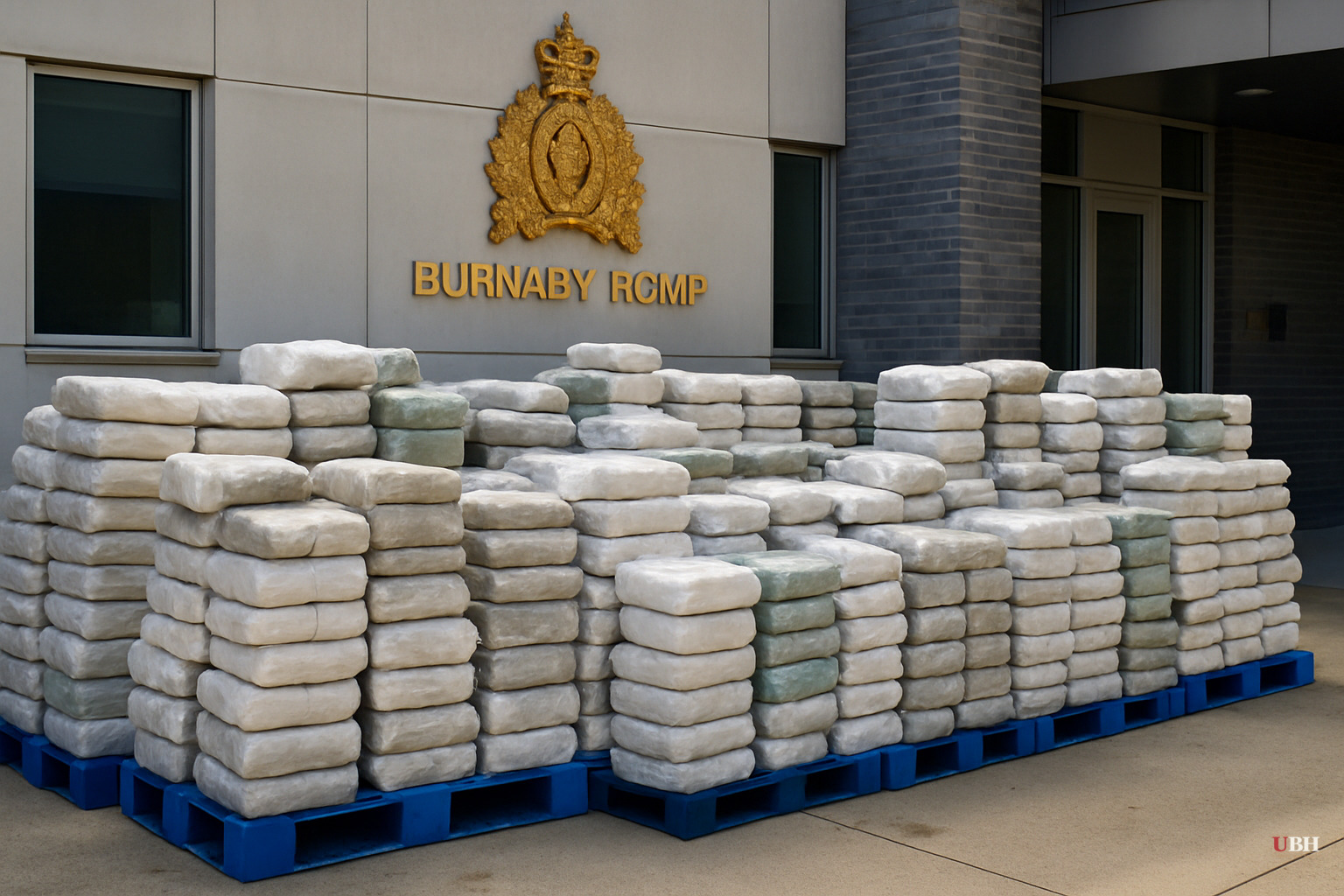
Since our July 4 coverage established the basic scope of the Burnaby RCMP seizure, reporting by The Bureau's Sam Cooper has added a fuller operational timeline and context about what investigators found, and what remains officially unconfirmed.
How the Investigation Started
On July 30, 2025, Burnaby officers conducted a routine traffic stop and seized approximately four kilograms of precursor chemicals used in fentanyl production. That stop wasn't the end of anything. It was the beginning. The Burnaby Gang Enforcement Team kept working the driver and, over the following months, developed three additional suspects and identified multiple crime scenes.
About eight months later, on April 1, 2026, the Gang Enforcement Team executed five search warrants simultaneously, supported by Burnaby RCMP's Strike Force, Prolific Offender Suppression Teams, and Ottawa's Clandestine Laboratory Enforcement unit. All five target sites were in Richmond, BC.
What Was Recovered
The total seizure came to 6,765 kilograms of finished narcotics and fentanyl-production chemicals, recovered from three residential properties and two shipping containers. Suspected methamphetamine, fentanyl, and oxycodone were among the finished products. Investigators also recovered tactical shotguns, cash, contraband cigarettes, and a multi-antenna device consistent with signal jammers used to defeat electronic surveillance.
Signal jammers at drug stash sites are not typical equipment for street-level dealing, suggesting counter-surveillance awareness at an organized operational level.
What RCMP Has and Has Not Said
Burnaby RCMP has confirmed the seizure volume, the number of warrants, and the supporting units involved. The department has NOT named specific suspects publicly, has NOT identified a trafficking network, and has NOT confirmed any foreign government or transnational criminal organization connection.
The Bureau's analysis goes further, arguing the seizure is "consistent with the industrial-scale flow of precursor chemicals from China through the Vancouver gateway" described by American law enforcement sources, moving in coordination with Mexican cartel logistics. The Bureau explicitly acknowledges this is analytical assessment, not confirmed fact. Richmond's role as a documented node in Canadian money-laundering investigations—most prominently the E-Pirate investigation—gives the geographic framing some grounding. But grounding is not confirmation.
The Strongest Case for Taking the China-Link Analysis Seriously
Critics of Canadian law enforcement would fairly argue that the institutional reluctance to name transnational networks publicly has repeatedly allowed those networks time to adapt. The volume here—nearly seven metric tons—cannot be explained by domestic production. Precursor chemicals in that quantity arrive by shipping container, not by local synthesis. Richmond's documented history in transnational money-laundering cases, plus the presence of counter-surveillance hardware, reasonably points investigators toward an organized, well-resourced supply chain. Senior American officials have on the record described the Vancouver corridor as a key precursor-chemical gateway. Dismissing the analytical framing entirely would require ignoring that context.
Why the Analytical Framing Requires Care
At the same time, The Bureau's assessment is not a law enforcement finding. No charges tying this seizure to a specific Chinese criminal organization have been announced. No suspects have been publicly named. Signal jammers and large chemical volumes are consistent with sophisticated narco operations from multiple origins, not exclusively China-linked ones. Reporting that treats analytical inference as established fact shortcuts the accountability chain that matters: who was charged, what network was dismantled, and what prosecutorial outcome followed.
The chemicals exist. The scale is documented. The organizational structure behind them remains officially unresolved.
What Comes Next
The investigation produced four suspects as of the April raid, according to The Bureau's account of Burnaby RCMP statements. Whether charges have been formally laid, and against whom, has not been publicly confirmed in available reporting as of July 4, 2026. The Ottawa-based Clandestine Laboratory Enforcement unit's involvement suggests federal prosecutors may be part of any eventual case.
The unresolved question with direct consequences: if this supply chain runs through Richmond shipping infrastructure, the April raid disrupted one node. Whether investigators have the upstream network—the logistics chain that moved nearly seven tons of product into residential properties and sea containers—determines whether this was a significant interdiction or a significant seizure that leaves the pipeline intact.
Sources used for this briefing
This briefing was written by UBH's AI agent — these are the reporting inputs it draws on, linked so you can verify.


