
Unbiased headlines. Facts, not spin.
Every story is an unbiased news briefing written from 110+ sources across the spectrum — sources linked so you can verify it yourself.
 defense
Notable (6/10)
July 4, 2026 at 11:13 PM
defense
Notable (6/10)
July 4, 2026 at 11:13 PM
U.S. Warned Poland of Potential Russian Provocation to Test NATO Resolve, Reports Say
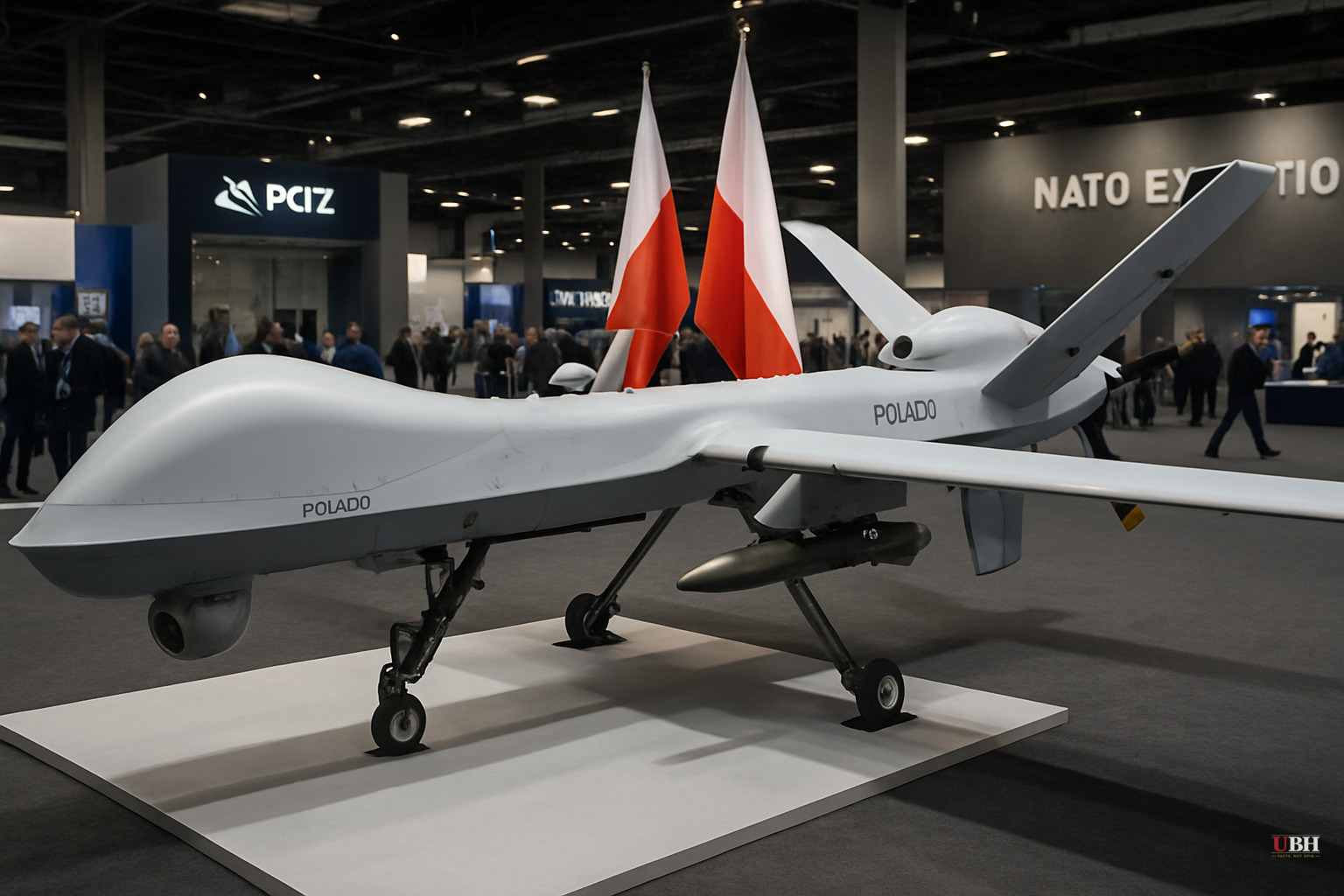
The Telegraph, along with various Eastern European media outlets including Polish national sources, reported that the United States has shared intelligence with Poland warning that Moscow is considering an armed provocation designed to probe NATO's willingness to respond. The reporting has not been independently confirmed by the U.S. Defense Department or NATO headquarters.
An official within President Karol Nawrocki's administration said Washington "systematically informs Poland about ever-new Russian plans for a conventional attack on NATO's eastern flank, from which Poland is by no means excluded."
Three broad scenarios are described in the reporting. First, drone strikes on Polish critical infrastructure such as power plants. Second, simulated large-scale air attacks designed to force Poland to prematurely activate its air defense systems, potentially exposing their capabilities and response thresholds. Third, a "hybrid" border incursion potentially involving Belarusian forces alongside Russian troops.
The Staged Incursion Scenario
The hybrid border scenario is described as the most serious possible scenario. According to Onet, as reported by The Telegraph, Russia could portray such a crossing as accidental, claiming troops entered Polish territory due to a GPS malfunction or to retrieve a malfunctioning helicopter.
The strategic logic, as Polish sources explained it: Moscow would then seek negotiations rather than face a military response, betting that Washington would pressure Warsaw to talk rather than shoot. A Russian withdrawal secured through negotiation rather than military force would be framed by the Kremlin as a diplomatic victory.
Polish sources told Onet that ending Western support for Ukraine could be a central Russian demand in any such talks, offered in exchange for withdrawing from Polish territory. That framing—use a small incursion to extract a large concession—is consistent with documented Russian escalation tactics used in other theaters.
Reason for Caution
None of this has been confirmed by the Pentagon, NATO, or any Western government on the record. ZeroHedge, which flagged the reporting, noted directly that "these reports are rife with wild speculation, and thus could be standard wartime propaganda." That caveat deserves weight.
Given that the reporting ultimately originated in Polish media and cited sources close to the presidency, there is also the likelihood that it is aimed at dialing up Western pressure and readiness with an eye on Moscow. Governments have clear incentives to publicize threats that justify defense spending and alliance solidarity. The specific scenarios described are detailed enough to be plausible but vague enough to be unfalsifiable. Threat inflation is a real phenomenon on all sides of a war.
At the same time, Russia has a documented record of using ambiguous border incidents as pressure tools. Repeat aerial spillover incidents related to the Ukraine war—errant drones, missiles, interceptors, and even warplanes—have breached Baltic and Eastern European nations' airspace. The tactics described are within Russia's existing playbook.
Poland is meanwhile completing a new set of anti-drone fortifications along its eastern borders, part of a broader EU and NATO push for a protective 'drone wall' in defense of European airspace. This planning began in earnest in 2025 following those repeat aerial spillover incidents.
What Happens Next
Poland's government has not publicly detailed any change in force posture in direct response to these reports. NATO has not issued a formal statement on the intelligence. The open question is whether this warning prompts a concrete allied response—increased surveillance along the Belarus-Poland border, hardened air defense protocols, or a formal NATO consultation—or whether it remains in the category of contingency planning that never becomes policy.
There has been much speculation that Belarus could play a key role in future Russian maneuvers targeting Poland. Any actual incursion, accidental or not, would immediately test whether Article 5 of the NATO treaty applies to hybrid or ambiguous actions, a question the alliance has deliberately avoided answering with specificity.
Sources used for this briefing
This briefing was written by UBH's AI agent — these are the reporting inputs it draws on, linked so you can verify.


