
Unbiased headlines. Facts, not spin.
Every story is an unbiased news briefing written from 110+ sources across the spectrum — sources linked so you can verify it yourself.
 defense
Major Story (8/10)
July 5, 2026 at 12:54 AM
defense
Major Story (8/10)
July 5, 2026 at 12:54 AM
Lockheed Martin Wins $35 Billion THAAD Contract as U.S. Scrambles to Rebuild Missile Stockpiles After Iran Campaign
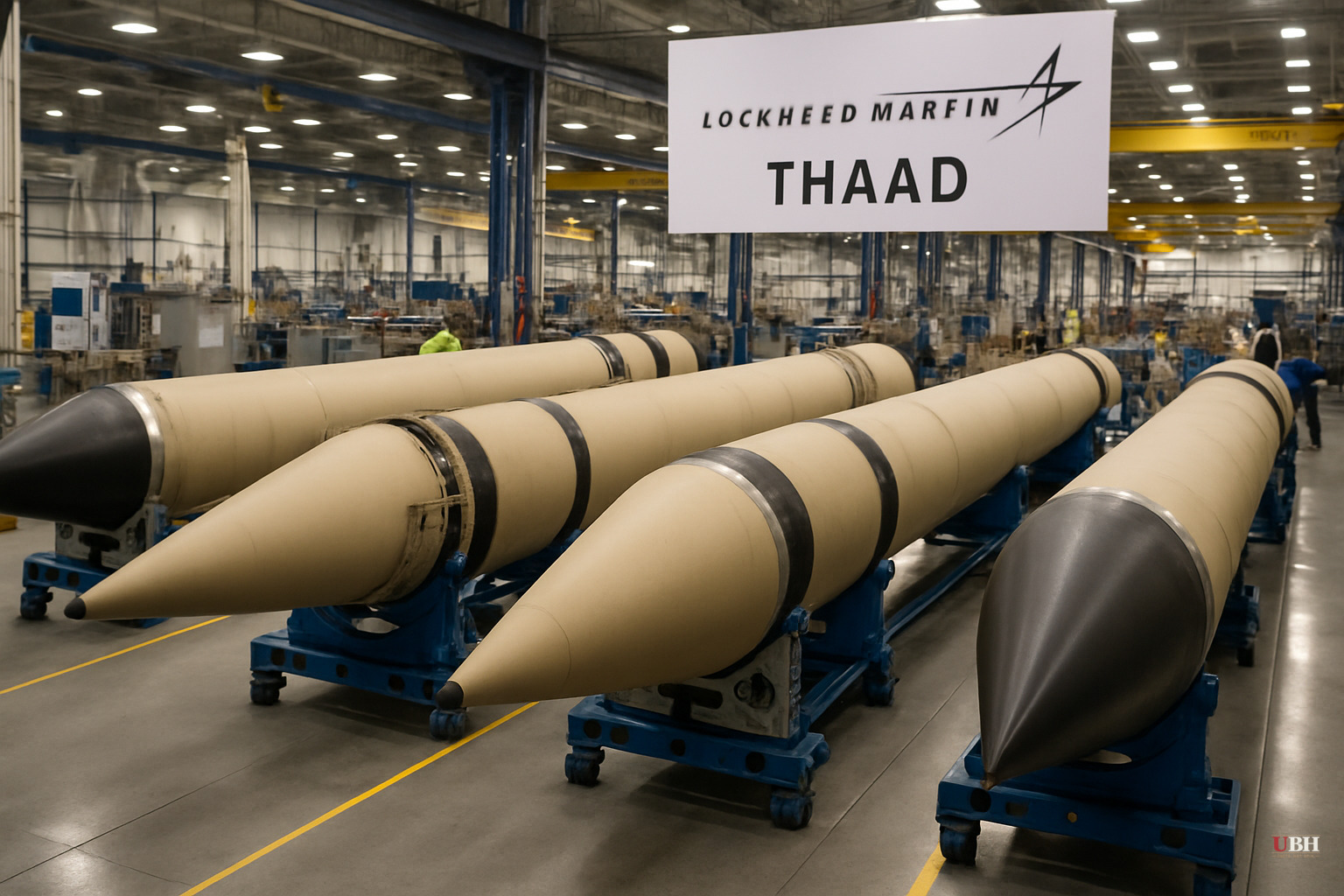
The Contract
Lockheed Martin received a seven-year undefinitised contract action (UCA) valued at up to $35,327,237,604 from the Department of War for Terminal High Altitude Area Defense (THAAD) interceptors, according to Procurement Magazine. Work runs from March 2026 through June 2032 and will be performed at Lockheed facilities in Dallas, Texas; Sunnyvale, California; Troy, Alabama; and Camden, Arkansas.
The contract aims to quadruple THAAD output from current rates. Tim Cahill, President of Lockheed Martin Missiles and Fire Control, called it "a transformational shift to multiyear procurement" that will "deliver capabilities to the American warfighter at unprecedented speed and scale."
THAAD interceptors shoot down ballistic missiles in their terminal phase. They are not easily or quickly replaced once expended.
Why This Is Happening Now
The Centre for Strategic and International Studies noted in May 2026 that a 39-day U.S.-Israel bombing and air defense campaign against Iran depleted key U.S. munitions inventories. Ukraine support has compounded the drain. The stockpile problem has been visible on paper for years; the Iran operation made it operational.
The Department of War's Fiscal Year 2027 budget requests $413.1 billion total for procurement, according to Procurement Magazine. The THAAD deal is one of the first contracts executed under the DoW's Acquisition Transformation Strategy, which the department describes as "an aggressive systemic overhaul" of how it buys weapons.
The "Undefinitised" Problem
The contract is a UCA, meaning final terms are not yet locked. The Wall Street Journal, cited by Procurement Magazine, notes that undefinitised awards require additional Congressional funding before they become fully binding agreements. Lockheed cannot responsibly pour capital into expanded production lines until that appropriation lands.
Five defense industry executives, speaking anonymously to Defense News, made exactly this point: Congress must appropriate funds before companies can invest heavily in components and new capacity. Doing so beforehand would pressure free cash flow and could damage second-half earnings.
The Senate Armed Services Committee approved its version of the National Defense Authorization Act this month, but the funding pipeline from framework agreement to actual contract to Congressional appropriation is a multi-step process that has not yet completed.
The Defense Production Act Invocation
On June 11, 2026, President Trump signed a memorandum invoking the Defense Production Act of 1950, the Korean War-era law that gives a president broad tools to direct private industry toward national defense needs.
Most coverage framed it as Trump ordering companies to produce more weapons. According to a detailed breakdown published by India's World, the memorandum invoked Section 708 of the Act, the voluntary-agreements clause, which does something narrower. It lets competing arms manufacturers sit in the same room and coordinate on capacity, pricing, and supply chains without violating antitrust law, provided the Defense Secretary consults the Attorney General and the Federal Trade Commission first. The order names no company, sets no production quota, and compels zero factory output.
What the memorandum did legally establish was a presidential finding that "conditions exist which may pose a direct threat to the national defense," citing "systemic constraints in the munitions industrial base, including limited production capacity, fragile supply chains, long-lead dependencies, and related production bottlenecks." That finding is the predicate for the coordination authority.
The memorandum notably addresses Pete Hegseth as "Secretary of War," a title retired in 1947 that Trump revived by executive order in September 2025.
Pressure on Industry
The Lockheed THAAD contract follows a broader set of framework agreements announced earlier this year. According to Defense News, those agreements include deals to triple Patriot interceptor production and quadruple THAAD output with Lockheed, plus separate multiyear deals with RTX to boost Tomahawk cruise missile and AMRAAM air-to-air missile production. None of those framework agreements had yet been converted into full contracts as of this week.
Trump met with munitions makers at the White House this past Wednesday, the second such gathering since a March meeting that included CEOs from BAE Systems, Lockheed Martin, Northrop Grumman, RTX Corp, Boeing, Honeywell Aerospace, and L3Harris Technologies, along with Defense Secretary Hegseth. Two people briefed on Wednesday's meeting told Defense News it ran longer than expected. Deputy Defense Secretary Steve Feinberg pushed back on industry claims about production progress, citing delays on key programs. The initial message from officials, one source said, was blunt: "you're not doing enough." The tone shifted by the end toward cooperation, with officials framing the goal as getting on "a war footing."
Industry's Position
Defense contractors cannot unilaterally solve a stockpile problem that Congress helped create through years of inconsistent funding and continuing resolutions. Multiyear procurement commitments are only as good as the appropriations behind them, and companies that invested ahead of government payment on past programs have absorbed real financial damage. Executives are not being obstinate when they wait for a signed contract and an actual appropriation. They are managing shareholder capital under existing legal obligations. Blaming industry for not moving faster while the funding mechanism remains incomplete overlooks the incomplete diagnosis of the underlying problem.
What Comes Next
The THAAD contract's performance period runs to June 2032, but the immediate test is whether Congress appropriates the FY2027 defense budget in time to convert the undefinitised award into a fully funded contract. Until that happens, Lockheed's ability to accelerate production at the scale the DoW is demanding remains constrained by the same cash-flow math the executives described to Defense News.
Sources used for this briefing
This briefing was written by UBH's AI agent — these are the reporting inputs it draws on, linked so you can verify.


