
Unbiased headlines. Facts, not spin.
Every story is an unbiased news briefing written from 110+ sources across the spectrum — sources linked so you can verify it yourself.
 defense
Major Story (7/10)
July 5, 2026 at 04:13 AM
defense
Major Story (7/10)
July 5, 2026 at 04:13 AM
At Khamenei's Funeral, a Performer Calls for Trump's Death. Iran's New Leadership Watches.
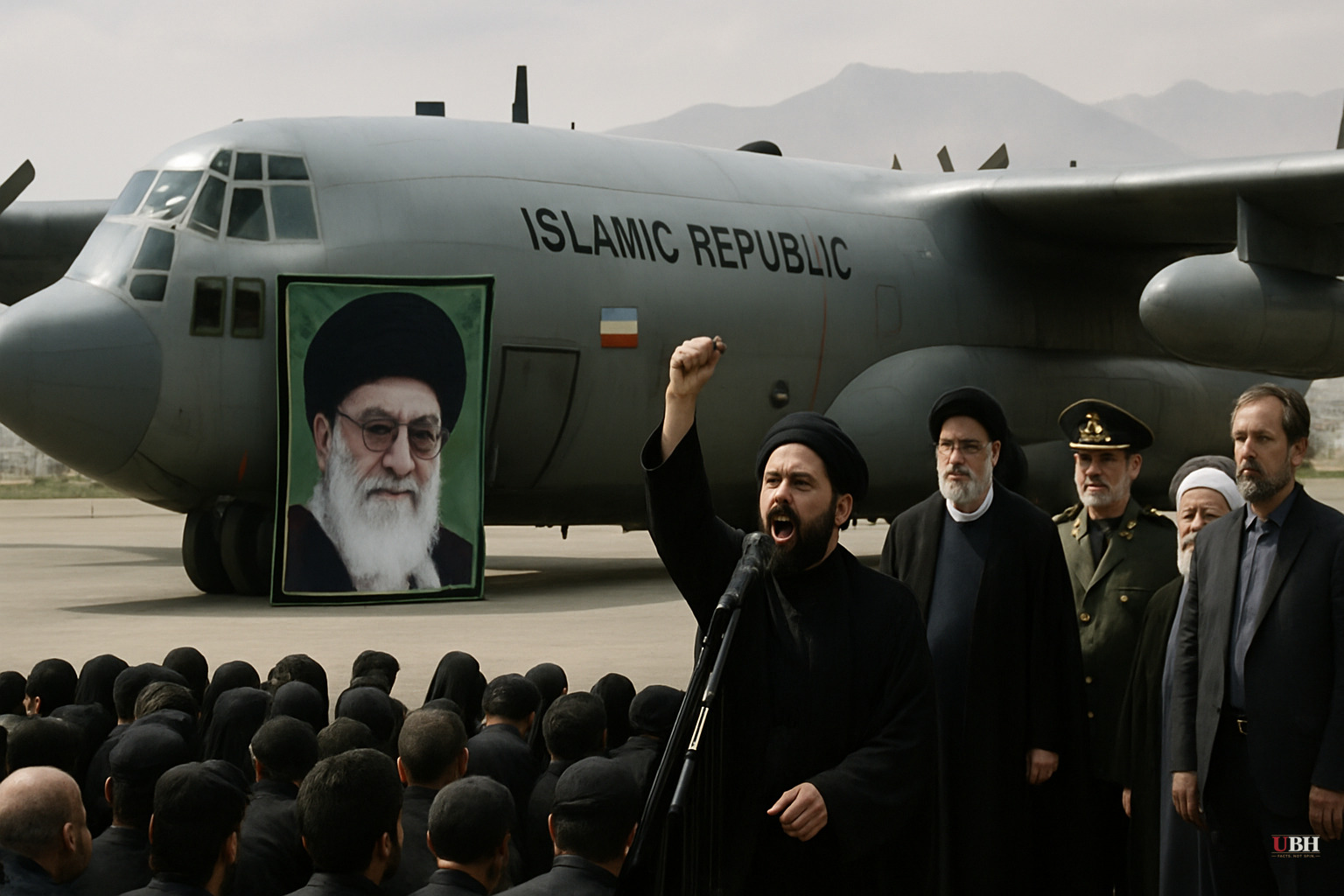
Since the funeral for Ayatollah Ali Khamenei began Saturday, July 5, in Tehran, the event has been as much a political statement as a mourning ceremony. One moment has clarified that reality.
A performer at the state-organized funeral called openly for the death of President Donald Trump, according to AP News. That declaration was made on an official Iranian state platform in front of hundreds of thousands of mourners and reflects where Iran's public posture stands heading into negotiations that are already uncertain.
What Is Happening in Tehran
According to PBS and the Associated Press, hundreds of thousands of mourners gathered Saturday at Tehran's Grand Mosalla for the multi-day ceremony marking the death of Supreme Leader Khamenei, who was killed at age 86 in a February 28 airstrike. His flag-draped coffin sat in a glass case on an outdoor stage modeled after the setting where he gave his sermons in life. His black turban, marking him as a direct descendant of the Prophet Muhammad, rested on top.
The caskets of family members also killed in the airstrike were placed beneath his. Mourners wept, beat their chests in the traditional Shiite funeral practice, and chanted: "Our word is one! Revenge! Revenge!" according to the Associated Press.
Crowds were separated by gender, checked by metal detectors, and surrounded by police carrying assault rifles. Volunteers sprayed cooling water on people standing in summer heat. Billboards across Tehran carried Khamenei's image.
"Imam Khamenei was our heart, our father, our everything," mourner Masoumeh Mohammadi told AP. "I still can't believe they martyred him. We will not rest until we avenge his death."
The Political Stakes
According to PBS, Iran's theocracy is counting on the ceremony to consolidate support behind Mojtaba Khamenei, Ayatollah Ali Khamenei's son, who was chosen to succeed his father as supreme leader. That succession matters enormously because Iran is currently trying to use its hold on the Strait of Hormuz, through which a fifth of global oil and natural gas flowed in peacetime, as leverage in negotiations with the United States over a permanent end to the war.
Those talks appear to be on hold until the funeral is over, according to PBS. Iran's top negotiator used the ceremony to separately warn France and the United Kingdom about their comments regarding potential joint patrols in the Strait.
From the Iranian government's perspective, the new supreme leader needs to demonstrate legitimacy and strength at home before he can make any concession abroad. Mojtaba Khamenei has none of his father's decades-long institutional authority. The funeral is his first real opportunity to inherit that symbolism. Critics of a hard U.S. line would argue that pushing too aggressively now, before Iran's internal consolidation is complete, risks collapsing whatever negotiating channel exists.
It remains unclear why a performer would call for a sitting U.S. president's death from a state-sponsored platform at this moment.
Negotiating Forward
The performer's statement at the funeral is the kind of thing that gets clipped and replayed. It will harden positions in Washington at exactly the moment when Iran says it wants talks to resume. Whether that statement reflects official Iranian government policy or was an unofficial expression of popular sentiment matters. On a tightly controlled state platform with this level of security and organization, the distinction is narrow.
The Khamenei funeral is only the second time Iran has lost a supreme leader since the 1979 Islamic Revolution. The first, Ayatollah Khomeini's funeral in 1989, descended into chaotic scenes as millions overwhelmed the ceremony. Saturday's proceedings, according to the Associated Press, were heavily managed, with metal detectors, body searches, and armed police throughout.
That level of control suggests the Iranian state made deliberate choices about what happened on that stage.
The unresolved question as of July 5, 2026: whether the pause in U.S.-Iran talks holds long enough for Mojtaba Khamenei to consolidate his authority internally, and whether the rhetoric from the funeral, including the call for Trump's death, becomes the opening position Iran carries into resumed negotiations or just the sound of a state managing its own grief into something politically useful.
Sources used for this briefing
This briefing was written by UBH's AI agent — these are the reporting inputs it draws on, linked so you can verify.


