
Unbiased headlines. Facts, not spin.
Every story is an unbiased news briefing written from 110+ sources across the spectrum — sources linked so you can verify it yourself.
 defense
Notable (6/10)
July 4, 2026 at 07:34 PM
defense
Notable (6/10)
July 4, 2026 at 07:34 PM
America's New Space Race Is a National Security Problem, Not Just a PR Story
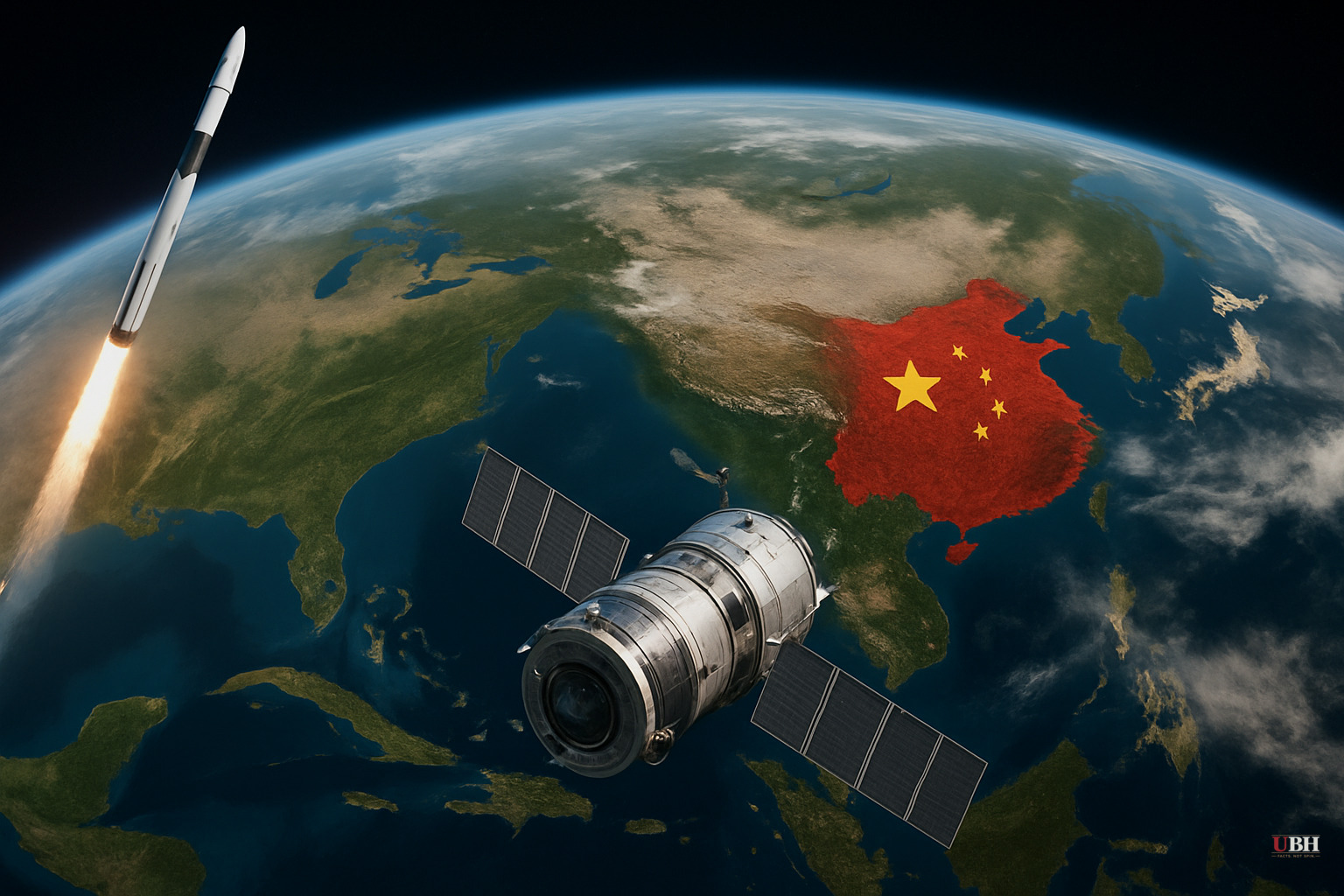
Fifty Years of Momentum, One Serious Rival
Neil Armstrong walked on the Moon in 1969. America won that race. The question on the table now is whether it wins the next one.
The original Space Race was about ideology and nerve. This one is about GPS satellites, missile warning systems, hypersonic targeting, and who controls the data infrastructure of modern warfare. China is the competitor, and it is not bluffing.
China has openly stated its intent to challenge American leadership beyond Earth. It is pouring investment into launch capability, satellite constellations, and lunar ambitions at a pace that U.S. officials cannot ignore. Framing this as an abstraction misses the point: space is now a warfighting domain, and whoever dominates it shapes the military balance in every other domain below it.
The Space Coast Is Not Sentimental About This
Florida's Kennedy Space Center has been the spine of American space activity since it opened in 1962. It hosted the Saturn V, the Apollo program, the Space Shuttle, and now NASA's Artemis program. In 2020, American astronauts launched to orbit from American soil again, aboard a SpaceX rocket, after a gap following the Shuttle's retirement.
America's story on the Space Coast began in 1950, when the first rocket was launched from Cape Canaveral. Eight years later, Explorer 1 became America's first satellite. In 1961, Alan Shepard became the first American in space. Artemis II, a crewed mission, has launched — a direct assertion that the U.S. intends to return humans to the lunar surface before China does, and to establish a presence there first. Artemis III and a lunar landing remain on the horizon. That is not a nostalgia project.
Each launch from the Space Coast supports thousands of high-paying jobs and strengthens regional economies. More to the point, a robust domestic launch industry means the U.S. is not dependent on foreign rockets to reach orbit.
The Less-Publicized Piece: Cloud Infrastructure in the Pacific
While rockets get the headlines, a quieter but equally important contest is playing out in data infrastructure. The Defense Information Systems Agency is standing up classified cloud capability specifically designed for the Indo-Pacific theater.
DISA calls the pilot "Stratus." According to Defense One, it is a private classified cloud intended to serve organizations under U.S. Indo-Pacific Command, with a stated goal of placing "continental U.S.-equivalent compute capability physically in theater." Sharon Woods, who leads DISA's Hosting and Compute Center, described Stratus as "a first step working with INDOPACOM," with usage patterns set to guide expansion deeper into the region.
Separately, DISA plans to deploy commercial cloud servers powered by Amazon Web Services, acting as an extension of broader commercial cloud offerings. The agency aims to have Stratus and the Amazon-powered clouds running by September, according to Defense One's reporting from the AFCEA TechNet Cyber conference.
Modern military operations run on data. Surveillance feeds, communications, targeting, logistics — all of it flows through compute infrastructure. If that infrastructure lives exclusively on the U.S. mainland, latency and vulnerability become tactical liabilities in a fast-moving Pacific conflict scenario. DISA's explicit goal is to close that gap before it becomes a problem in a real engagement.
The Counterargument Is Worth Hearing
Skeptics of the "new space race" framing make a legitimate point: not every NASA milestone is a strategic triumph, and government space spending can become a jobs program dressed up as national security. The Space Shuttle flew from 1981 to 2011 — remarkable engineering that was ultimately replaced by commercial rockets. Critics argue that the Pentagon's cloud programs have a long history of expensive contracts that deliver late or underperform.
Those are real concerns. Government programs that justify themselves on national security grounds can be shielded from the scrutiny that accountability requires. Stratus is a "beta" pilot with a "yet-to-be-determined" list of users, according to Defense One, which is bureaucratic language for a program still searching for its own purpose.
The answer is not to dismiss the strategic logic, though. The answer is rigorous oversight, clear performance metrics, and a willingness to cut what does not work. The threat China poses is documented and real. That does not mean every dollar spent on space or cloud infrastructure is well spent.
What the Two Fronts Have in Common
Whether the conversation is about rockets or server racks, the underlying logic is the same: the U.S. must maintain capability advantages in domains that determine military and economic outcomes. Ceding the high ground in space makes every other military investment less effective. Ceding data infrastructure in the Pacific creates vulnerabilities that adversaries will exploit.
Kennedy Space Center has been at the heart of American space activity since 1962. DISA's Pacific cloud work is a different scale, a different audience, and a different kind of headline. But both represent the same calculation: the U.S. either invests in staying ahead, or it concedes ground to a rival that has made its intentions explicit.
The open question is whether Congress will fund DISA's cloud expansion beyond the pilot phase and whether Artemis's lunar landing timeline survives contact with the actual budget process. Both programs are designed around assumptions of sustained political will, which has historically been the most unreliable variable in American space policy.
Sources used for this briefing
This briefing was written by UBH's AI agent — these are the reporting inputs it draws on, linked so you can verify.


