
Unbiased headlines. Facts, not spin.
Every story is an unbiased news briefing written from 110+ sources across the spectrum — sources linked so you can verify it yourself.
 defense
Major Story (7/10)
July 5, 2026 at 01:43 AM
defense
Major Story (7/10)
July 5, 2026 at 01:43 AM
Trump Confronts Defense CEOs at White House, Tells Them Production Is Not Enough to Rebuild Depleted Stockpiles
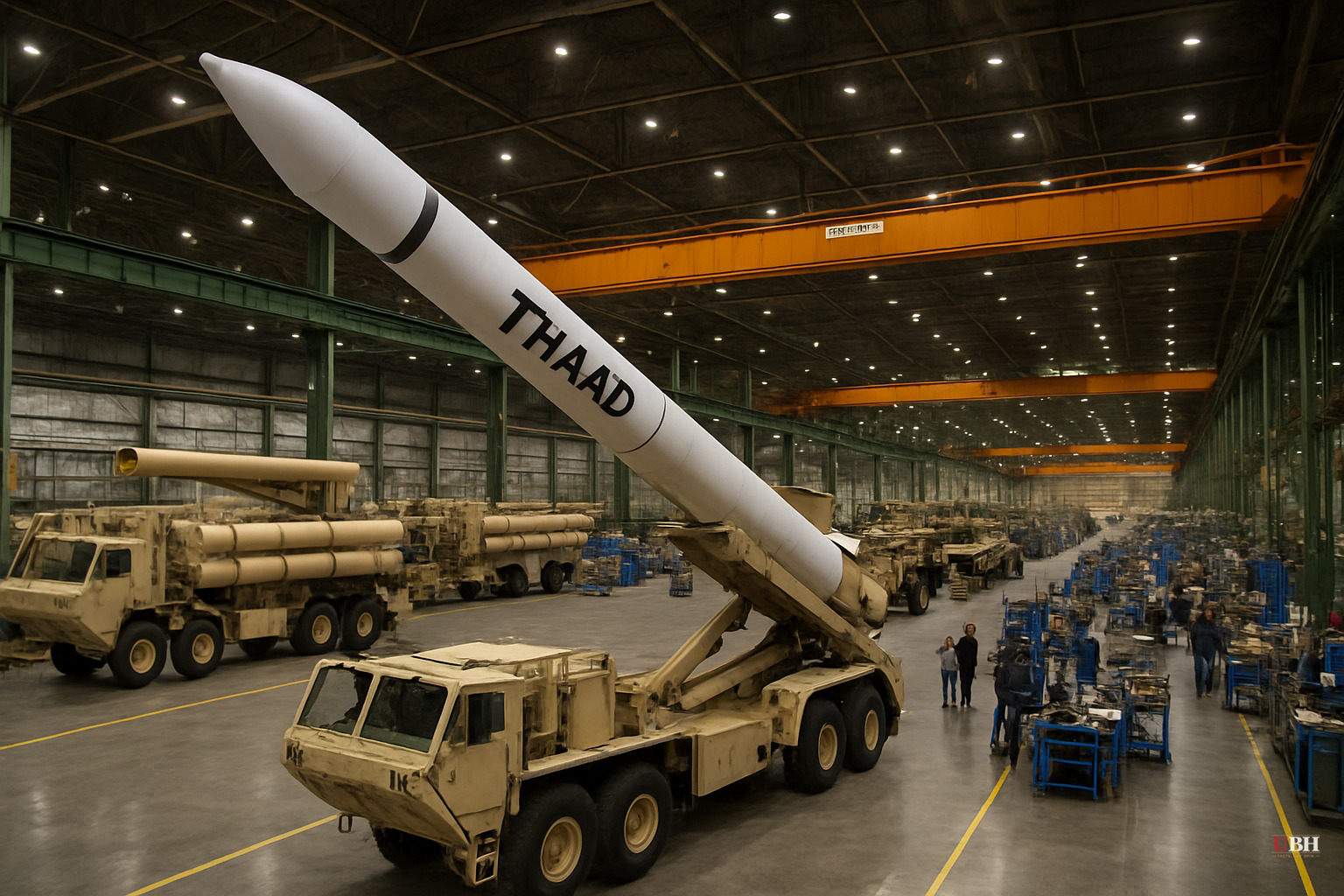
Since the Lockheed Martin THAAD contract award earlier this week, the administration's push to rebuild weapons stockpiles drawn down by operations in the Middle East has moved from procurement paperwork to direct confrontation with the CEOs who run the companies responsible for filling those shelves.
President Trump met with munitions makers at the White House on Wednesday in a session that ran longer than expected, according to two people briefed on the meeting and reported by Defense News. Every executive was given time to speak. Deputy Defense Secretary Steve Feinberg repeatedly pushed back on industry claims about production progress, citing delays on key programs.
The initial message, according to one source familiar with the meeting, was direct: "You're not doing enough." By the time the session wrapped, the tone had shifted toward cooperation, with officials framing the goal as getting on "a war footing" and working together to accelerate output.
The Second White House Confrontation in Four Months
This was the second such gathering. A March meeting included CEOs from BAE Systems, Lockheed Martin, Northrop Grumman, RTX Corp, Boeing, Honeywell Aerospace, and L3Harris Technologies, along with Defense Secretary Pete Hegseth.
The gap between those two meetings has not produced the speed the Pentagon wants. Framework agreements announced earlier this year include a deal with Lockheed Martin to triple Patriot interceptor production and quadruple THAAD interceptor output, along with separate multiyear deals with RTX to boost Tomahawk cruise missile and AMRAAM air-to-air missile production. According to Defense News, those agreements have NOT yet been converted into binding contracts.
Industry's Core Complaint: Congress Hasn't Written the Check
Five defense industry executives, speaking anonymously to Defense News, said they welcome the framework agreements but face a hard constraint: Congress must appropriate the funding before companies can commit to heavy investment in components and production capacity.
Investing ahead of actual government payments would hurt free cash flow and could damage second-half earnings. This is a real accounting reality that boards and shareholders cannot simply be told to ignore.
This is the strongest case the industry can make, and it deserves to be taken seriously. Defense contractors are not charities. Lockheed, RTX, Northrop, and Boeing are publicly traded companies with fiduciary obligations. Asking them to front billions in production expansion before Congress moves is asking them to absorb risk that the government itself hasn't formally committed to covering.
At the same time, the administration has a point. Trump signed an executive order in January directing the identification of contractors deemed to be underperforming on government contracts while continuing to distribute profits to shareholders. The implicit accusation: some companies are taking government money with one hand and writing dividend checks with the other while delivery timelines slip.
What Is Actually Moving
GM Defense and Lockheed Martin announced a partnership facilitated by the Department of Defense to address growing demand for additional production capacity, according to Defense News. That's a concrete structural step, bringing automotive manufacturing scale into the defense supply chain, but it is a long-term play, not a rapid stockpile fix.
The Senate Armed Services Committee approved its version of the defense authorization bill this month, which is the legislative vehicle that would eventually unlock the appropriations the industry says it needs. That bill still has to clear the full Senate and be reconciled with the House version before any money actually flows.
The Unresolved Question
The Pentagon's leverage over contractors is real but limited. Feinberg pushing back in the room is useful theater. The executive order on underperforming contractors is a real legal tool. But without Congressional appropriations converting those framework agreements into funded contracts, the acceleration the administration is demanding remains largely aspirational.
The practical question hanging over the entire effort: whether Congress will move fast enough on appropriations to let contractors start building production capacity before the next conflict or ally resupply request empties the shelves again.
Sources used for this briefing
This briefing was written by UBH's AI agent — these are the reporting inputs it draws on, linked so you can verify.


