
Unbiased headlines. Facts, not spin.
Every story is an unbiased news briefing written from 110+ sources across the spectrum — sources linked so you can verify it yourself.
 defense
Major Story (8/10)
July 5, 2026 at 09:41 PM
defense
Major Story (8/10)
July 5, 2026 at 09:41 PM
Trump Schedules Zelenskyy and al-Sharaa Meetings for Wednesday in Ankara, With Putin Follow-Up Expected After
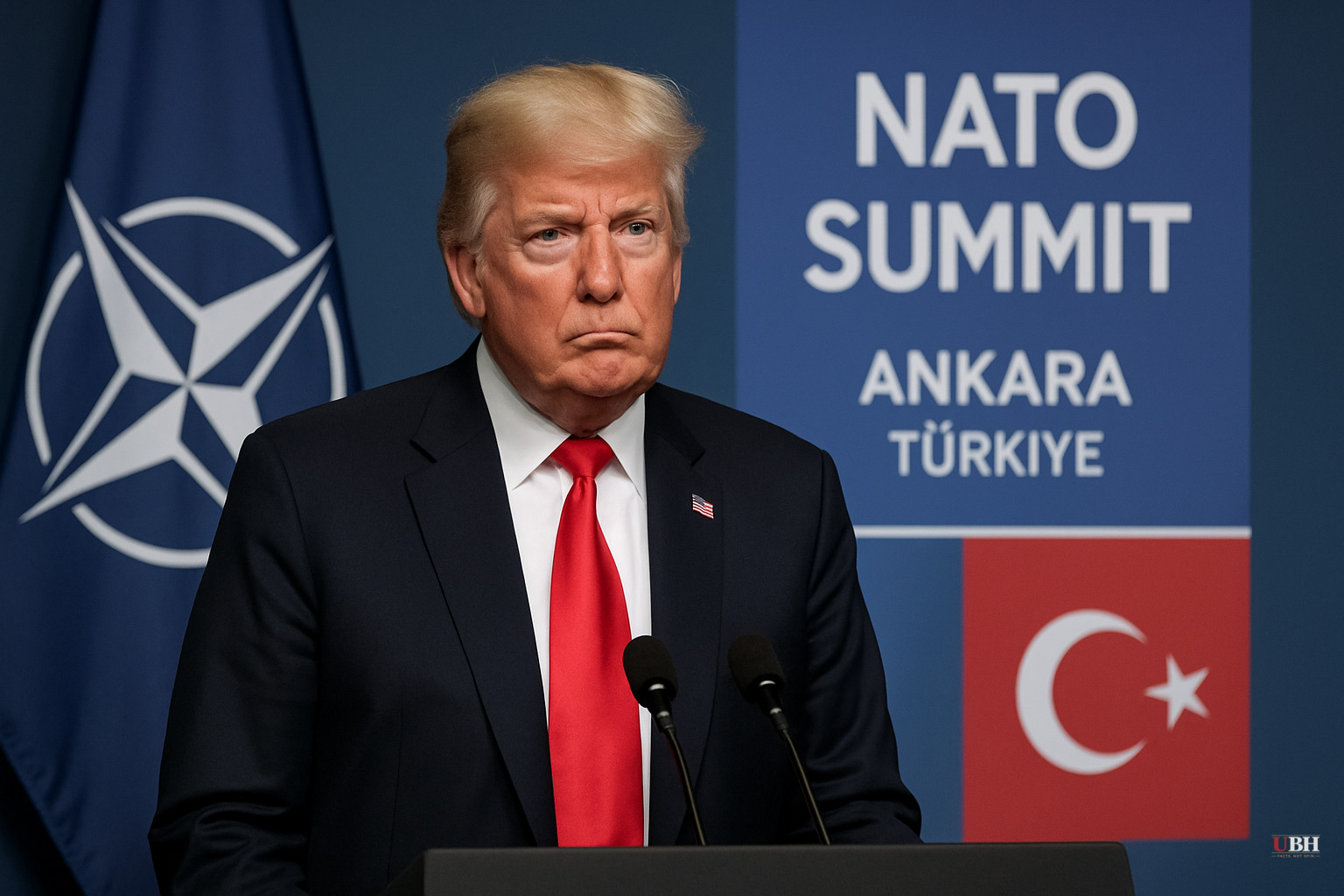
Since the Ankara summit opened with unresolved questions on burden-sharing and U.S. troop posture, the diplomatic calendar has gotten considerably more crowded.
The White House confirmed Sunday that Trump will depart Washington on Monday evening, arrive in Ankara on Tuesday, and spend Wednesday in a full-day bilateral sprint. White House deputy spokeswoman Anna Kelly told reporters the schedule includes an official welcome, a NATO leaders' working session, and then separate one-on-one meetings with Zelenskyy and Syrian President Ahmad al-Sharaa. Trump will hold a press conference before departing.
He is also scheduled to meet Turkey's President Recep Tayyip Erdogan on Tuesday, according to Kelly.
The Ukraine Thread
The Zelenskyy meeting carries the most immediate strategic weight. Russia's war in Ukraine is now in its fifth year, and a senior U.S. official, speaking Sunday on condition of anonymity to describe the administration's approach, said Trump "feels a sense of urgency" to end the conflict and will press Zelenskyy on a path forward.
Both Zelenskyy and Putin called Trump on Saturday, nominally to mark the July Fourth 250th anniversary of American independence. Zelenskyy posted on X afterward that the two discussed front-line conditions and that he sees "a real prospect of ending this war," with the Ankara meeting as the next step. Kremlin foreign affairs adviser Yuri Ushakov said Putin reaffirmed Trump's "readiness to help achieve a quick cessation of hostilities."
Notably, the senior U.S. official told reporters Trump is expected to follow up directly with Putin after the Zelenskyy meeting in Ankara. That sequence matters: Zelenskyy gets to frame the conversation first, then Trump relays whatever comes out of it to Moscow. Ukraine's calculus in pushing for this summit meeting is obvious. It aims to keep Trump's attention locked on the war before any bilateral Trump-Putin dynamic can drift.
Analysts say Russian advances on the front lines have sputtered, and Ukraine has demonstrated the capacity to strike deeper into Russian territory. That battlefield context gives Zelenskyy some negotiating footing, though it does not resolve the fundamental question of what a sustainable ceasefire looks like.
The Syria Question, Still Unanswered
The al-Sharaa meeting is harder to read. U.S. officials provided no details on the goals of that conversation.
What is known publicly is messy. Trump has repeatedly floated the idea that Syria should take on Hezbollah in Lebanon, a suggestion that has unsettled the region and complicated ongoing negotiations tied to the post-Iran-war environment. Al-Sharaa, whose rebel forces ousted Bashar Assad and who previously led an Islamic insurgent group, has flatly said he has no interest in fighting Hezbollah. He has suggested Trump's comments were misconstrued. Trump has repeated them anyway.
The strongest case for Trump's Syria gambit is strategic: if a new Syrian government could apply pressure on Hezbollah from the east, it would theoretically reduce the burden on Israel and simplify U.S. calculations in Lebanon. It's not an incoherent idea on paper.
The problem is al-Sharaa has said no, clearly and publicly. His government is fragile, its legitimacy is contested domestically, and picking a fight with Hezbollah would be a potentially regime-ending move. What exactly Trump expects to accomplish in that bilateral given al-Sharaa's stated refusal and the absence of any stated U.S. objective is a genuine open question.
Hormuz, Greenland, and the Money
Beyond the headline bilaterals, the senior U.S. official described several other summit threads worth tracking.
Maritime security in the Strait of Hormuz is expected to come up, with the official noting that "several allies have expressed interest in contributing" to protecting shipping through the waterway. The same official was blunt about the limits: "Many of them don't have the necessary ships or assets to contribute to a meaningful maritime effort." Burden-sharing is not just about GDP percentages. It is about actual military hardware.
On defense spending, Washington's position going into the summit is that allies must "demonstrate meaningful upward trajectories," phrasing that leaves room to pressure countries that have announced increases but have not yet delivered them.
The official also previewed "billions of dollars in announcements" on the sidelines involving defense co-production projects and factory-building with European and Canadian allies.
And on Greenland: a separate U.S. official confirmed the administration still believes U.S. acquisition of Greenland is the "best long-term solution" but said "alternative arrangements" are under discussion with governments in Greenland, Denmark, and the U.S. who "want to solve this permanently." No timeline was given.
What Comes Next
The unresolved question that will define the summit's legacy is simple: does the Zelenskyy-Trump meeting in Ankara produce any concrete ceasefire framework that Trump then carries to Putin, or does it produce another round of optimistic statements followed by a frozen negotiation? The expected Trump-Putin follow-up call after the Ankara meeting is the specific event to watch for an answer.
Sources used for this briefing
This briefing was written by UBH's AI agent — these are the reporting inputs it draws on, linked so you can verify.


