
Unbiased headlines. Facts, not spin.
Unbiased Headlines is an independently owned news organization. We bring you the facts, not opinions, written fresh from 110+ named sources. Sources linked so you can verify it yourself.
 economy
Major Story (8/10)
Event date: November 3, 2026 ·
Trump Says U.S. Aid to Israel Ends at Year's End, Netanyahu's Office Calls It a Shift to 'Partnership'
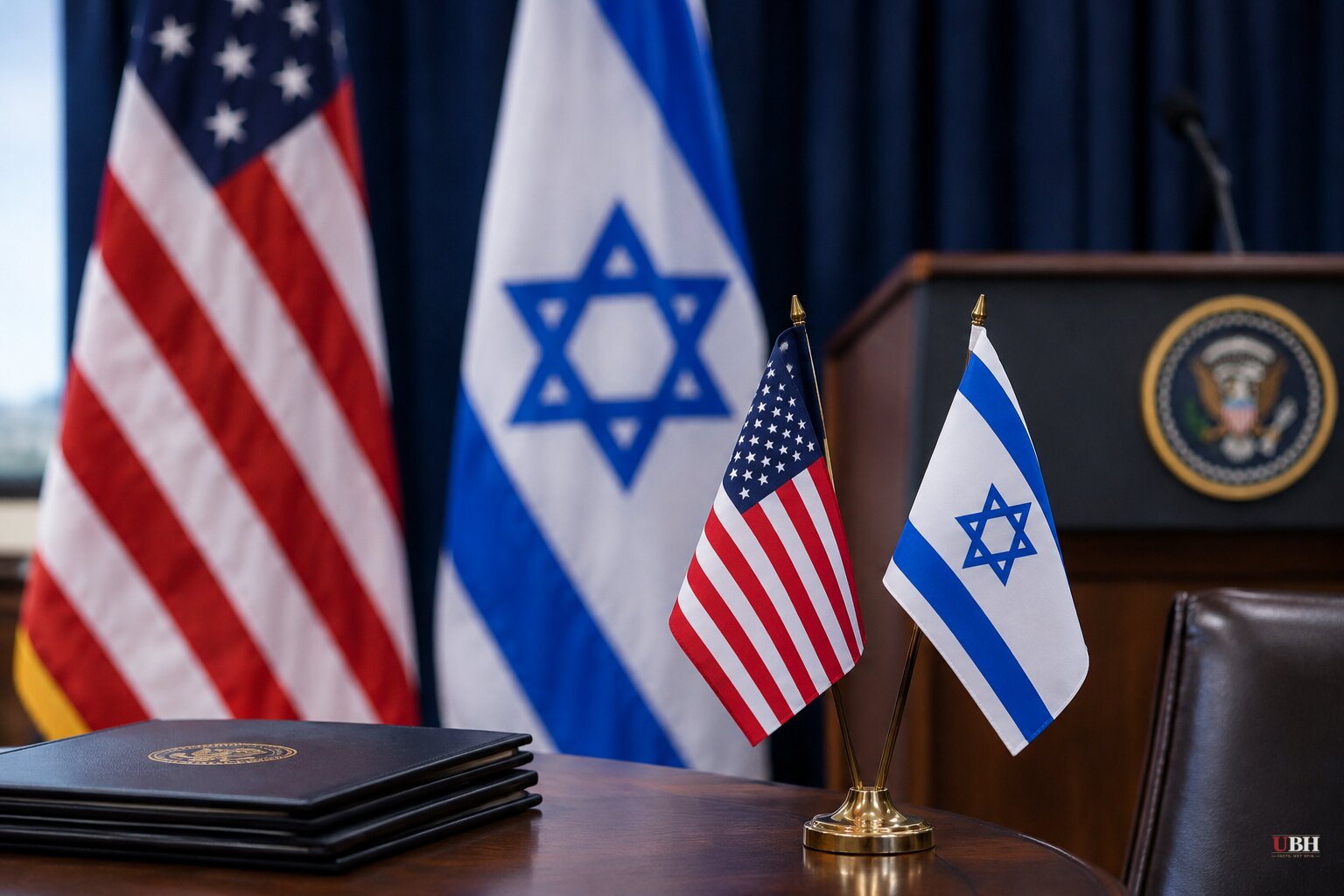
President Donald Trump announced on Tuesday, Nov. 3, that U.S. military aid to Israel will stop at the end of this year. "We were giving them $4 billion – we are – but it gets cut off at the end of the year," Trump said on "Fox & Friends" the morning voters went to the polls in the midterms.
His reasoning was simple. "They don't need it," Trump said. "Israel is a very thriving country." He said Israel can still purchase weapons. "They can buy whatever they want," he said.
He described the aid as "things and money," meaning military hardware, cash or "barter." He said the idea came from Israeli Prime Minister Benjamin Netanyahu. "He brought it up," Trump said.
The politics Trump put on the table
Trump acknowledged the political backdrop. He pointed to Michigan's Senate race between Democrat Abdul El-Sayed and Republican Mike Rogers. "Why should we suffer the slings from lunatics like an El-Sayed when they don't need it?" Trump said. He called the aid "a bad talking point."
That makes this a policy announcement with a campaign motive, by the president's own account. It was timed to the day Americans voted.
What the existing deal says
The current memorandum of understanding, set up in 2016, provides around $38 billion in security assistance over fiscal years 2019 through 2028. The current U.S.-Israel security assistance agreement provides about $3.8 billion annually through 2028. Trump put the figure at $4 billion.
Congress passed a law in 2020 authorizing the funding for Israel, but the Senate and House must still pass appropriations bills every year to distribute and release the funds.
The timing and terms of any change to the agreement have not been detailed.
Netanyahu's side
Netanyahu has been heading this way for months. In an interview with CBS News' "60 Minutes" earlier this year, he said: "I want to draw down to zero the American financial support, the financial component of the military cooperation that we have. Because we receive … $3.8 billion a year. I think that it's time that we weaned ourselves from the remaining military support."
In an October interview with an Israeli television channel, he said: "If you think we're going to continue receiving what I secured twice, and that's tens of billions of dollars in American aid for the defense budget, prepare yourselves and get used to the fact that it won't happen because America has changed."
Netanyahu has also said Sen. Lindsey Graham challenged his push to end the aid.
After Trump's announcement, Netanyahu's office posted on X that U.S. military aid "has always been a cross-the-aisle agreement." It said Israel used the money "both to defend itself and to confront enemies who threaten America and the West." The office said "Today, Israel has a strong and stable economy." It framed the decision as a transition "from aid to partnership" that "shows the strength and sophistication of our relationship, and its ability to adapt and stand strong over time."
Opposition leader Gadi Eisenkot criticized how the change became known. "The fact that the security establishment, along with Israeli citizens, is learning about a change in the strategic relationship framework through the media highlights just how much Benjamin Netanyahu's conduct poses a genuine danger," he said on X.
Public opinion in the U.S. has cooled. An Associated Press-NORC poll released in July found 20 percent of U.S. adults viewed Netanyahu favorably, 38 percent unfavorably, and 41 percent said they didn't know enough to have an opinion.
Israel's books
The timing lands on an economy under strain. Economist Joseph Zeira, writing for Project Syndicate on Nov. 6, argues that a strong stock market and appreciating currency mask heavy damage from three years of war. He says defense spending rose from roughly 4.2 percent of GDP in 2022 to 7.8 percent, adding more than $1,600 per person in annual costs.
Zeira says the budget deficit rose from 1.8 percent of GDP in 2022 to 7.1 percent in 2023 and 9 percent in 2024, before declining to 6.5 percent in 2025. He notes that since 1985 Israel's deficit has averaged 3 percent of GDP. He argues falling output and investment point to a prolonged recession. That is his assessment.
Israeli business reporting points to bills pushed past the election. The outgoing government postponed a series of increases in fuel, public transportation, electricity and water. Netanyahu and Finance Minister Bezalel Smotrich chose to forgo approximately half a billion shekels in tax revenue to prevent a liter of gasoline from crossing the NIS 8 threshold. Smotrich made two reductions in the fuel excise tax, totaling NIS 1 per liter. The two-month relief measure is expected to cost the state approximately NIS 500 million. Fuel prices have been pushed up by the conflict involving Iran, Ukrainian strikes on Russian refineries and a weaker shekel.
American aid is not the whole picture. But the next government inherits a large defense bill, a deficit still well above Israel's 3 percent long-term average, and postponed price hikes, as the aid Trump says will end is slated to stop.
No government yet
Israel's election produced no clear winner. With about 90 percent of ballots counted, Netanyahu's bloc was heading for about 54 seats and Eisenkot's bloc for roughly 49. Two Arab parties were on track to win as many as 19. Neither coalition appears likely to win the 61 seats needed for a majority.
Netanyahu remains caretaker prime minister until a government is formed. Eisenkot has denounced Netanyahu as unfit to lead but has also objected to partnering with Arab parties. The Joint List said it would "do everything in its power" to remove Netanyahu from office.
The Knesset opens on Nov. 10, and Netanyahu's opponents could be well-placed to take control of the legislative process even without a government. President Isaac Herzog will select who gets the first chance to form a new government. If talks fail, the country could head to a second round of elections.
Several questions remain open. How will the 2016 agreement be amended, and which Israeli government will sign off on the new terms?
Sources used for this briefing
6 links from 6 independent newsrooms (syndicated copies of the same report count once)
These are the sources it draws on, linked so you can verify.


