
Unbiased headlines. Facts, not spin.
Unbiased Headlines is an independently owned news organization. We bring you the facts, not opinions, written fresh from 110+ named sources. Sources linked so you can verify it yourself.
 economy
Notable (6/10)
Event date: November 3, 2026 ·
BofA, Barclays and Morgan Stanley Strategists Expect Treasury to Hit $41.1 Trillion Debt Limit by Late February
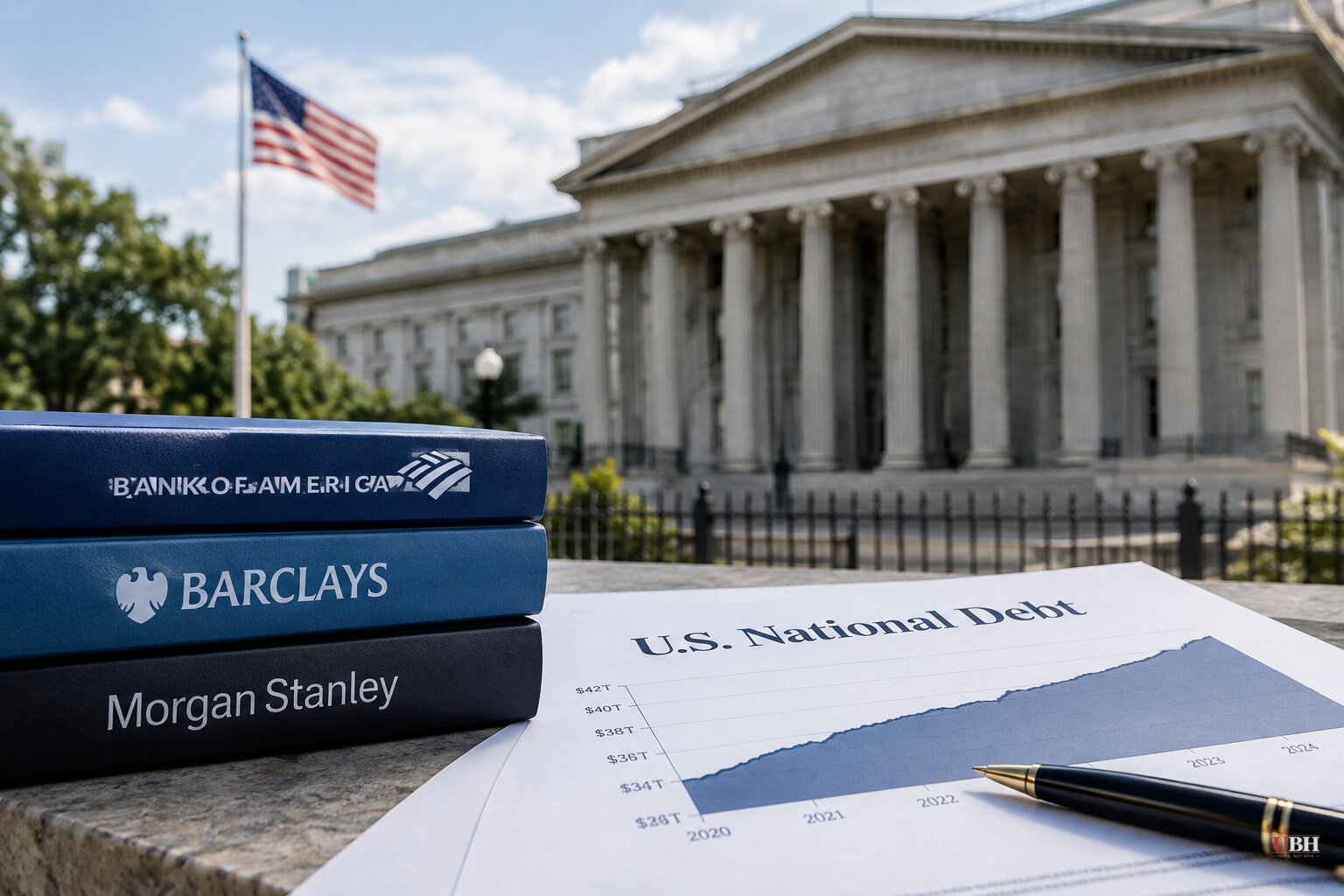
The debt-limit clock just moved up. Strategists at Bank of America, Barclays and Morgan Stanley said Treasury's latest financing estimates, combined with a higher cash balance, pull the date it reaches the $41.1 trillion cap forward to mid- to late February 2027. Bank of America had earlier put it around May.
Hitting the limit is not the same as running out of money. Bloomberg reported the strategists' view that the February date would force Treasury into extraordinary measures, with an actual funding crunch not arriving until late 2027.
What Treasury has put on paper
Treasury's Nov. 2 quarterly borrowing estimate projected $800 billion in net privately held marketable borrowing for January through March 2027. That figure assumes a $1 trillion cash balance at the end of March.
On Nov. 4, Treasury said in its refunding plan that it expects to keep nominal coupon and floating-rate note auction sizes unchanged for at least the next several quarters. It plans to trim short-term bill issuance in December, then raise it in January to cover seasonal spending increases.
Neither document names a date for reaching the limit. Net marketable borrowing is also counted differently from debt subject to the cap, which includes Treasuries held in government accounts, according to the Congressional Budget Office's February 2026 outlook. The borrowing estimate alone cannot be used to calculate the date. The February call is the strategists' projection, not a Treasury announcement.
Treasury's next refunding announcement is scheduled for Feb. 3, 2027.
From limit to X-date
When the limit is reached, Treasury can use extraordinary measures, such as pausing investments and reinvestments in federal employee retirement funds, to keep paying bills. The date those tools run out is the so-called X-date.
The Bipartisan Policy Center's June 4 report, which assumed no further action from Congress, projected the limit would be reached between late winter and midsummer 2027. It put the X-date roughly six to nine months after that. Taken at face value, a mid-to-late February limit date lines up with an X-date somewhere in the second half of 2027.
Gil Fortgang, Washington associate analyst at T. Rowe Price, expects the debt ceiling vote in late 2027. He said past precedent points to brinksmanship from both sides, with Democrats and the White House pushing their agendas before reaching a compromise. T. Rowe Price says Democrats won majorities in both chambers on Tuesday, which it says gives them bargaining leverage on essential spending votes.
The borrowing behind the cap
Congress raised the limit by $5 trillion, from $36.1 trillion to $41.1 trillion, on July 4, 2025, through Public Law 119-21, the One Big Beautiful Bill Act. It was the largest single increase on record.
Since then the debt has passed $40 trillion, a mark it hit in August. The Treasury Department reported a deficit of nearly $2 trillion for the fiscal year that ended Sept. 30. That was 12% above the prior year's $1.78 trillion and the largest since 2021.
Net interest on the public debt topped $1 trillion for the first time. The deficit also grew because Treasury issued about $145 billion in tariff refunds after the Supreme Court found that certain global tariffs violated federal law.
"Today's deficit figures cap off a remarkably dismal year for our fiscal health," said Maya MacGuineas, president of the Committee for a Responsible Federal Budget. She added that "we're running out of time" to make tough choices.
Brake or ritual
The fight over the limit itself is an old one. The Tax Foundation argues that default "should not be an option," but says the limit remains "one of the only brakes on runaway debt and deficits." It says any reform should preserve or increase chances for Congress to debate the nation's fiscal health.
The opposing view is that the cap restrains nothing. Joel Perkes of debasementbasement notes that the limit does not authorize spending and only decides whether Treasury can borrow to pay bills Congress has already run up. By his count from Congressional Research Service data, Congress has changed it 104 times since World War II, 22 of them since 2001. The last cut came in 1963.
Treasury's Borrowing Advisory Committee weighed in on Nov. 4. It judged that the market has largely absorbed recent Treasury issuance and tied the recent rise in yields mainly to economic conditions and monetary policy expectations rather than weak demand. It recommended that Congress raise or suspend the limit to avoid market disruption and higher costs for taxpayers.
The Government Accountability Office's review of the 2011 to 2023 standoffs found yield gaps on bills maturing around the expected X-date. Payment uncertainty showed up in prices before any payment was missed.
Whether Washington addresses the limit before extraordinary measures run low, or waits for the market to force the issue, remains unsettled. Treasury's Feb. 3 refunding announcement is the next scheduled checkpoint.
Sources used for this briefing
7 links from 7 independent newsrooms (syndicated copies of the same report count once)
These are the sources it draws on, linked so you can verify.


