
Unbiased headlines. Facts, not spin.
Unbiased Headlines is an independently owned news organization. We bring you the facts, not opinions, written fresh from 110+ named sources. Sources linked so you can verify it yourself.
 defense
Major Story (7/10)
Event date: October 21, 2026 ·
Trump Says Putin-Zelensky Meeting Will Be Arranged 'Very Soon.' Neither Kyiv Nor Moscow Has Confirmed It
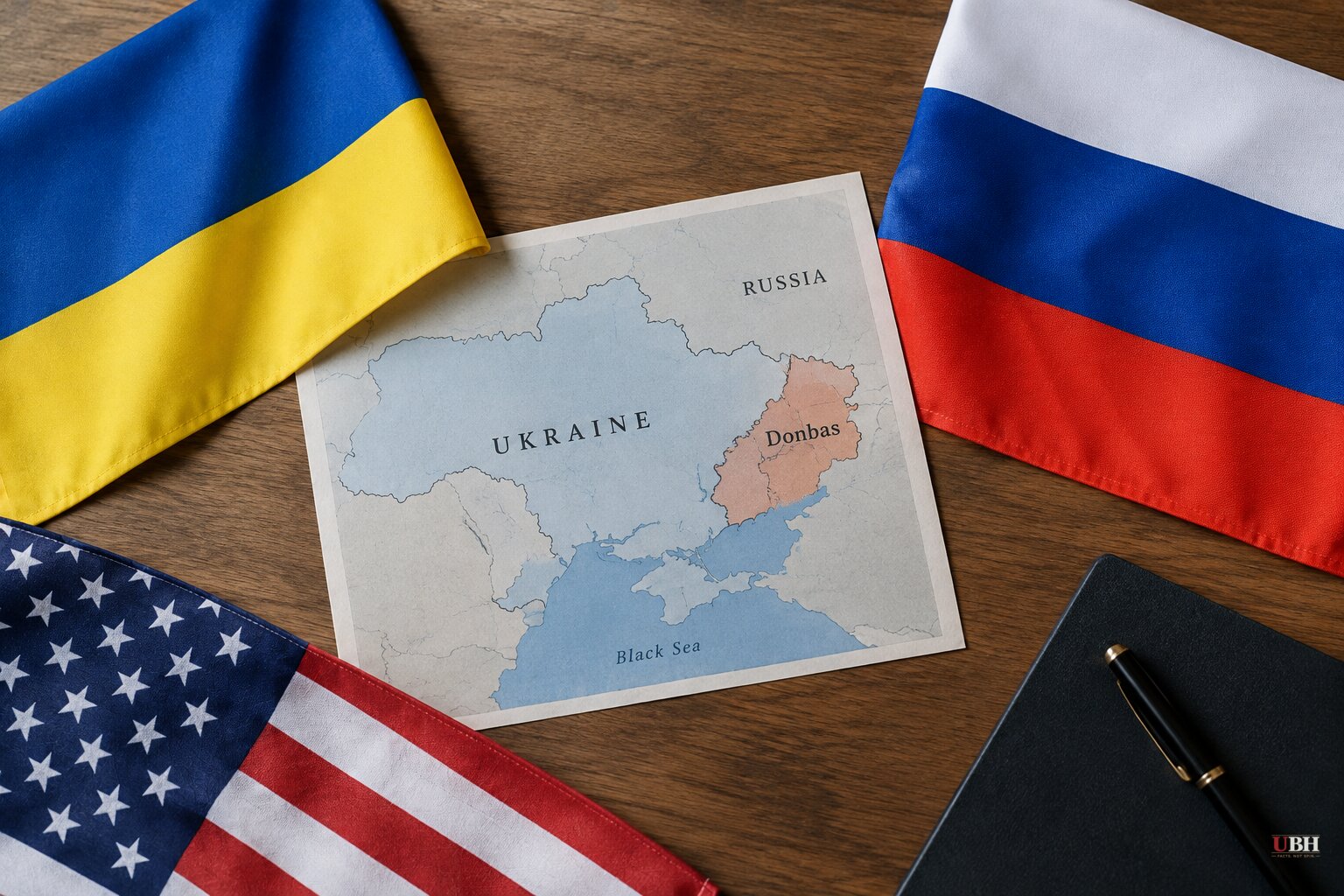
Since Steve Witkoff's shuttle between Oslo and St. Petersburg last week restarted U.S.-brokered diplomacy, the talk has moved faster than the positions. On Oct. 28, Trump took it a step further.
"There'll be a meeting set up very soon," Trump told reporters, referring to Vladimir Putin and Volodymyr Zelensky. "We're making a lot of progress with Russia-Ukraine."
He gave no date and no venue. Neither Kyiv nor Moscow has publicly confirmed that the two leaders agreed to meet. The remarks came six days before the Nov. 3 midterm elections. In a separate set of comments, Trump suggested a meeting need not be in person: "It could be done not necessarily through a meeting otherwise too," ZeroHedge reported, and Russian state media presented those comments as a sign that an in-person summit is unlikely.
What is actually scheduled
The only dated items are lower down the ladder. Zelensky said negotiators from Ukraine, Russia and the United States agreed to technical-level meetings in the first half of November in Abu Dhabi. A U.S. official said the next talks could be held in a couple of weeks in Abu Dhabi or Switzerland. A Kremlin spokesman said mid-November in Abu Dhabi is likely.
A new round would be the fourth brokered by the Trump administration. The most recent round, in Geneva in February, stalled with no significant progress. European governments, Ukraine's main backers, are again not at the table.
Zelensky has said he hopes a leaders' meeting follows the technical talks. Putin said he agreed "in principle" to restart negotiations. Within hours, Russia launched a deadly barrage of ballistic missiles and drones at Kyiv. Moscow said that same day it had destroyed more than 800 Ukrainian drones heading toward its cities.
The Oleshky ceasefire
The one thing both sides did agree to is local. Ukraine and Russia said on Friday they had agreed to a ceasefire in the Russian-occupied Kherson-region town of Oleshky, which took effect Oct. 27. It covers aid deliveries and evacuations through humanitarian corridors. Ukrainian authorities say about 2,000 civilians are stuck there, and residents have reported a deepening food crisis.
The channel ran through First Lady Melania Trump. She said her intervention let Russia and Ukraine assign teams to work out technical terms, including de-mining roads. "Residents who wish to evacuate will receive coordinated support and transportation to their preferred destination," she said. The White House said both nations agreed to "temporarily stop all military action" in the town.
Pope Leo XIV raised Oleshky in a call with Putin and then spoke with Zelensky on Monday, according to the Vatican.
The Trump-Zelensky rupture
The diplomacy is running alongside the worst U.S.-Ukraine rift in over a year. It began when Trump announced he was lifting sanctions on Russian diesel exports, saying it would lower fuel prices before the midterms. Diesel is at a record high in the U.S., and the White House is trying to ease pressure on it.
Zelensky called the decision "weak" and said it would hand Putin "billions" in extra revenue. Russian Deputy Prime Minister Alexander Novak said the first three tankers of Russian diesel were heading to North America. Trump has also rejected imposing Congress's new sanctions on buyers of Russian energy.
Trump blames Ukraine's drone strikes on Russian refineries for the diesel squeeze and has called them a "disgrace." Zelensky says the closure of the Strait of Hormuz is the cause. Trump has said Zelensky "doesn't want to end this war, and probably never did" and that it is "time for somebody else to negotiate on behalf of Ukraine."
Zelensky has said he would organize elections only if Putin agrees to a total 60-day ceasefire. He has also said he is open to peace talks if Ukraine's security can be guaranteed.
Trump's stated reasoning is that Russia has the advantage. "Russia is a big machine. They just keep grinding forward," he said Tuesday. "We want Zelenskyy to make a deal... In my opinion, it's just really just going to get worse."
Pressure and optics
Courthouse News Service reported that Trump has intermittently cut back U.S. intelligence-sharing, restricted Ukraine's access to Starshield, and suspended deliveries of Patriot interceptors. Trump said Friday that if Ukraine still had a Starlink problem, he would "straighten it out" and, if needed, speak to SpaceX CEO Elon Musk.
The Financial Times, citing European officials, reported that the U.S. is threatening to halt the procurement system that supplies Ukraine with weapons.
Witkoff's trip to Russia also produced the release of Stephen Hubbard, a 74-year-old American held more than four years on mercenary charges the State Department called fabricated. Witkoff then told Putin: "You are a humanitarian also, sir, and I salute that."
Ukrainian leaders fear the diesel deal, the sanctions rejection and the satellite disruptions will embolden Putin and leave him little reason to compromise.
The gap that has not closed
Russia still demands Ukraine cede all of the eastern Donbas, including territory it has not captured. Kyiv rejects giving up land it holds and wants ironclad guarantees against another invasion. Nothing announced this week changes either demand.
Putin has also invited Trump to discuss ending the war with Xi Jinping on the sidelines of the APEC summit in China on Nov. 18-19. The technical talks planned for early November in Abu Dhabi are the first point at which either side's position can be tested. Whether Putin and Zelensky will sit in the same room remains unanswered.
Sources used for this briefing
7 links from 7 independent newsrooms (syndicated copies of the same report count once)
These are the sources it draws on, linked so you can verify.


