
Unbiased headlines. Facts, not spin.
Unbiased Headlines is an independently owned news organization. We bring you the facts, not opinions, written fresh from 110+ named sources. Sources linked so you can verify it yourself.
 defense
Breaking / Critical (9/10)
Trump Says Iran War Ends 'Whenever I Want It To,' and Tehran Seizes on His 'Waste of Time' Ceasefire Remark
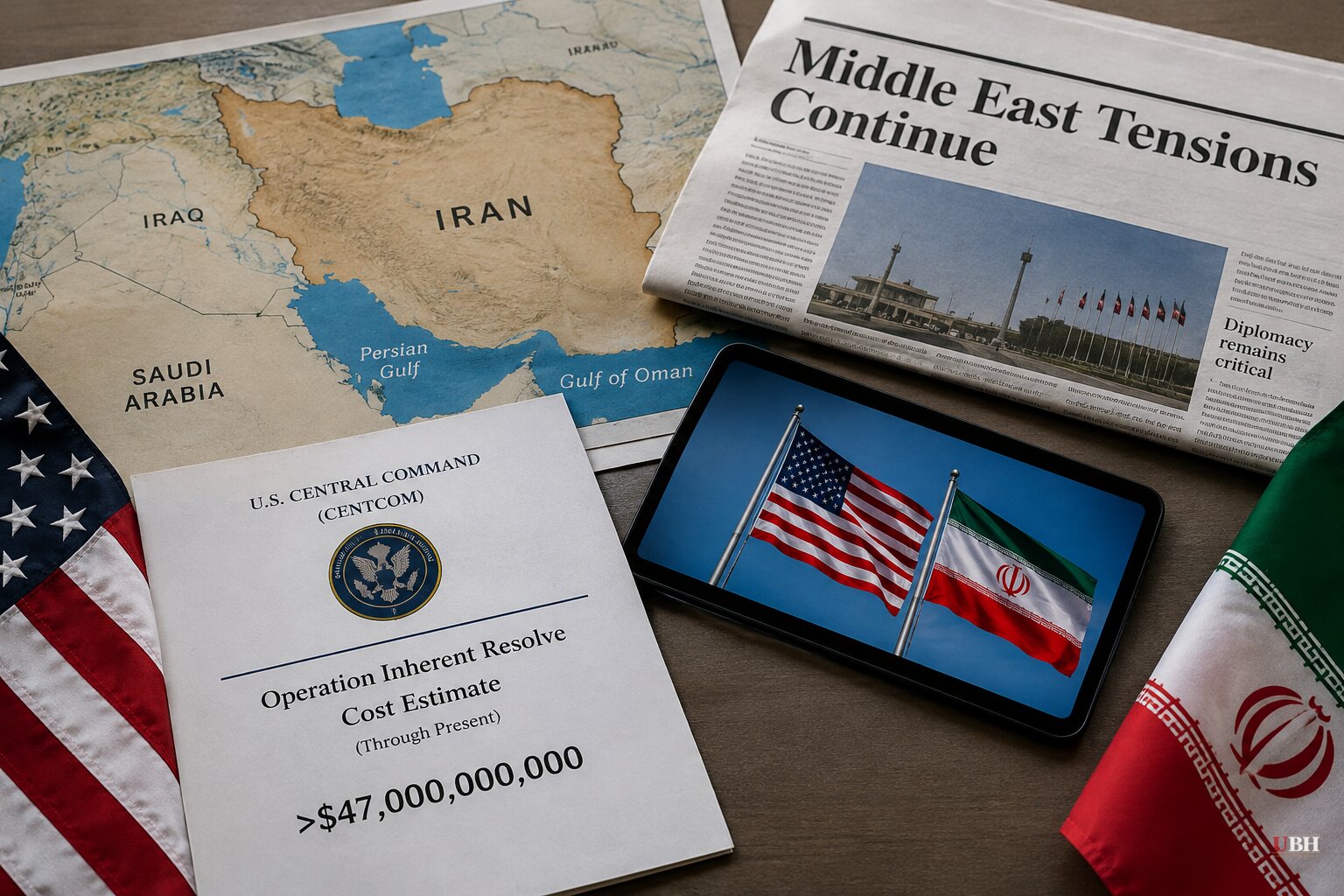
Since the U.S. and Israel launched the Iran war on Feb. 28, the conflict has run for eight months, outlasted an April ceasefire, and turned into a naval blockade. This week the argument is about who controls the ending.
At a rally in Lubbock, Texas, on Tuesday, Oct. 27, President Trump said: "Somebody asked me before, 'When will the war in Iran end?' I said, 'Whenever I want it to end.'" He said it "would be very quick, but we have to have an end properly," with a "total statement" that Iran will never have a nuclear weapon.
He is also saying he will soon decide whether to "make a deal" with Iran or "finish it off." Fox News reports the headline of its live coverage as Trump saying "anything's possible" regarding potential strikes on Iran after the midterm elections.
The ceasefire comment
The sharper exchange came a day earlier. At a Mississippi rally on Monday, Oct. 26, Trump described the U.S. blockade of Iranian ports as "probably in naval history" the greatest.
"Not one Iranian ship has gotten through in many, many months other than when we did a little ceasefire, which I never liked very much. I considered it sort of a waste of time," he said. "But, you know, you like to listen to professionals. But we did a little ceasefire, so we let some ships get in. You know, we want to be nice, but it was just a waste of time as far as I'm concerned."
Iranian Foreign Ministry spokesman Esmaeil Baqaei answered on Wednesday, Oct. 28. "President Trump's admission that he never believed in the Islamabad MoU and considered it a waste of time exposes the hollowness of their diplomatic commitments," he said.
Baqaei added that Washington "has a long record of reneging on its commitments and treating international obligations as disposable whenever they become inconvenient." He also said there is "absolutely no justification for European states and other apologists for Washington to continue whitewashing U.S. misconduct."
The White House position, in Trump's own words, is that the ceasefire let some ships through, that he deferred to professionals, and that any real end needs an explicit statement that Iran will never have a nuclear weapon.
Iranian Foreign Minister Abbas Araghchi, meanwhile, was in Moscow for the Gas Exporting Countries Forum summit, where he posted a photo with Vladimir Putin. He wrote on X that the "devastating impact on international markets of any Israel-instigated military misadventure in Persian Gulf region remains major concern for both gas suppliers and consumers."
The cost behind the talk
The latest CENTCOM estimate puts the war's cost at more than $47 billion through mid-October, up from $43.6 billion in early September. Defense Secretary Pete Hegseth's July figure was $37.5 billion.
Munitions replacement is the biggest line at $29 billion. Platform losses, including aircraft and drones, run about $6 billion. The estimate does not include repairs to U.S. bases hit by Iranian drones and missiles.
Stephen Semler of the Center for International Policy estimated in July that total U.S. spending in the first four months exceeded $103 billion once other factors were counted. That is his estimate, not a Pentagon number.
Brown University's Watson School tracker puts extra U.S. spending by consumers on gasoline and diesel at $146 billion since February.
Politics a week out
A Reuters/Ipsos poll released Monday put Trump's approval at 32%. An AP-NORC poll published last week found voters from both major parties want the next Congress to focus on making life more affordable and ending the war.
Diesel prices remain near record highs, a problem for Republicans in tight races in Iowa, Kansas, Ohio and Texas. Republicans hold narrow majorities in both chambers.
There is a private-sector fallout as well. Villa Vie Residences ended a world cruise in Cambodia on Tuesday and told passengers they had to disembark the Villa Vie Odyssey by 2 p.m. The company blamed "extraordinary increases in fuel costs" since the conflict began in late February. It said fuel expenses rose from an average of $1,800 a month per cabin to more than $6,000.
Gulf allies brace
The regional picture is tightening. Saudi air defenses intercepted and destroyed a ballistic missile launched toward Taif by Houthi forces on Tuesday. Iran-backed Houthi rebels have also struck Saudi oil facilities and airports, and a Saudi-led coalition has hit Houthi-controlled areas in Yemen.
On Monday, Egypt's parliament allowed President Abdel Fattah al-Sisi to take "all necessary measures" to help Saudi Arabia defend itself, according to Reuters. Egyptian Foreign Minister Badr Abdelatty and Saudi Foreign Minister Prince Faisal bin Farhan spoke Tuesday about efforts "to contain the current crisis and prevent escalation, the likelihood of which has increased recently," according to Egypt's Foreign Ministry.
The State Department announced over the weekend it is drawing down personnel at four U.S. embassies in the Middle East, following intelligence suggesting Iran has intensified efforts to target American staff in the region and beyond.
US officials speaking anonymously say the Pentagon has been planning to restart heavy fighting if ordered to do so. The Wall Street Journal reported, citing unnamed people briefed on the conversations, that the U.S. has told several Gulf Arab countries to be prepared for a short, intense military campaign after the midterm elections.
The Pentagon did not immediately respond to a request for comment on its estimate, which has not been shared publicly.
Sources used for this briefing
8 links from 8 independent newsrooms (syndicated copies of the same report count once)
These are the sources it draws on, linked so you can verify.


